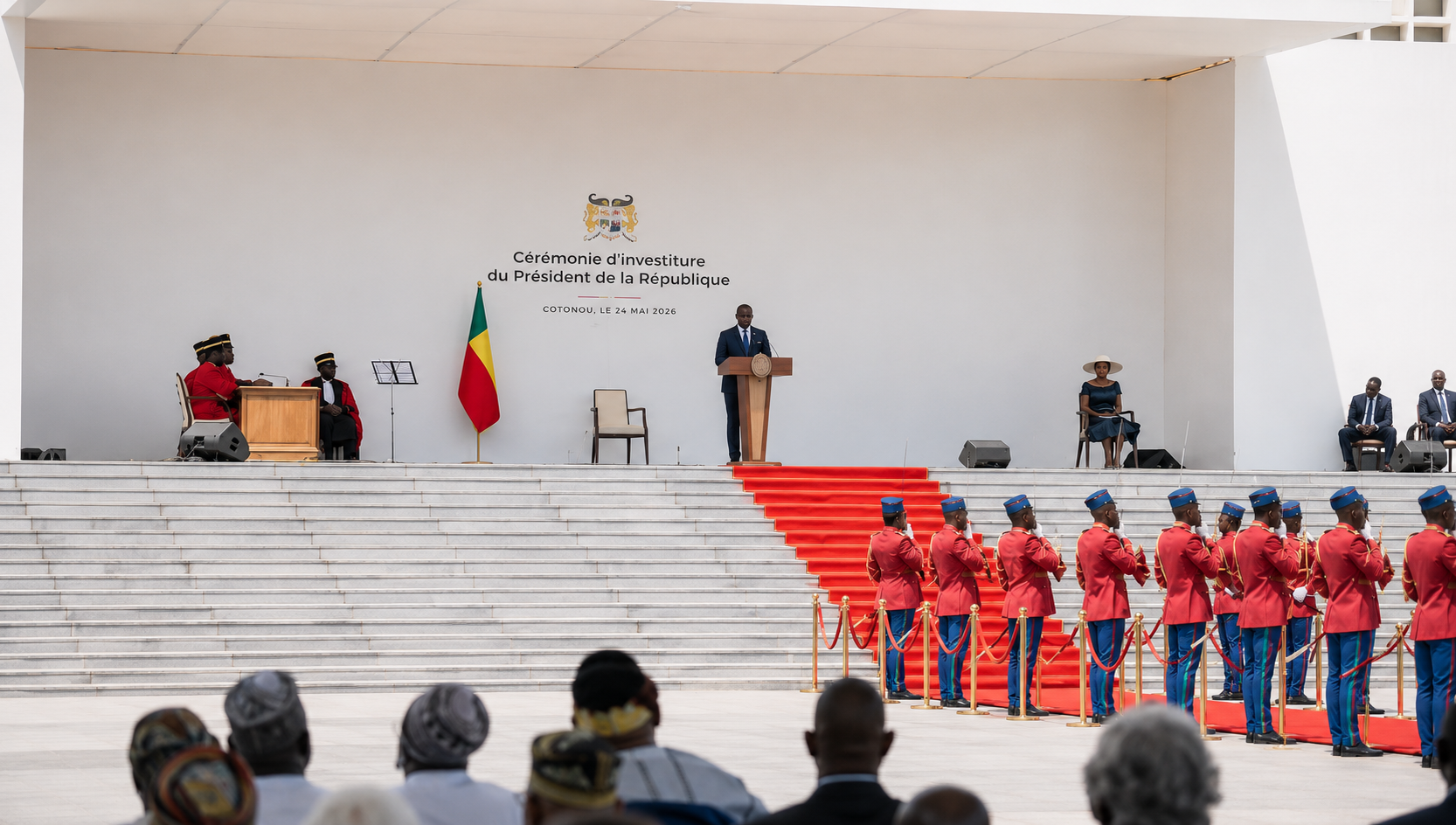
The Bénin has entered a new phase in its political history with the inauguration of Romuald Wadagni as the West African nation’s fifth president since the democratic renewal of 1990. On a bright Sunday morning, May 24, 2026, the former Finance Minister took the oath of office at the Palais des Congrès in Cotonou, marking the beginning of a seven-year mandate. His victory in the April presidential election was decisive, securing 94% of the vote in a contest notably devoid of major opposition presence.
Wadagni, born in Lokossa, brings a wealth of technical expertise to the presidency, having spent 17 years at Deloitte before joining Patrice Talon’s government in 2016. His tenure as Finance Minister was defined by strategic financial maneuvers, including multiple international bond issuances and the preservation of Benin’s sovereign credit rating. His election, confirmed by the Constitutional Court, was a foregone conclusion after the main opposition party, Les Démocrates, was barred from participating due to technical disqualifications in the candidate registration process.
An economic legacy to uphold
Wadagni’s presidency is framed as a continuation of Talon’s economic policies, though with a renewed emphasis on tangible benefits for citizens. His inauguration speech outlined a vision centered on converting economic growth into real improvements for families, particularly targeting youth, women, rural communities, and the middle class. The new president also pledged a firm stance against armed groups operating in northern Bénin since 2022, signaling continuity in security policy.
Institutional continuity is further underscored by constitutional amendments adopted in 2025, which extended the presidential term to seven years—a change first implemented in the 2026 election cycle. This reform decoupled presidential elections from legislative ones, altering the country’s electoral calendar. The Vice President, Mariam Chabi Talata, who ran on the same ticket, remains a key figure in the executive branch, reflecting the 2019 constitutional revisions.
A tightly controlled political landscape
The exclusion of the opposition from the electoral process has drawn international scrutiny. Les Démocrates, led by figures like Reckya Madougou—currently serving a 20-year sentence for “terrorism”—and Joël Aïvo, imprisoned for a decade on “conspiracy” charges, were effectively sidelined. High financial barriers for candidate registration, stringent certification requirements, and a 2025 threshold of 20% of votes per constituency to retain parliamentary seats have further narrowed the political space. The January 2026 legislative elections yielded zero seats for opposition parties.
The Constitutional Court’s decision to invalidate Les Démocrates’ candidacy in October 2025, citing insufficient parliamentary sponsorship, was the culmination of years of tightening restrictions. Critics argue the legal framework disproportionately targets dissent, with institutions like the Court for the Repression of Economic Crimes and Terrorism (CRIET) frequently accused of political misuse. The opposition’s response has included mass emigration of key figures.
Diplomatic overtures to the Sahel
The inauguration ceremony itself was a carefully orchestrated event, attended by over 6,000 guests, including former Bénin presidents Nicéphore Soglo and Thomas Boni Yayi. The protocol, meticulously timed from 9:30 AM to noon, included the handover of presidential insignia by outgoing leader Patrice Talon and a solemn oath-taking before the Constitutional Court.
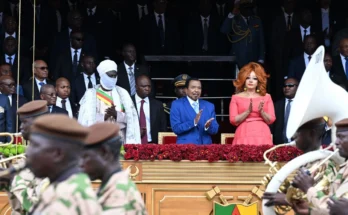
While the event traditionally excludes foreign heads of state, this year’s ceremony saw a notable diplomatic presence from the Sahel. Representatives from the Alliance of Sahel States (AES)—Mali, Burkina Faso, and Niger—joined Nigerian Vice President as special envoys. The warm reception for Niger’s Prime Minister Ali Mahaman Lamine Zeine, particularly a prolonged applause from the audience, signaled a thaw in relations that have been strained since the July 2023 coup in Niamey. The gesture contrasts sharply with Bénin’s previously firm stance against military regimes in the region.
Bénin and Niger have faced repeated border closures, particularly affecting the transit of Nigerien hydrocarbons via the oil pipeline to Benin’s port. Wadagni’s conciliatory tone toward Niamey suggests a potential shift in regional diplomacy, though concrete actions will be required to rebuild trust.
What to watch next
Several developments will test the new president’s approach. The imminent formation of his government will reveal whether Wadagni broadens the executive beyond Talon’s inner circle. The fate of imprisoned opposition figures remains a litmus test for political pluralism, with calls for amnesty growing louder. Meanwhile, the success of his diplomatic outreach to the Sahel hinges on tangible gestures, such as an official visit to Niamey, Bamako, or Ouagadougou.
The Bénin now enters a seven-year term under an institutional framework largely shaped by its predecessor. The central question is not one of stability, but of inclusivity: Can a system praised by international donors for its economic discipline coexist with a political environment that leaves little room for dissent?