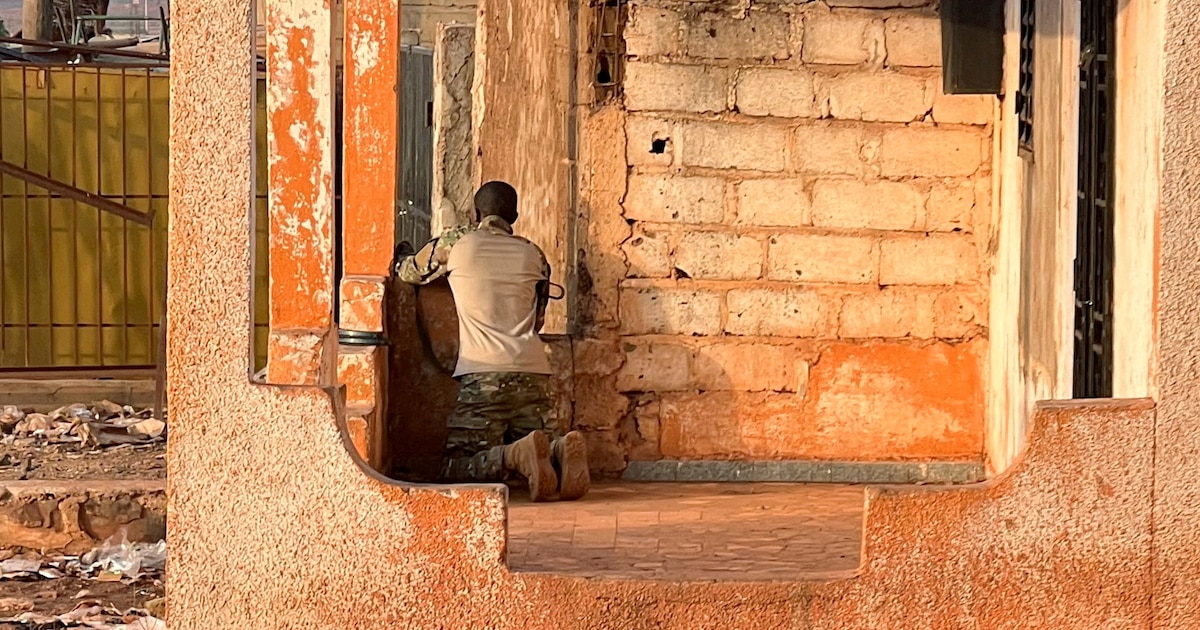
In a striking military setback, Russian mercenaries from the Africa Corps—a Kremlin-backed force that replaced Wagner in Mali—were forced into a humiliating retreat from Kidal on April 26. Social media footage captured the chaotic withdrawal: disarmed troops fleeing in trucks, abandoning armored vehicles and helicopters to jihadist fighters and Tuareg rebels. Several Malian soldiers were captured in brief clashes, marking a sharp reversal of fortune for the junta’s allies.
This coordinated blow comes after a weekend of intense attacks across Mali. Jihadist factions, including the Group for the Support of Islam and Muslims (GSIM), an Al-Qaeda affiliate, joined forces with the Front for the Liberation of Azawad (FLA) to target strategic positions nationwide. Bamako, the capital, as well as Kati (home to the military’s main base) and Gao (a former UN stronghold), faced simultaneous assaults. At least six cities were hit in an offensive that underscored the growing boldness of insurgent groups.
Kidal’s fall: a symbolic blow to Moscow’s Mali strategy
The loss of Kidal is particularly damaging. In November 2023, Wagner mercenaries had triumphantly seized the city—once a Tuareg stronghold—hoisting their signature skull-and-crossbones flag. Experts now describe the retreat as a major strategic failure for Russia’s Africa Corps, which had been deployed to bolster the Malian junta since 2021. “The capture of Kidal was the only major success the Russians could claim in Mali,” noted Djenabou Cissé, a researcher at the Fondation pour la recherche stratégique. “Its loss exposes the fragility of their military partnership with Bamako.”
Jihadist surge tightens grip on the Sahel
Since mid-2025, jihadist factions have intensified their campaign, encircling Bamako in a blockade aimed at crippling the economy. The Institute for Economics and Peace ranked the region as the global epicenter of terrorism and its casualties in 2025—a grim distinction reflecting the escalating violence. Despite military support from Africa Corps, Malian forces have suffered repeated defeats, with civilians bearing the brunt of the conflict.
Reports from Le Monde and the Washington Post highlight a disturbing pattern: since Wagner’s arrival in 2021—and Africa Corps’ takeover in 2025—human rights abuses, including sexual violence, have surged. UN investigations and human rights groups have documented these atrocities, many linked directly to Malian troops and their Russian allies. “The mercenaries’ presence has not only failed to curb terrorism but has worsened the humanitarian crisis,” warned Wassim Nasr, a jihadism analyst, in an interview with the Washington Post.
Bamako under pressure as junta scrambles to respond
Videos from across Mali captured the scale of the offensive. In Kidal, insurgents stormed the governor’s office, while in Bamako, civilians watched as GSIM fighters entered the city unopposed. Near the capital, in Kati—a stronghold of the junta—an explosion destroyed the home of Defense Minister Sadio Camara, who was killed in the attack. Prime Minister Abdoulaye Maïga paid tribute to Camara but sought to reassure the public in a televised address. Junta leader Assimi Goïta later declared the situation “under control,” vowing to “neutralize” all involved factions.
Yet skepticism lingers. A Malian officer, speaking anonymously to RFI, alleged “The Russians betrayed us in Kidal.” He claimed local authorities had warned Africa Corps three days before the attack, only for the mercenaries to negotiate their withdrawal instead of defending the city. Sources suggest Russia may abandon other northern strongholds, further weakening the Malian army’s position.
The Kremlin, through spokesperson Dmitri Peskov, declined to address whether Africa Corps could regain control. However, he asserted that Russian forces had thwarted a coup attempt by the FLA and GSIM, per Reuters. As Mali’s crisis deepens, the retreat of Africa Corps serves as a stark reminder of the limits of foreign military intervention in the Sahel.