The sudden withdrawal of Africa Corps troops from Kidal in northern Mali marks a major strategic failure for the Kremlin’s military outreach in Africa. Once hailed as a key victory for Russian-backed forces in the region, the loss of this Tuareg stronghold now exposes the vulnerabilities of Moscow’s military ambitions on the continent.
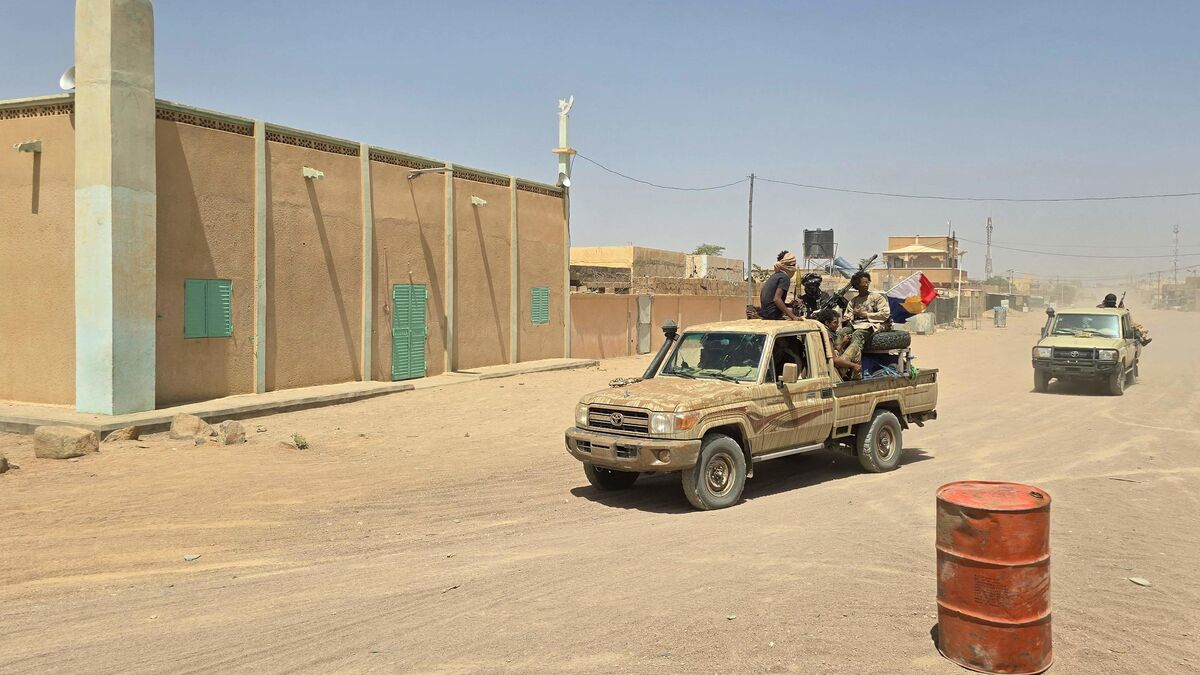
On April 26, a convoy of Russian-allied fighters abandoned Kidal under chaotic circumstances. According to reports, the retreat was negotiated under humiliating terms—disarmed and documented one by one, the soldiers left behind a critical stronghold. The scene was met with jubilation by Tuareg rebels from the Front de Libération de l’Azawad (FLA), who seized the opportunity to mock their adversaries by waving a French flag, a pointed reference to the region’s colonial past.
Analysts describe the fall of Kidal as a major blow to the Kremlin’s propaganda machine. « This was the only substantial military success Russia could claim in Mali since deploying Africa Corps in 2021, » explains Djenabou Cissé, researcher at the Fondation pour la Recherche Stratégique. « Its loss underscores the fragility of Moscow’s strategy and the growing resistance faced by its proxies in the Sahel. »
a symbolic defeat with far-reaching consequences
Kidal had long been a contested territory, serving as a symbol of Tuareg autonomy and a target for successive Malian governments and their foreign allies. When Africa Corps forces captured the city in 2023, it was framed as a turning point—a demonstration of Russian military prowess and a counter to Western influence in the region.
Now, the rapid collapse of that position raises serious questions about the effectiveness of Moscow’s military support for the Malian junta. Unlike earlier successes in Central African Republic or Sudan, where Russian mercenaries secured key assets, the Kidal operation has backfired spectacularly. The retreat, conducted under a negotiated settlement, suggests that local resistance forces are gaining the upper hand—not just militarily, but politically.
what’s next for Russia’s african corps in Mali?
While the Kremlin has yet to issue an official response, observers anticipate a recalibration of strategy. The failure in Kidal could force Moscow to reassess its approach in the Sahel, where anti-Western sentiment is high but local governance remains volatile. Some analysts suggest that Africa Corps may shift toward covert operations or focus on protecting economic interests—such as mining concessions—rather than large-scale territorial control.
One thing is certain: the image of invincibility that Russia sought to project in Africa has taken a severe hit. As rebel groups consolidate their gains and regional governments reassess their alliances, the fall of Kidal may well be remembered as the moment when Moscow’s African ambitions began to unravel.