Moscow’s expanding security footprint in Africa is taking a new turn as gold concessions become the currency of influence in volatile Sahel nations. New reports reveal how a Russian-linked network is leveraging military partnerships to secure lucrative mining contracts, raising concerns over long-term sovereignty and economic transparency.
From soldiers to shareholders: the Prigojine legacy in Central Africa
Following the death of Yevgeny Prigojine in 2023, his son, Pavel, appears to have inherited and expanded a powerful economic empire in the Central African Republic (CAR). According to recent assessments, this network—spanning security operations and mining—now generates over $400 million annually. The revelation underscores a troubling trend: where Russian forces go, commercial interests often follow.
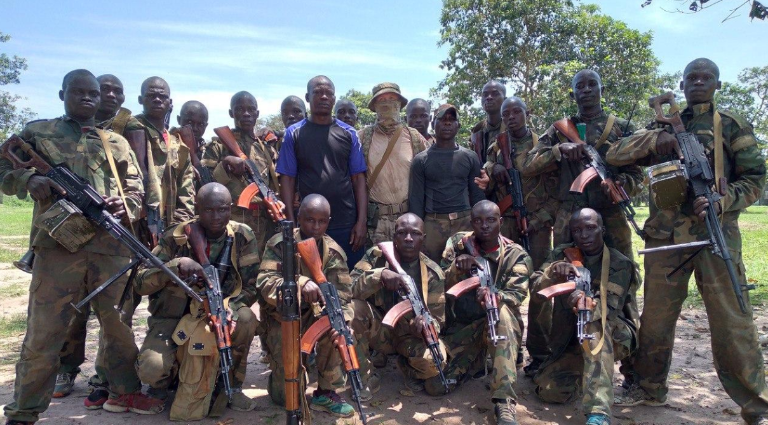
In Bangui, Wagner-affiliated contractors continue to provide close protection for President Faustin-Archange Touadéra and conduct anti-insurgency operations. Yet behind these services lies a deeper agenda: securing exclusive access to the country’s gold reserves, now estimated to contribute $250 million to the network’s yearly revenue.
Gold-backed security: how mining deals reshape Sahel alliances
The CAR model is gaining attention in Mali, Burkina Faso, and Niger—nations part of the Alliance of Sahel States (AES)—as they deepen ties with Moscow. While each country’s trajectory differs, the shared pattern involves trading military support for resource concessions. The risk isn’t theoretical: once foreign fighters are embedded in a nation’s security apparatus, oversight becomes nearly impossible.
Analysts warn that opaque mining contracts and shadowy payment mechanisms risk diverting national wealth into private hands. Without transparent audits or public reporting, it remains unclear whether gold revenues are boosting local economies or funding parallel power structures.
Beyond security: the hidden economy of Russian mercenaries
The Wagner network’s business ventures extend far beyond gold. Investigations suggest involvement in arms trafficking, pharmaceuticals, and even alcohol production—all under the guise of post-conflict reconstruction. Such diversification transforms military contractors into de facto economic players, with influence that outlasts their combat roles.
This raises a critical question: when security partners become investors, who ultimately benefits—the state or the armed group?
The Sahel’s cautionary tale: sovereignty at stake
As AES governments face jihadist threats and diplomatic strains with Western partners, the Kremlin’s offer of rapid military intervention is tempting. But the CAR precedent shows how security deals can evolve into resource monopolies. Mali’s leaders have already faced public scrutiny over civilian casualties linked to foreign-backed operations, while Niger and Burkina Faso are negotiating new military cooperation frameworks.
The core issue isn’t whether nations need Russian support—it’s how to prevent that support from eroding sovereign control. Clear contracts, independent monitoring, and equitable revenue sharing must anchor any partnership, ensuring that gold—or any other resource—doesn’t become the price of security.
Moscow’s balancing act: control vs. commercial autonomy
Russia’s official shift toward the Africa Corps has done little to dismantle existing networks. In CAR, Pavel Prigojine allegedly maintains autonomy through deep ties with local elites and mining officials. This dual structure—state oversight on paper, private interests in practice—creates a governance gray zone that Sahel nations cannot afford to ignore.
The lesson for AES leaders is clear: military alliances must come with ironclad transparency clauses. Otherwise, the continent risks trading one form of dependency for another—where foreign boots on the ground are merely the first step toward foreign hands on the gold.
Comments are closed, but trackbacks and pingbacks are open.