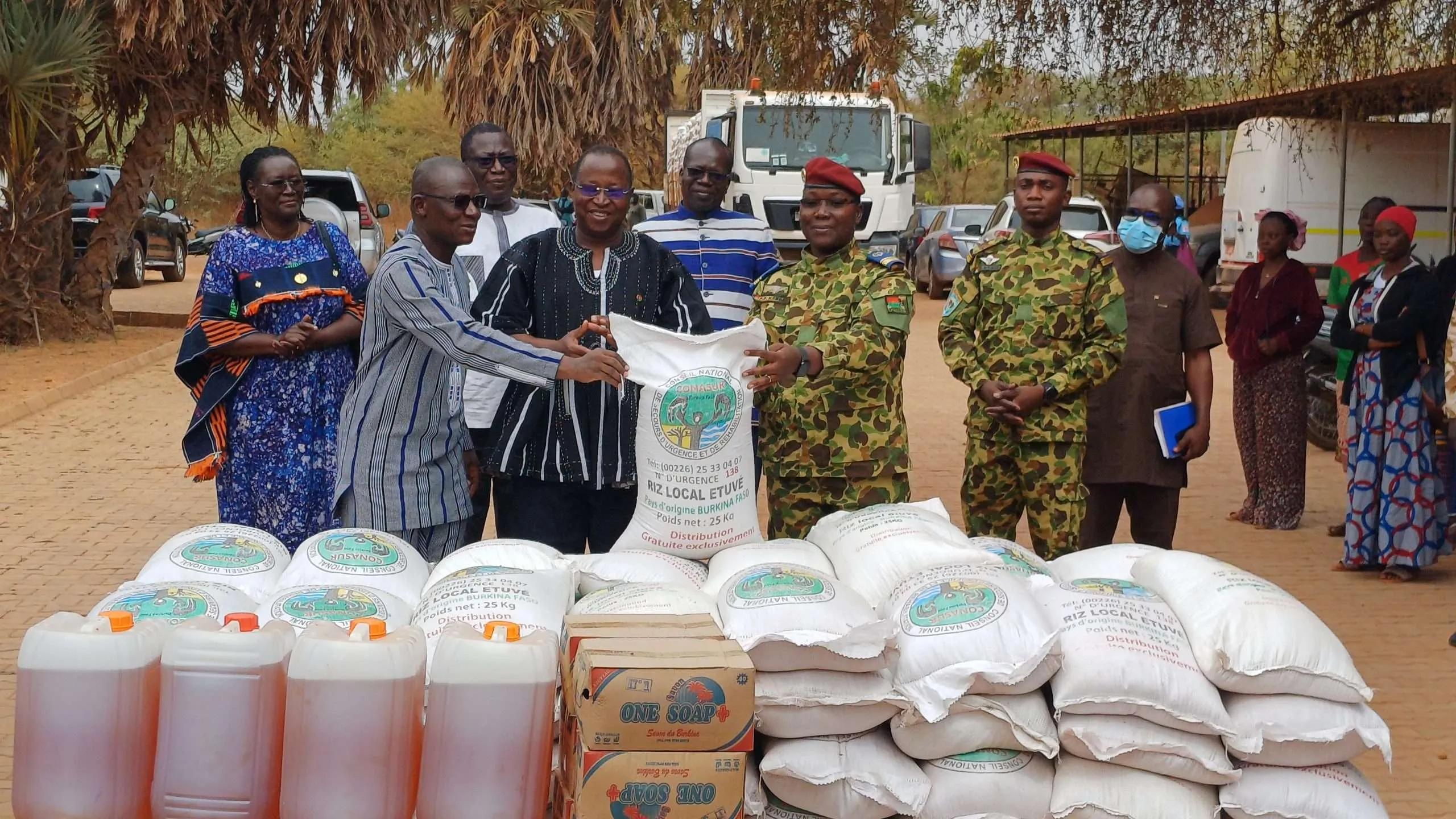
The gap between official rhetoric and reality has become hard to ignore. On Wednesday, September 23, 2026, transitional authorities in Burkina Faso once again rolled out a warm welcome for a shipment of 25,000 tonnes of wheat offered by the Russian Federation, even as Captain Ibrahim Traoré continues to tell audiences that the country is closing in on food self-sufficiency through its agro-pastoral campaigns and a “reclaimed sovereignty.”
Reactions set in as the grain arrives
The arrival has triggered a wave of public commentary, and the central question is blunt: how can a country on the verge of feeding itself still need thousands of tonnes of foreign grain shipped in from abroad? For many observers, the answer lies less in agriculture than in political theatre. Claiming that Burkina Faso no longer needs outside help to secure its food supply, they argue, disguises a deep agricultural crisis worsened by lost control over large rural areas and the forced abandonment of farmland by displaced communities.
Between the plate and the speech
Celebrating the supposed end of dependency while welcoming emergency grain shipments raises uncomfortable contradictions. If food self-sufficiency were a concrete reality rather than a slogan, national granaries would be enough to supply cities and displacement camps without waiting for vessels from the Black Sea. The gap between the two narratives has become the subject of growing public debate.
A gift, or a disguised purchase?
Behind the label of “humanitarian generosity” and strategic partnership with Moscow lies a political and financial transaction whose terms remain largely hidden. In diplomatic language, “free donation” often works as a smokescreen. Several informed observers point to a disguised purchase or a highly political barter: in exchange for grain shipments, Russia deepens its geopolitical, security and economic footprint in the country, trading food for strategic concessions in gold mining, economic contracts and unreserved diplomatic alignment.
What the 25,000 tonnes really cost
These 25,000 tonnes are not free. They are paid for through external dependency and sovereign concessions. Far from an act of disinterested solidarity, the transfer looks more like a political bill settled indirectly by the Burkinabe taxpayer.
Reactions across society
Citizens, analysts and civil society voices are now weighing what the shipment means for the country’s direction. Some see it as a necessary emergency measure; others view it as proof that the sovereignty narrative does not match the reality of empty granaries and continued imports.
The diplomacy of the food bowl
Presenting an external supply operation as a symbol of sovereignty reverses basic values. A genuinely sovereign people produces what it consumes on its own soil, under the protection of its own security forces. As long as Captain Ibrahim Traoré’s break-with-the-past speeches collide with the reality of imported wheat sacks used to meet immediate needs, sovereign self-sufficiency will remain what it is today: a communication illusion.
What comes next
The debate is unlikely to fade with the unloading of the cargo. The coming months will test whether Burkina Faso can translate its rhetoric into real agricultural capacity, or whether more foreign grain shipments will keep arriving while the self-sufficiency claim loses credibility with the public.
Comments are closed, but trackbacks and pingbacks are open.