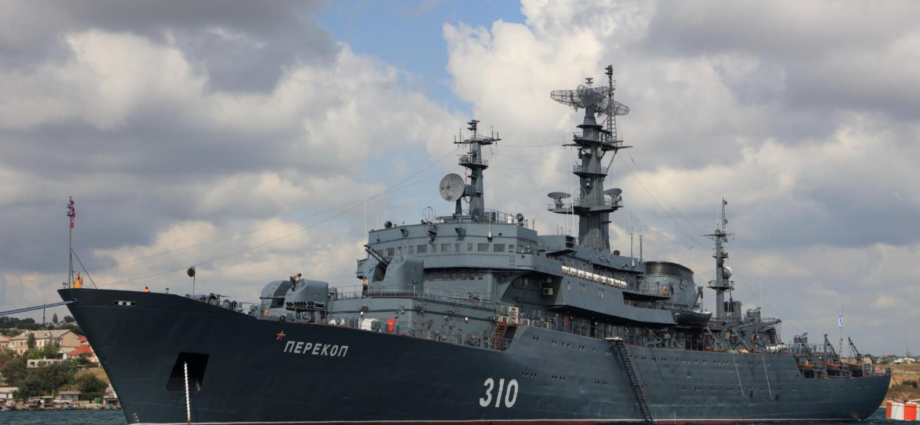
The Russian naval training vessel Perekop arrived in Namibia’s strategic port of Walvis Bay on October 20, 2026, following a week-long voyage covering over 1,800 nautical miles. Officially labeled as a routine maritime training mission, the destination and timing of the Baltic Fleet vessel have sparked wider discussions about Moscow’s evolving naval strategy in Africa.
Walvis Bay as a stepping stone for Russia’s African maritime ambitions
The Perekop, a dedicated training ship, is part of a long-range deployment spanning Eurasia and the African continent. While Russian authorities emphasize the educational purpose of the campaign, the stop in Namibia reflects a broader pattern of naval diplomacy aimed at strengthening military ties and maritime access.
Walvis Bay holds significant logistical value. Situated along the Atlantic coast of southern Africa, the port serves as a key hub for shipping, resupply, and technical servicing. For a navy without an extensive network of overseas bases, regular port calls become essential for sustaining long-distance operations.
No permanent base agreement has been confirmed, but the visit reflects a growing emphasis on maintaining consistent access to African infrastructure. The scale and frequency of such visits may signal deeper strategic intent over time, though visibility alone does not confirm intent.
Military training with diplomatic ripple effects
The announced training mission includes navigation drills, route planning, and long-distance sailing exercises under real-world conditions. Such activities are consistent with the Perekop’s intended role. Yet, naval training deployments also serve secondary diplomatic functions: fostering institutional contacts, deepening defense partnerships, and projecting presence.
The ship’s arrival in Walvis Bay was accompanied by meetings between Russian naval officers, Namibian defense officials, and embassy representatives. These interactions underscore bilateral engagement but do not confirm the signing of any new defense agreement.
Symbolism and geopolitical messaging in the Atlantic
The timing and location of the Perekop’s visit send signals beyond logistics and training. In an era of heightened tensions between Russia and Western capitals, naval appearances serve as symbolic reaffirmations of Moscow’s global reach. Such maneuvers are particularly relevant for a nation seeking to preserve its status as a major power despite economic and military constraints.
Analysts note that Russian naval activity in Africa is not solely operational—it carries diplomatic weight. Port visits, joint exercises, and access negotiations can enhance influence even without immediate formal commitments. The appearance of a naval vessel becomes a form of soft power, reinforcing partnerships without requiring immediate concrete deliverables.
What comes next: tracking the long-term implications
The true significance of the Perekop’s stopover will become clearer in the months ahead. Will it be followed by repeated visits from operational vessels? Could there be discussions on logistical support, joint exercises, or technical cooperation? These developments would indicate deeper integration into the region’s naval ecosystem.
As of now, official statements and public records do not confirm a shift toward a permanent Russian naval presence in Namibia. The absence of such evidence places the visit in the context of ongoing military-diplomatic outreach rather than a sudden strategic pivot.
Namibia’s perspective: balancing partnerships in a multipolar world
For Namibia, the visit presents an opportunity to engage with a major non-Western partner. African states increasingly navigate a landscape shaped by multiple external actors. While no evidence suggests a Namibian tilt toward Moscow at the expense of Western allies, such engagements allow for strategic diversification and potential access to training, technology, or support.
The focus remains on understanding the long-term trajectory of Russia’s naval footprint in Africa. A single port call does not constitute a strategy. Only sustained activity—repeated deployments, formal agreements, or infrastructure investments—will clarify whether Walvis Bay is becoming part of a broader pattern of Russian maritime influence on the continent.
Comments are closed, but trackbacks and pingbacks are open.