Niger’s armed forces receive cutting-edge american military equipment
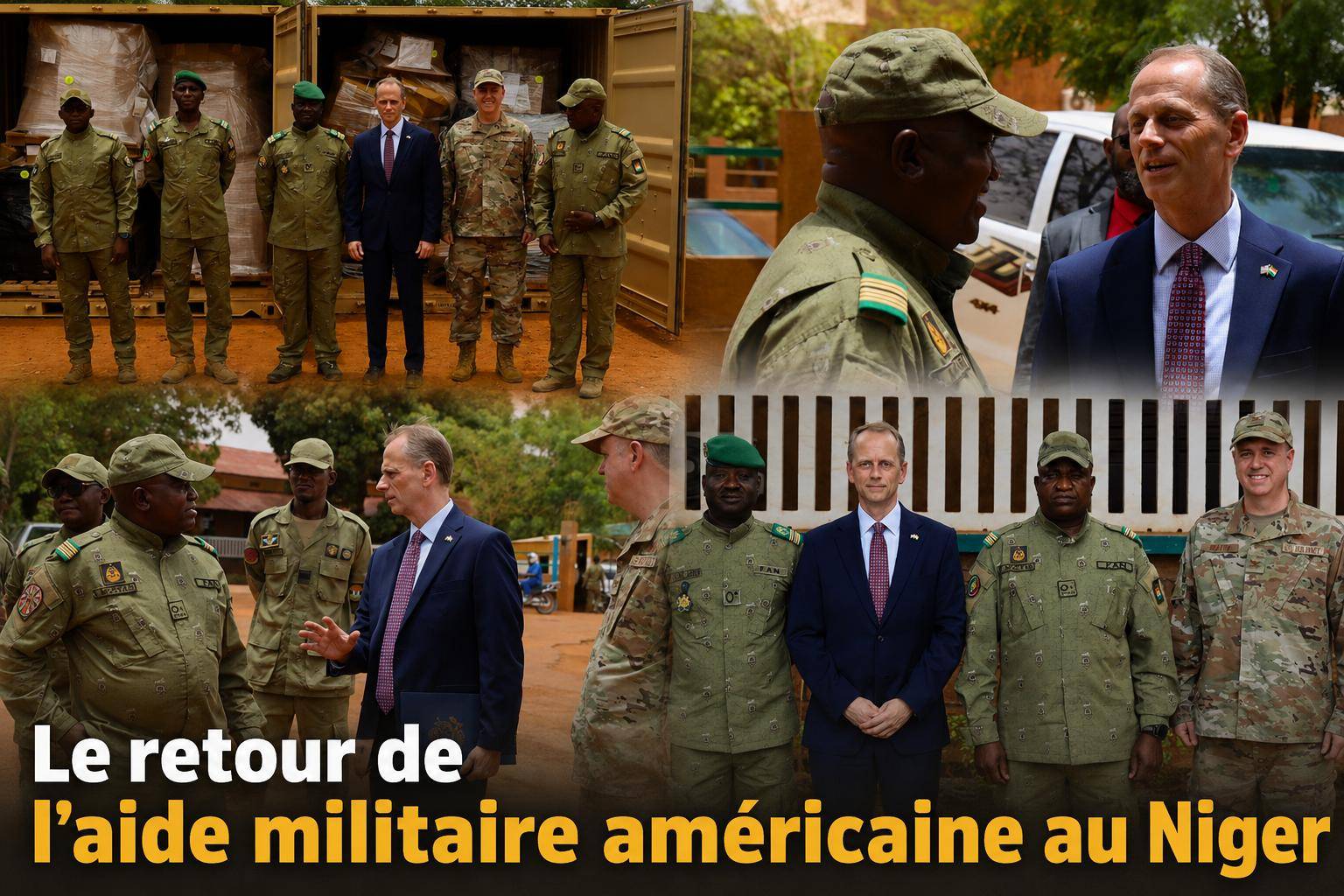
In a landmark ceremony held at the Niamey Logistics Center of the Nigerien Armed Forces (FAN), nine containers packed with advanced military equipment arrived on May 26, 2026, courtesy of the United States government. This strategic donation marks a pivotal moment in Niger’s ongoing fight against terrorism and transnational crime, while also signaling a pragmatic shift in its foreign policy.
Equipment tailored for battlefield efficiency
The donated cargo, delivered directly from U.S. military stockpiles, includes essential spare parts, tactical communication devices, personal protective gear, and first-line maintenance tools. Military logistics officers confirmed that these resources are designed to enhance operational resilience and combat readiness, particularly in remote and high-risk areas where rapid repairs and reliable communication can mean the difference between success and failure.
For the troops deployed along the volatile border regions, this infusion of high-tech gear is more than just an upgrade—it’s a lifeline. The equipment will be deployed immediately to support counterterrorism operations, curb organized cross-border crime, and secure the country’s vast and often isolated rural zones.
Security challenges fueling strategic cooperation
Niger continues to face relentless asymmetric threats, particularly in the so-called “three borders” region (shared with Mali and Burkina Faso) and the Lake Chad Basin. The Ministry of Defense emphasized that the new U.S. support will play a critical role in bolstering the FAN’s ability to respond swiftly and decisively to these evolving threats.
From diplomatic rupture to pragmatic partnership
This military aid represents more than just a logistical boost—it reflects a significant recalibration of Niger’s foreign policy. Just two years ago, Niamey took a firm stance against Western military presence, demanding the withdrawal of U.S. and French troops, including the closure of the U.S. drone base in Agadez. Yet the growing intensity of jihadist attacks and the harsh realities of asymmetric warfare have forced a reevaluation of priorities.
The return of American support, even in a limited capacity, demonstrates that diplomatic channels remained open despite public posturing. It’s a clear signal that sovereignty, while a core principle, must sometimes yield to the imperatives of national security.
Balancing alliances in a shifting geopolitical landscape
Observers of Sahelian politics note that Niger is carefully diversifying its defense partnerships without committing exclusively to any single ally. While maintaining close security ties with new partners such as Russia, Turkey, and Iran, Niamey is also re-engaging with Washington in a more pragmatic fashion.
For the United States, this donation underscores a broader strategy: maintaining influence in the region despite recent setbacks. After temporarily halting aid following the 2023 political upheavals, Washington is now re-establishing trust through targeted logistical support rather than large-scale troop deployments.
“In defense, the only rule that matters is operational effectiveness on the ground.”
— Internal memo from the FAN Logistics Center
A new chapter in Niger’s defense strategy
The arrival of these nine containers of U.S. military equipment in Niamey is more than a logistical milestone—it’s a testament to Niger’s evolving approach to security. By accepting this aid, the country acknowledges that absolute sovereignty must sometimes be balanced with strategic compromises when national survival is at stake.
In the face of shared threats along its borders, Niger is turning to a diversified toolkit of alliances, proving that adaptability may well be the key to enduring stability in the Sahel.