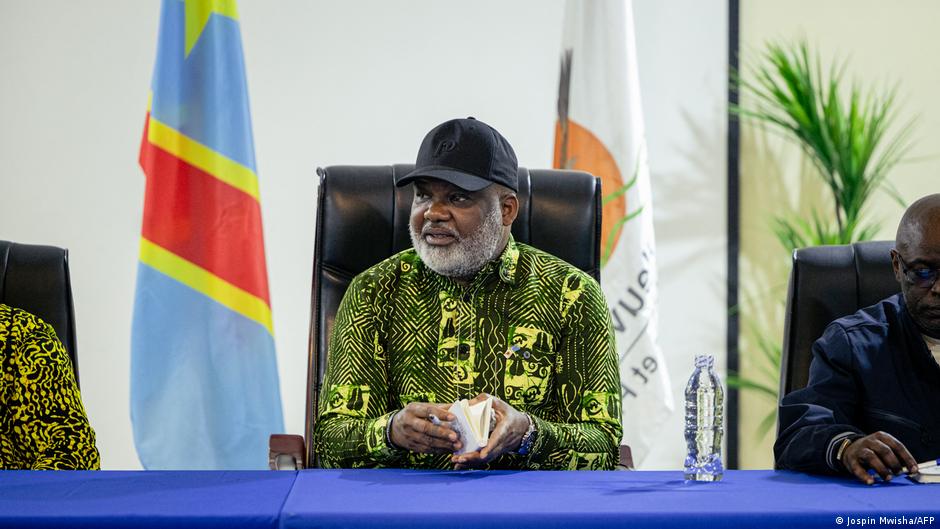
Why These UN Sanctions Against Corneille Naanga Matters for Congo’s Stability
The United Nations Security Council has imposed sanctions on Corneille Naanga, coordinator of the M23 rebel movement in the Democratic Republic of Congo, alongside other armed group leaders operating in the eastern regions. The decision comes at a delicate time, as the DRC holds the rotating presidency of the UN Security Council this month. The move has sparked debate among Congolese civil society groups, who question the effectiveness and timing of these measures.
The sanctions target key figures in groups such as the AFC/M23, Twirwaneho, FDLR, and ADF, including John Imani Nzenze, Charles Sematama, Gustave Kubwayo, Sébastien Kimenyi, and Muhammed Lumisa. The AFC/M23 has dismissed the sanctions as “selective and discriminatory”, particularly as the group claims to be engaged in peace processes.
Timing and Political Messages Behind the Sanctions
International relations experts suggest that the timing of these sanctions is not coincidental. Professor Bob Kabamba of the University of Liège, Belgium, argues that the UN may be attempting to isolate the M23 from peace negotiations, which could complicate ongoing mediation efforts.
“It will be challenging for the UN to maintain credibility on the ground while imposing sanctions on a group it has previously collaborated with in peace initiatives,” Kabamba explains. “The decision risks undermining the UN’s ability to function in eastern Congo, where cooperation with armed groups has been essential for conflict resolution.”
Professor Julien Mahatma Tazi of the University of Kinshasa offers a different perspective, emphasizing the symbolic and practical role of sanctions in reinforcing accountability. “The DRC’s international visibility during its UN presidency has kept the eastern crisis in the global spotlight,” he notes. “These sanctions reinforce the message that participation in peace talks does not absolve individuals of responsibility for fueling conflict. They also apply pressure on armed group leaders while supporting diplomatic efforts.”
Civil Society Calls for Swift Implementation of Sanctions
In rebel-controlled areas like Walikale in North Kivu, civil society leaders express frustration over the lack of enforcement. Fiston Misona, president of the Walikale Civil Society, stresses the urgency of applying these measures to protect civilians.
“Every time sanctions are announced, we see no follow-through. The UN must ensure these measures are enforced against human rights violators in Congo,” Misona insists. This is not the first time Corneille Naanga has faced sanctions; he has previously been targeted by the United States and the European Union.
The UN’s sanctions regime, while a standard tool in conflict management, carries significant implications in Congo’s ongoing crisis. Whether these measures will deter armed group activities or further destabilize the region remains a critical question for policymakers and citizens alike.
Comments are closed, but trackbacks and pingbacks are open.