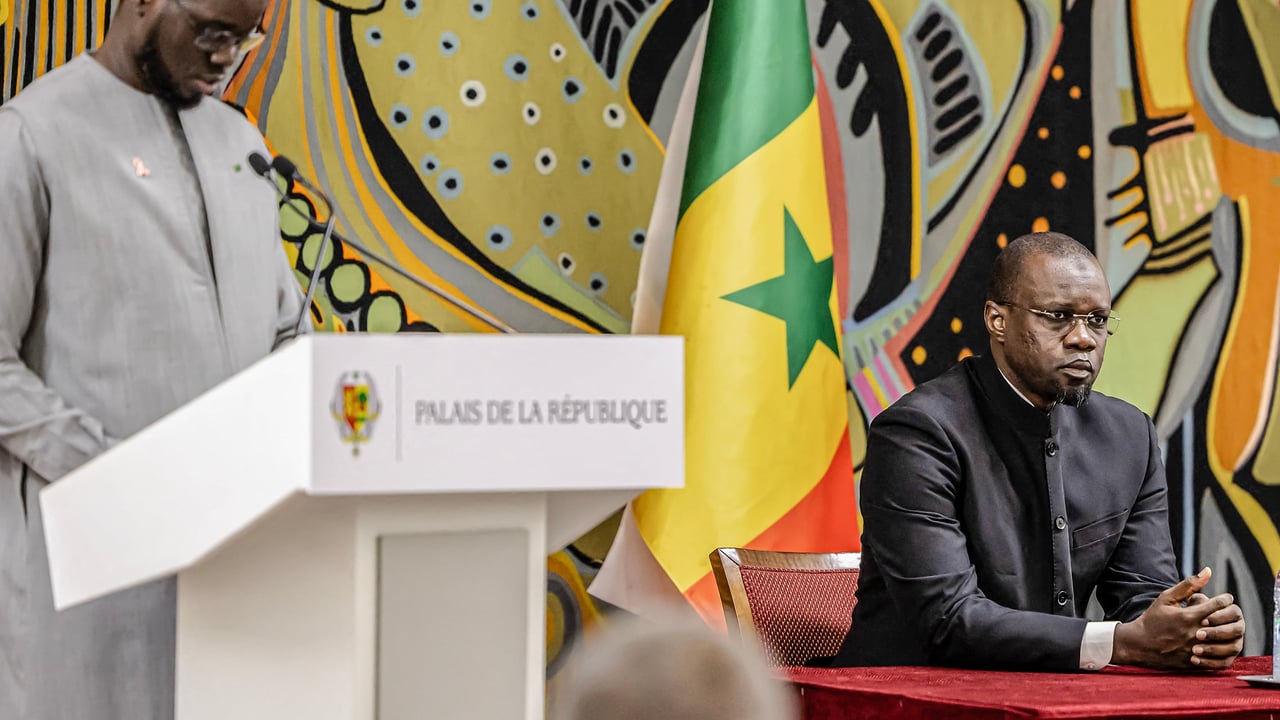

During Senegal’s National Day celebrations on April 4, 2025, President Bassirou Diomaye Faye made a bold declaration: he intends to overhaul the nation’s constitutional framework to redistribute executive power. His vision? A system where authority is shared, not concentrated. “I want strong directors-general, empowered ministers, and a highly effective prime minister,” he stated. “I refuse to be a president who hoards all decision-making powers.”
Yet behind this apparent push for decentralization, analysts argue the proposed reforms could inadvertently solidify the political influence of opposition leader Ousmane Sonko. The changes, if implemented, may pave the way for Sonko to regain a more prominent role in governance—one that aligns with his long-standing demands for systemic reform.
Why constitutional reform favors Sonko’s political comeback
The president’s proposed amendments target key aspects of Senegal’s governance structure. While Faye emphasizes reducing presidential dominance, the reforms could reshape the balance of power in ways that benefit Sonko’s Pastef movement. Here’s how:
The shift from a hyper-presidential to a shared-power model
Senegal’s current constitution grants the president sweeping authority over appointments, policy direction, and oversight. Faye’s plan seeks to dilute this concentration by strengthening the prime minister’s role and granting more autonomy to government ministers. However, this decentralization could inadvertently create new pathways for opposition figures like Sonko to influence national decision-making.
Under the proposed system, a prime minister with substantial executive powers would need broad parliamentary support—potentially opening the door for cross-party collaboration. Sonko, a figure with significant grassroots backing, could emerge as a key player in such negotiations, especially if his movement secures key legislative seats.
Parliamentary influence and Sonko’s strategic positioning
The reforms include provisions to enhance the National Assembly’s oversight capabilities. A more assertive legislature could provide Sonko’s Pastef with the platform to shape policy debates and challenge government initiatives. His ability to mobilize public opinion and legislative allies may position him as a kingmaker in the new political landscape.
Moreover, the proposed changes could weaken the traditional dominance of established parties, creating an opening for Sonko’s movement to expand its influence. If the reforms pass, his political capital—built on years of opposition advocacy—could translate into tangible governance roles.
Public perception and the optics of reform
Faye’s push for constitutional reform has been framed as a move toward transparency and accountability. Yet the optics of these changes are not lost on voters. Many see Sonko as a savior of democracy, given his past struggles with legal challenges and political persecution. A system that grants greater power to elected officials—rather than a single leader—could bolster Sonko’s reputation as a champion of democratic values.
His supporters argue that decentralizing power aligns with his long-standing calls for systemic change. If the reforms succeed, Sonko’s movement may gain legitimacy as a constructive force in governance, rather than an outsider movement.
Challenges and uncertainties ahead
While the potential benefits for Sonko are evident, the road to reform is fraught with obstacles. The National Assembly must approve the changes, and political factions are likely to fiercely debate the details. Sonko’s past legal troubles and ongoing political tensions could complicate his path to a formal role in the new system.
Additionally, the reforms require public endorsement. Faye’s administration must build broad consensus to avoid perceptions of partisan maneuvering. If mishandled, the process could backfire, fueling skepticism about the government’s true intentions.
What’s next for Senegal’s political landscape?
As the debate over constitutional reform intensifies, all eyes are on Ousmane Sonko. His ability to navigate the new political terrain will determine whether he emerges as a reformist leader or remains on the sidelines. For President Faye, the stakes are equally high: the success of his reforms hinges on balancing decentralization with national unity.
The coming months will reveal whether Senegal’s constitutional overhaul strengthens democracy—or inadvertently hands more power to a rising political figure.
Comments are closed, but trackbacks and pingbacks are open.