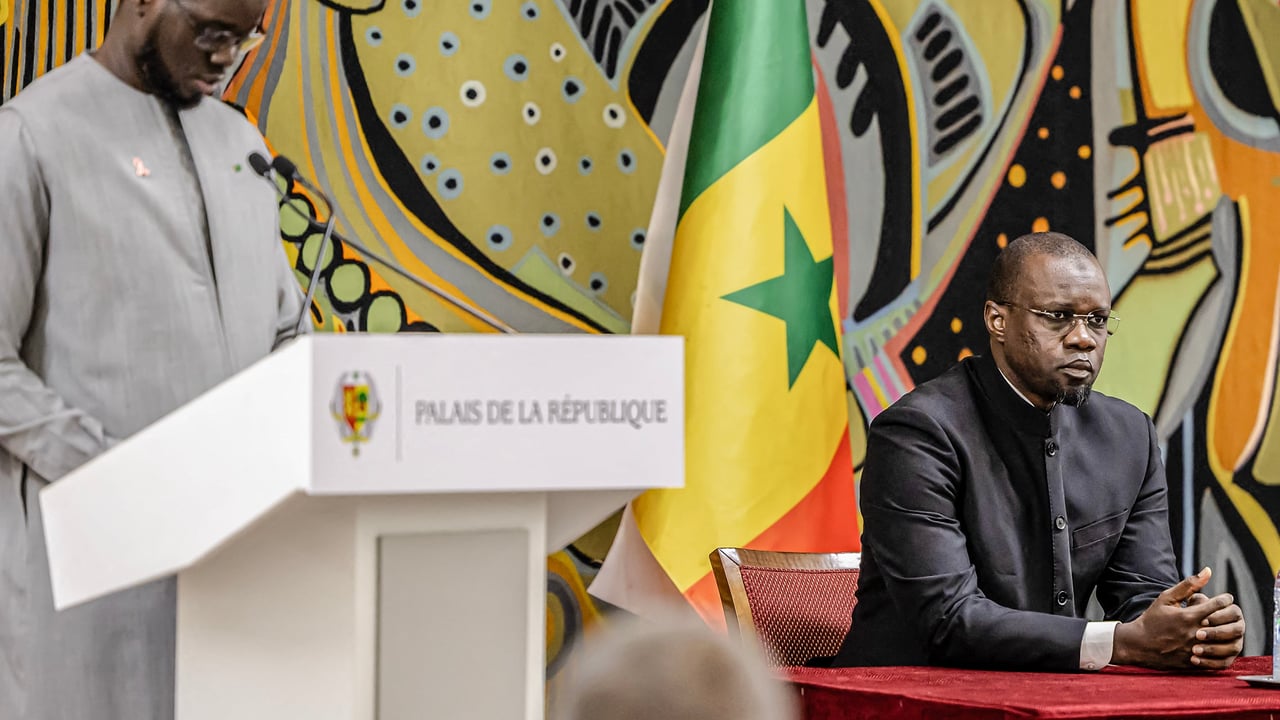
During a landmark press briefing on National Day last April 4th, President Bassirou Diomaye Faye made his intentions clear: he is determined to overhaul Senegal’s constitutional framework. His vision? A clear separation of powers that strengthens institutions without concentrating authority in the hands of a single leader. Yet behind this seemingly democratic proposal lies a strategic move that could reshape the political landscape in favor of one individual: opposition leader Ousmane Sonko.
At the heart of the proposed reforms is the redefinition of the presidency’s role. The current constitution grants sweeping executive powers to the head of state, but the new draft seeks to redistribute some of these prerogatives to other branches of government. While this may appear as a step toward institutional balance, political analysts warn it could inadvertently create a vacuum that Sonko—a prominent figure in Senegalese politics—might fill.
How the reforms could shift the balance of power
Under the existing system, the president holds significant control over both the executive and legislative processes. However, the constitutional amendments aim to:
- Limit the president’s ability to dismiss ministers or dissolve parliament without parliamentary approval;
- Institute a stronger role for the Prime Minister, who would be directly accountable to the National Assembly;
- Reduce the president’s unilateral authority in appointing key officials, including directors-general of public enterprises.
While these changes may seem neutral on the surface, they carry profound implications. By decentralizing executive power, the reforms could weaken the presidency’s grip on governance—unless a strong alternative rises to take its place. And for many, that alternative is Sonko, whose political influence has grown steadily in recent years.
Sonko’s rising influence in a shifting political landscape
Ousmane Sonko has long been a vocal critic of the establishment, positioning himself as a champion of youth and economic reform. His party, Pastef, has gained substantial traction, particularly among young voters disillusioned with traditional politics. With the constitutional reforms potentially diluting the presidency’s dominance, Sonko could emerge as the de facto leader of a more balanced, yet highly competitive, political system.
Critics argue that while the reforms aim to promote institutional strength, they could instead consolidate power within opposition circles. Sonko, already a polarizing figure, would stand to gain from a system where no single institution holds overwhelming authority—especially if the presidency is weakened without a clear successor to fill the void.
Will the reforms unite or divide?
The debate surrounding the constitutional changes has sparked intense discussions across Senegal. Supporters of the reforms emphasize the need for a modernized governance structure that prevents excessive concentration of power. Opponents, however, warn that these amendments could destabilize the country by creating power struggles between institutions and political factions.
One thing is certain: if the reforms pass, their impact will extend far beyond legal texts. They will redefine political dynamics, influence electoral strategies, and shape the careers of key leaders—most notably Ousmane Sonko. Whether this shift ultimately benefits Senegal’s democracy or fuels further division may depend on how the new system is implemented—and who ends up wielding its levers of power.

Comments are closed, but trackbacks and pingbacks are open.