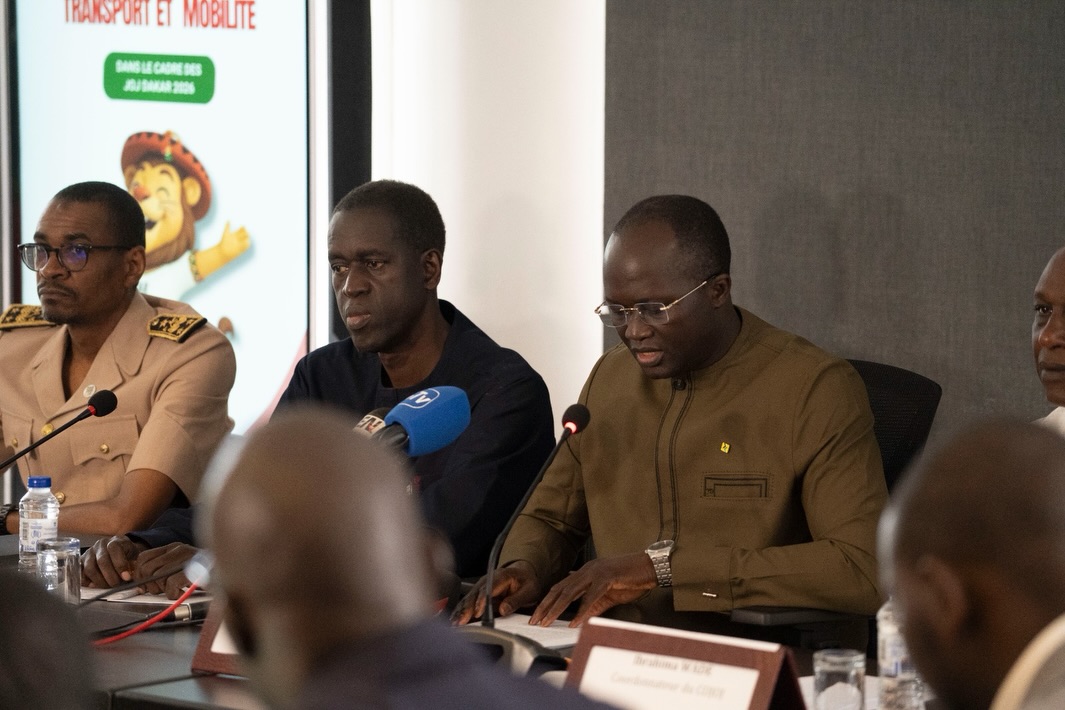
The Minister of Land and Air Transport, Yankhoba Diémé, recently led the inaugural session of the Steering Committee (COPIL) dedicated to Transport and Mobility. This meeting signals the official launch of the operational strategy for the upcoming Dakar 2026 Youth Olympic Games.
As the first nation on the African continent to host an Olympic event of this magnitude, Sénégal is preparing to welcome approximately 2,700 athletes representing 206 National Olympic Committees. The event will also draw thousands of international officials, volunteers, and sports enthusiasts.
A three-hub logistical framework
To manage the complex logistics of the Dakar 2026 games, authorities have designed a structured organization centered on three primary hubs: Dakar, Diamniadio, and Saly/Mbour. The management framework includes:
- The Steering Committee (COPIL), under the leadership of Minister Yankhoba Diémé.
- The “Mobility JOJ 2026” Technical Committee, coordinated by CETUD.
- The AIBD Operations Committee, tasked with managing arrival and departure flows at the Blaise Diagne International Airport.
During the session, the Minister emphasized that efficient mobility is the cornerstone of the event’s success, particularly regarding logistics and security. Rail infrastructure will play a pivotal role, providing rapid connections between Dakar, Diamniadio, AIBD, and Thiès.
Testing and long-term legacy
The government is now moving into the execution phase, which will include full-scale simulations to evaluate the effectiveness of the transport and security systems. These trials aim to ensure that Dakar 2026 serves as a global showcase for Sénégal‘s expertise while establishing a lasting improvement in the country’s transport governance.