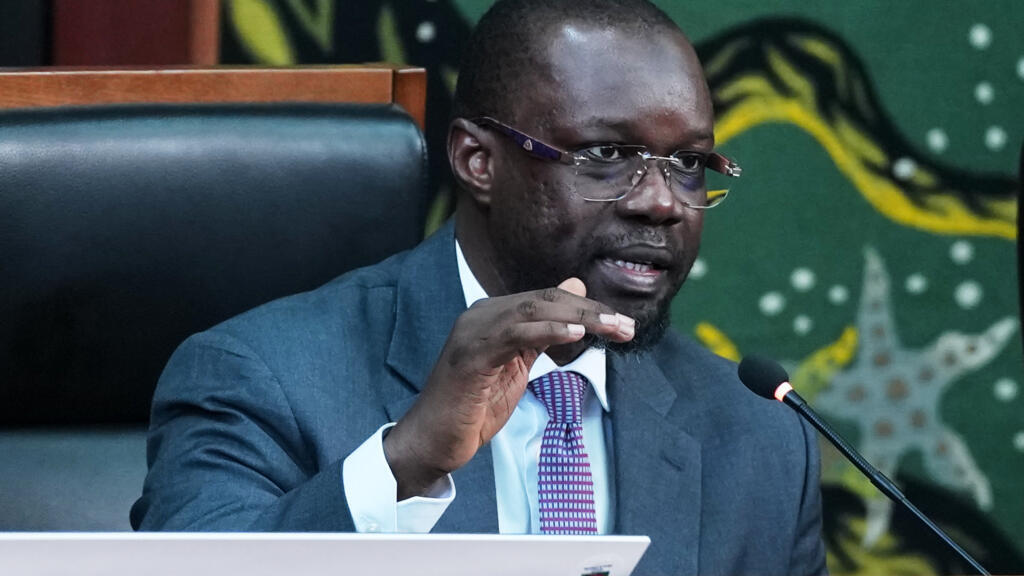
Senegal’s political landscape has shifted significantly after President Bassirou Diomaye Faye appointed a new cabinet that notably excludes members of the Pastef party, led by former Prime Minister Ousmane Sonko. The decision follows weeks of escalating tensions between the two leaders, culminating in Sonko’s removal from his ministerial post and his subsequent election as Speaker of the National Assembly.
In a statement released shortly after the government reshuffle was announced, Sonko’s party confirmed it would not participate in the new administration. The communiqué highlighted “fundamental disagreements” between Sonko and President Faye regarding the allocation of key ministerial positions and the role of the ruling party in the executive structure.
The announcement comes just 12 days after Sonko was dismissed from his role as Prime Minister, a position he held alongside his party leadership. The split has raised concerns about political stability in a country already grappling with severe economic challenges, including a debt crisis that has drawn international scrutiny.
Government reshuffle excludes key pastef figures
The new cabinet, announced on June 1, comprises 30 ministers, with several high-profile Pastef members notably absent. Among them are figures who played central roles in the previous administration. The leadership vacuum follows months of mounting friction between Sonko and President Faye, whose alliance was once a cornerstone of Senegal’s political strategy.
The exclusion of Pastef from the government underscores a broader rift in the ruling coalition, leaving analysts questioning the future cohesion of the political bloc that secured Faye’s election. The decision reflects deeper strategic differences, particularly over governance priorities and the distribution of power within the executive branch.
economic pressures compound political uncertainty
The political rupture coincides with Senegal’s struggle to address a mounting debt crisis. In 2024, revelations of underreported government debt—amounting to 132% of GDP by year-end—prompted the International Monetary Fund to suspend a $1.8 billion loan program. The suspension has intensified pressure on the government to secure alternative financing while negotiating a revised agreement with the IMF.
Finance Minister Ahmadou Al Aminou Mohamed Lô has indicated that discussions to resume the program will resume next week, with a goal of finalizing key terms by June 30. The outcome of these talks could determine whether Senegal regains access to critical financial support amid rising fiscal constraints.
The political fallout adds another layer of complexity to Senegal’s economic recovery efforts. The debt crisis has already led to reduced public spending and delayed critical infrastructure projects, while inflation and currency pressures continue to strain household incomes. The IMF’s suspension of financial support has further limited the government’s ability to implement social programs aimed at alleviating poverty.
Analysts warn that the absence of Pastef from the government could weaken President Faye’s ability to push through unpopular but necessary economic reforms. The party’s exclusion may also embolden opposition factions, complicating legislative efforts to pass budgetary measures and structural adjustments.
As Senegal navigates this dual crisis—political fragmentation and economic instability—the coming weeks will be pivotal. The government’s ability to reconcile internal divisions and secure external financing will determine whether the country can avoid deeper financial distress and restore investor confidence.