Senegal’s political turmoil: why president and PM parted ways
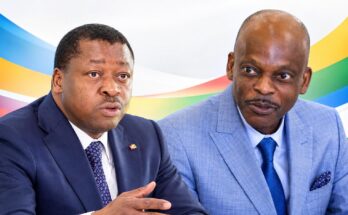
The alliance between Bassirou Diomaye Faye, Senegal’s President, and Ousmane Sonko, his Prime Minister, has come to an abrupt end after nearly two years of escalating disagreements at the highest level of government.
This unexpected split has thrust Senegal into the spotlight, a nation long regarded as a cornerstone of stability in West Africa. The move has left many questioning the future direction of the country’s leadership.
Here’s a closer look at the four key factors behind this political rift.
Diverging visions for Senegal’s economic future
The first major point of contention stemmed from contrasting economic strategies. President Faye had emphasized fiscal caution and gradual reforms, while Prime Minister Sonko championed bolder, more aggressive economic policies aimed at rapid growth and job creation.
These opposing approaches created a growing divide, with Sonko openly advocating for policies that Faye viewed as too risky for a developing economy like Senegal’s.
The clash intensified as Sonko pushed for accelerated infrastructure projects and public spending, while Faye insisted on maintaining fiscal discipline to avoid debt traps.
Clashing priorities in governance and reform
Beyond economics, the two leaders held fundamentally different views on governance. Faye prioritized institutional stability and long-term planning, while Sonko focused on immediate, high-impact changes to address youth unemployment and social inequality.
Sonko’s advocacy for sweeping reforms in education, healthcare, and public administration clashed with Faye’s preference for measured, sustainable adjustments.
This ideological gap widened as Sonko’s public statements increasingly challenged the President’s authority, raising concerns about a potential power struggle.
Leadership style and power dynamicsThe breakdown also reflected deep-seated differences in leadership style. Faye’s approach was collaborative, favoring consensus-building within the government and with international partners. In contrast, Sonko’s leadership was more assertive, often bypassing traditional channels to push his agenda forward.
Sonko’s tendency to act independently—even publicly—undermined the cohesion of the executive branch, leaving Faye with little choice but to reassess the partnership.
As tensions rose, Sonko’s outspokenness began to overshadow the President’s agenda, creating a leadership imbalance that proved unsustainable.
Public perception and political fallout
The final fracture was driven by shifting public sentiment. Sonko, once a popular figure among young voters, saw his approval ratings dip due to his confrontational approach and perceived lack of diplomatic finesse.
Faye, meanwhile, maintained a more reserved public image, which resonated with voters seeking stability after years of political volatility.
As Sonko’s influence waned and his political capital diminished, Faye moved decisively to realign the government’s priorities, culminating in Sonko’s removal from office.
The separation marks a turning point for Senegal, raising questions about the country’s political stability and the future of its democratic institutions.