Senegal Space Week 2026: Dakar pushes for tech sovereignty breakthrough
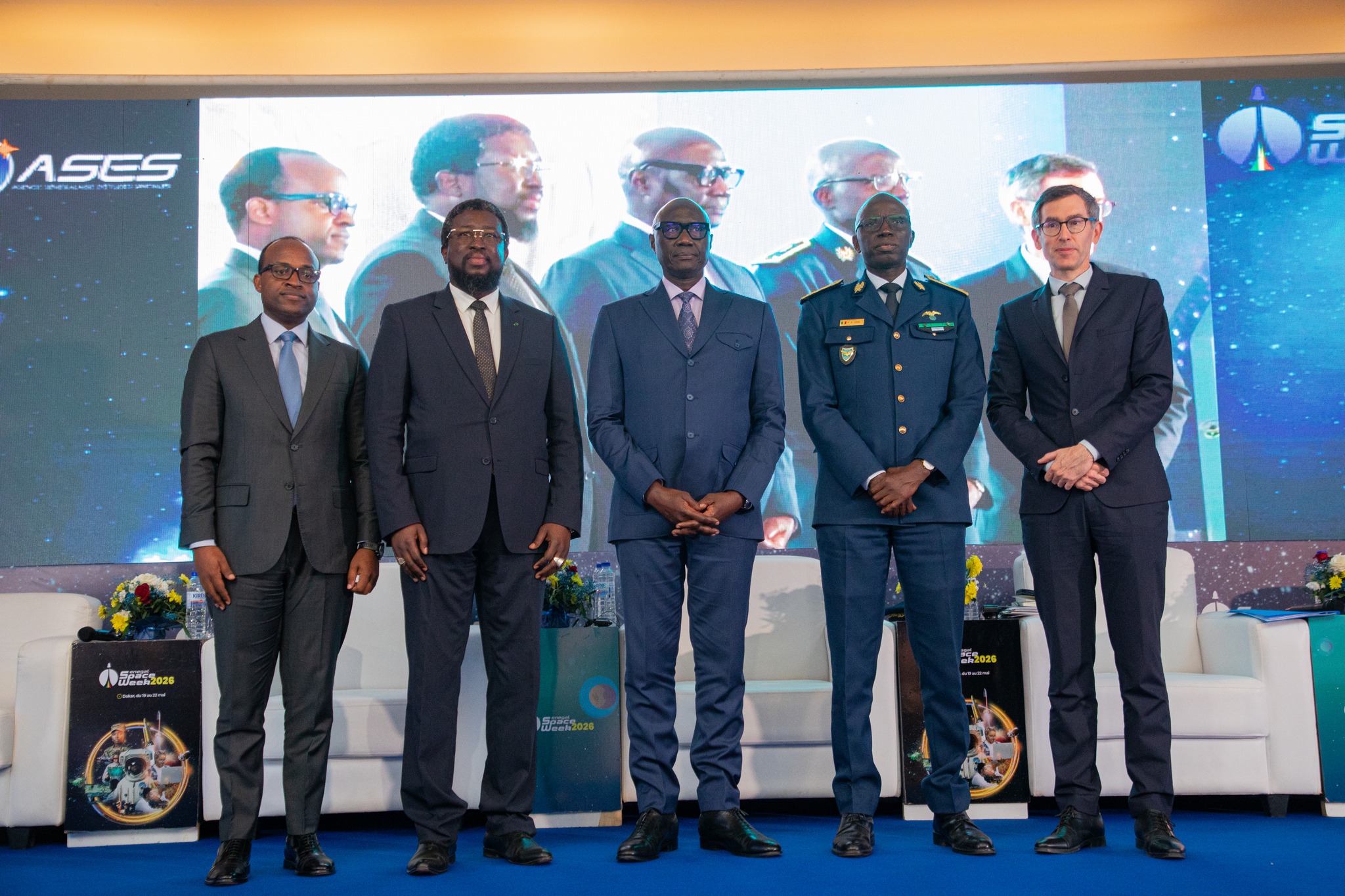
The second edition of Senegal Space Week has concluded in Dakar, marking a pivotal moment in the nation’s quest to establish itself as a leading African hub for space technology, data science, and artificial intelligence. This high-profile event, inaugurated under the High Patronage of President Bassirou Diomaye Faye, underscores Senegal’s strategic pivot toward technological self-reliance in an era where space capabilities and digital intelligence are reshaping global power dynamics.
With the theme “Space for Security and Defense: Applications and Geointelligence for National Territory Safeguarding,” the conference focused on leveraging space-based technologies to enhance border surveillance, maritime security, cyber resilience, and disaster prevention. The gathering brought together policymakers, military leaders, and tech innovators to outline a roadmap for integrating these tools into Senegal’s governance and defense frameworks.
Space technology as a cornerstone of national sovereignty
In a keynote address, Minister of Armed Forces Biram Diop emphasized that the global race for technological dominance now transcends traditional military domains, with space and data systems emerging as critical instruments of state sovereignty. “The mastery of space capabilities is no longer optional—it is an absolute necessity,” he declared, highlighting their role in strategic intelligence, counterterrorism, and territorial integrity.
“The mastery of space capabilities is no longer optional—it is an absolute necessity.”
Geointelligence: the strategic backbone of Senegal’s technological vision
Maram Kaïré, Director General of the Senegalese Space Studies Agency (ASES), outlined a structured approach to integrating satellites, AI, and geographic information systems (GIS) into national policy-making. This fusion of technologies, he argued, would empower Senegal to enhance predictive analytics, public decision-making, and real-time monitoring of critical infrastructure.
The ASES chief also spotlighted ongoing collaborations with defense and security forces to develop geointelligence capabilities—positioned as a game-changer for national security and territorial management.
Laying the groundwork: infrastructure and innovation
Beyond policy discussions, Senegal is advancing tangible infrastructure to support its space ambitions. Key initiatives include:
- The construction of Senegal’s first astronomy and astrophysics observatory in Khombole, inaugurated late last year.
- Development of satellite data reception and processing stations.
- Launch of high-performance computing platforms and innovation incubators.
- Future plans for microsatellite assembly and testing facilities.
These projects are designed to nurture a homegrown scientific and technological ecosystem, reducing reliance on foreign expertise and fostering indigenous innovation.
Diplomatic leverage: positioning Senegal on the global stage
Senegal is also pursuing an active space diplomacy strategy, forging partnerships with international agencies, academic institutions, and global governance bodies. The goal? To position Senegal as a credible and influential voice in international space policy debates, while attracting foreign investment and knowledge transfer.
According to Kaïré, “A robust space sector cannot thrive without strategic alliances. These partnerships are essential for building capacity and ensuring our voice is heard in shaping the future of space governance.”
Investing in human capital: the engine of technological progress
No space program can succeed without skilled human resources. Senegal is prioritizing education and youth engagement, with initiatives such as:
- Expansion of engineering and science programs in universities.
- STEM education outreach in schools.
- Support for young innovators and entrepreneurs in tech fields.
- Specialized training in AI, satellite operations, and cybersecurity.
As Kaïré put it, “No technological ambition is sustainable without investing in people. The future of Senegal’s space program lies in the hands of our youth.”