Strategic precautions as Mali’s instability spreads
With more than 400 kilometers of shared border and deep commercial ties, Senegal remains acutely aware of the escalating challenges emanating from neighboring Mali and the broader Sahel region. In response, Dakar is quietly intensifying its border security measures to address growing terrorist threats that have begun to encroach on West African stability.
Transportation sectors remain particularly vulnerable, with reports emerging of Senegalese truckers stranded in Mali and convoys targeted by arson attacks since the April 25 incident. While officials from the Ministry of Foreign Affairs acknowledge «close monitoring of the situation with transporters in Mali», they maintain a cautious public posture, stating «no repatriation requests have been received at this time, but vigilance remains our priority».
Military reinforcements along critical zones
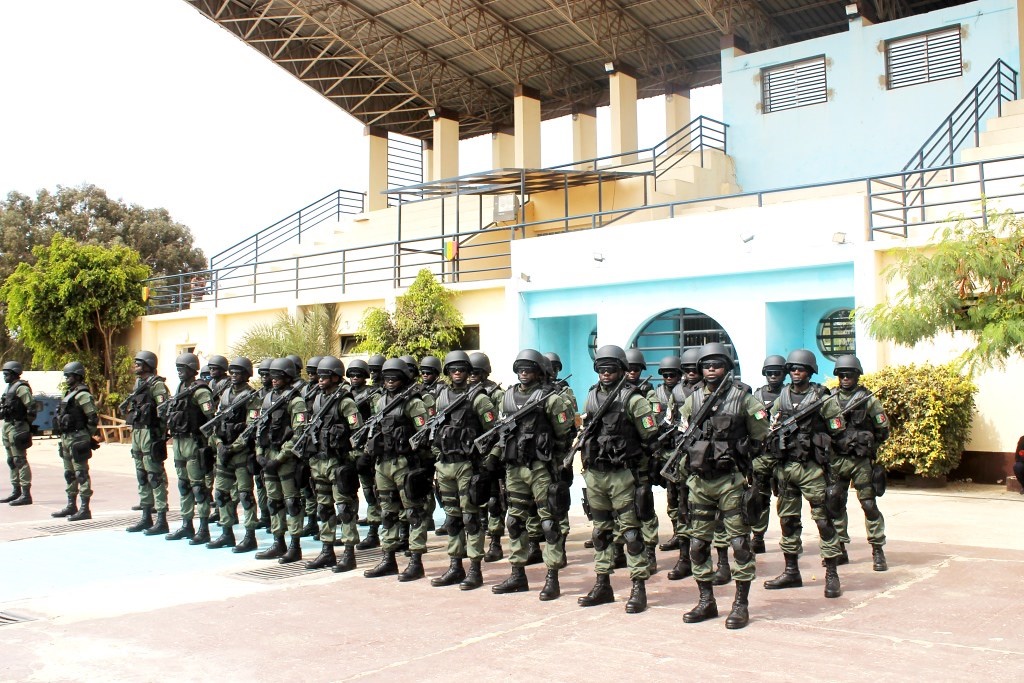
The government has allocated significant resources to bolster security infrastructure, particularly in southern regions like Tambacounda and Kédougou. Recent initiatives include three new operational bases established in early April 2026 for the Groupe d’Action et d’Intervention Rapide (GAR-SI 2 Saraya), a rapid intervention unit funded by the European Union. These bases are strategically positioned to enhance response capabilities in high-risk border areas.
A senior military officer explained the strategic rationale: «420 kilometers of border cannot be continuously manned, but critical crossing points demand heightened surveillance. These new bases allow us to react swiftly to emerging threats while maintaining proximity to local communities». The GAR-SI units, equipped with mine-resistant vehicles and specialized training, operate in tandem with the Cadre d’Intervention et de Coordination Opérationnel (CICO)—a multi-agency task force designed to coordinate counter-terrorism responses ranging from medical evacuations to criminal investigations.
Beyond military solutions: cultural and social resilience
Security experts emphasize that Senegal’s relative stability stems not only from military investment but also from strong social cohesion. Professor Bakary Sambe of the Timbuktu Institute highlights the country’s harmonious ethnic and religious communities—particularly in border regions like Kédougou—as a natural barrier against extremist recruitment tactics. «The interwoven fabric of Bassari, Bédik, and Fulani communities, reinforced by cross-cultural marriages and mutual respect, creates an effective cultural shield against divisionist strategies», he notes.
Religious leaders, including Sufi scholars, play a pivotal role in this framework. Despite limited influence in eastern border areas, their collaboration with state authorities and community leaders has helped prevent widespread radicalization. «Their preventive work complements our security measures, forming a multi-layered defense against extremist ideologies», observes a government security advisor.
National leadership on regional collaboration
President Bassirou Diomaye Faye has framed terrorism as a continental threat requiring unified action. In a recent address, he underscored the shared destiny between Senegal and Mali: «Our nations share history, values, and identity—what affects one inevitably touches the other». He reiterated Senegal’s commitment to the ECOWAS standby force while advocating for strengthened intelligence-sharing mechanisms among African states. «No country is immune—neither Nigeria nor even the United States has been spared. Collective vigilance is our only path forward», he asserted.
The President also referenced ongoing bilateral patrols with Mali, though specific operational details remain undisclosed. «Solidarity must be matched with strategic dialogue. We stand ready to support Mali’s peacebuilding efforts through all available channels», he concluded, emphasizing that «not everything can—or should—be made public».
Investment in defense capabilities
Between 2020 and 2025, Senegal ranked second in sub-Saharan Africa for arms imports (8.8% of regional purchases), according to Stockholm International Peace Research Institute data. Notable acquisitions include South African-made Puma M36 armored personnel carriers, designed to withstand IEDs and mine attacks—lessons drawn directly from Sahel conflict dynamics. Additional defense contracts with Turkey in 2025 further demonstrate the country’s proactive approach to regional security challenges.
The coordinated expansion of military, intelligence, and community-based initiatives reflects Senegal’s comprehensive strategy to safeguard its borders while maintaining regional stability in an increasingly volatile Sahel.