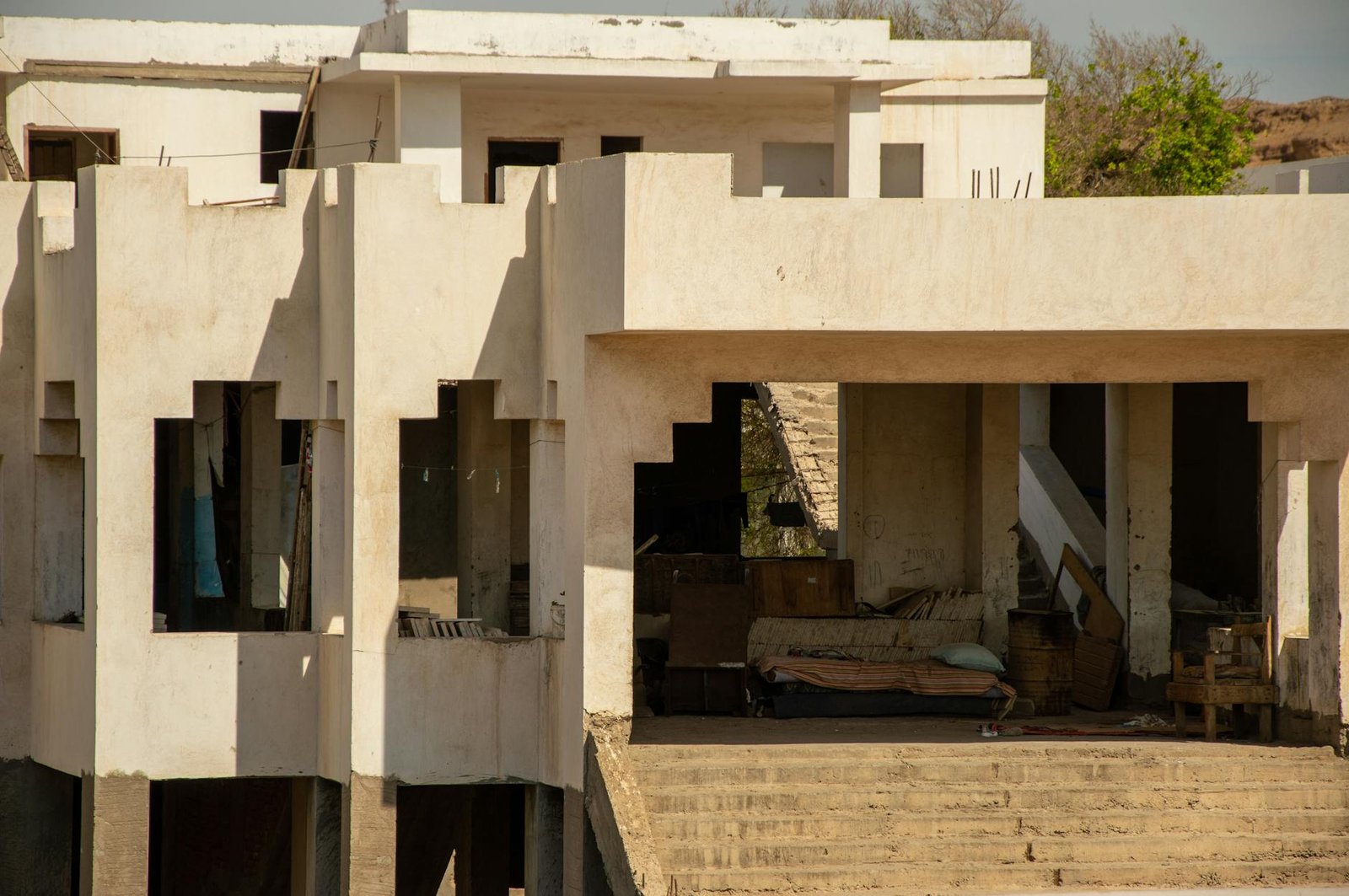
The Senegalese government is undertaking a sweeping review of its public infrastructure portfolio, targeting 25 completed yet unused facilities that have failed to deliver expected services. Official assessments indicate these dormant assets represent a combined value of 279 billion West African CFA francs—an immobilized budget that yields no economic or social returns. The findings expose a persistent flaw in public procurement: the disconnect between project completion and actual operational integration.
Targeted audit pinpoints idle government properties
This initiative reflects a systematic evaluation of state-owned assets, with auditors categorizing structures that remain physically finished but functionally inactive. The roster includes administrative buildings, sector-specific facilities, and economic infrastructure. Each unused asset represents a direct loss, as maintenance costs—along with potential deterioration from neglect—continue to accrue without generating any utility. The Dakar administration aims to reactivate these sites through redeployment, inter-agency sharing, or private-sector partnerships. A granular analysis is underway to determine why each asset remains idle, with recurring causes including missing operational budgets, unassigned functional roles, and incomplete logistics chains required for activation.
Strategic move amid fiscal constraints
This audit aligns with the 2024 government’s commitment to financial transparency and expenditure control. By unlocking 279 billion CFA francs already spent, Senegal can reduce pressure on its debt service and curb reliance on external financing—without imposing new taxes or taking on additional debt. The initiative complements ongoing scrutiny of public contracts and parastatal accounts, reinforcing a core principle: maximize existing resources before seeking new funding. This approach echoes repeated critiques from the national audit authority, which has long flagged post-delivery management gaps in Senegal’s public procurement system.
Reforming project governance and accountability
The audit underscores deeper issues in infrastructure governance. Delivering a facility marks only the beginning of its lifecycle; effective economic utility comes later. Yet the project pipeline—from feasibility studies to commissioning—often remains fragmented across ministries and agencies, creating blind spots. International lenders have repeatedly called for clearer accountability chains throughout the process. For the 25 affected sites, multiple remediation paths are under consideration: reassigning some to ministries currently renting private office space, leasing others to private operators under performance contracts, or addressing missing components (equipment, staffing, utilities) to activate original service plans. Final decisions will hinge on individual evaluations and budgetary trade-offs.
This effort to revitalize idle public assets serves as a credibility test for Senegal’s administration. Success will depend on transparent progress reporting and verifiable performance metrics. If executed effectively, the model could offer valuable lessons for neighboring economies grappling with the same challenge of so-called “ghost infrastructure” draining public investment returns.