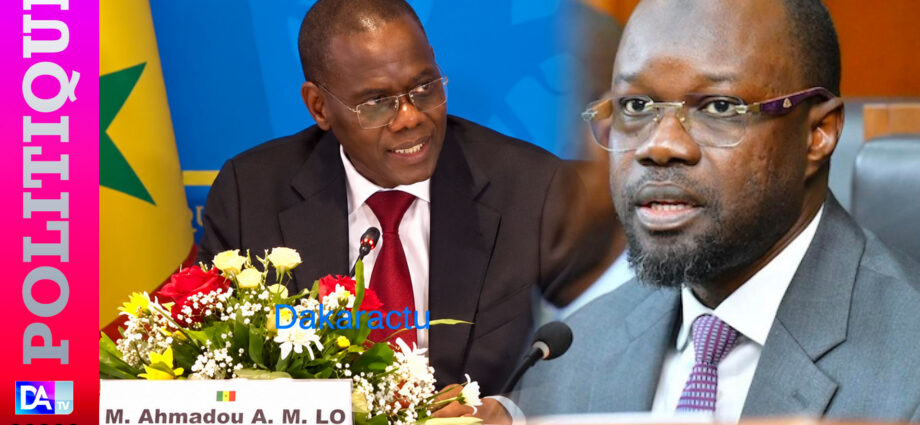
The Prime Minister of Senegal has framed the revised finance law (LFR) for 2026 as a critical turning point in the country’s economic trajectory, linking it directly to the initial 2026 finance law introduced by former Prime Minister Ousmane Sonko. This decisive shift, he argues, is not a departure but a necessary correction to address the pressing economic challenges that have emerged since the original budget was passed.
In a forceful press conference, the Prime Minister, Al Aminou Lo, emphasized that the LFR represents continuity rather than contradiction. It builds on the foundational work of the initial 2026 finance law, which was overwhelmingly approved by Senegal’s National Assembly. However, the current government now faces criticism from some quarters, including prominent figures like the President of the National Assembly, who previously supported the initial budget but now opposes the revisions.
Why the revised finance law matters now
The revision isn’t arbitrary—it’s a response to rapidly changing economic realities that have destabilized the original projections. Among the key challenges are:
- Plunging revenue streams: Economic slowdowns and reduced trade activity have shrunk government income, creating a widening gap in anticipated funds.
- Soaring operational costs: The surge in global energy prices has driven up government spending, particularly in fuel subsidies and public sector operations.
- Unmet expectations: Certain sectors and projects funded in the initial budget are now under strain due to delayed disbursements and external pressures.
For the Prime Minister, these are not flaws in the government’s execution but inevitable consequences of an unpredictable economic climate. He urges lawmakers to acknowledge these realities and focus on constructive solutions rather than recriminations—pointing out that the shared responsibility for the 2026 budget means all stakeholders must engage in honest dialogue.
The shifting political landscape
The Prime Minister’s defense of the LFR comes at a time of heightened political tension. Once a unified front behind the initial finance law, the National Assembly is now deeply divided over the revisions. Critics argue that the changes reflect mismanagement or a lack of foresight, while supporters view them as pragmatic adjustments essential for stability.
Al Aminou Lo addressed these divisions head-on, questioning why elements of the original budget—now deemed unfeasible—were not challenged sooner. He invited opponents to present concrete objections, framing the debate as an opportunity to strengthen the nation’s financial strategy rather than a battle over political pride. His message was clear: the time for decisive action is now, and hesitation could have far graver consequences.
A moment of truth for Senegal’s economic future
The revised finance law is more than a technical adjustment—it is a pivotal moment with far-reaching implications for Senegal’s economic stability and growth. With global markets volatile and domestic pressures mounting, the government’s ability to adapt will determine whether the country can secure its financial footing or risk further instability.
For the Prime Minister, the path forward is non-negotiable. The LFR is not a retreat but a reaffirmation of Senegal’s commitment to responsible governance. As he made clear in his address, the time for deliberation is ending—and the time for action has arrived.
What’s next? Key milestones to watch
The National Assembly is expected to vote on the LFR in the coming weeks, a decision that will shape the country’s economic agenda for the rest of the year. Stakeholders across sectors—from business leaders to civil society—are closely monitoring the process, aware that the outcome will have lasting effects on everything from public services to investor confidence.
One thing is certain: the revised finance law is not just about numbers on a balance sheet. It’s about Senegal’s ability to navigate uncertainty, uphold its commitments, and emerge stronger from the challenges ahead.
Comments are closed, but trackbacks and pingbacks are open.