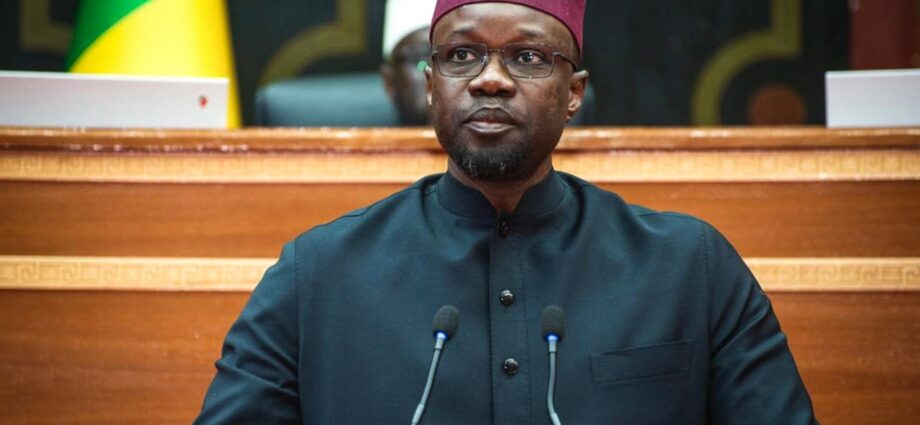
The Senegalese Constitutional Council has repeatedly blocked key political initiatives by the Pastef movement, raising concerns over governance stability and legal transparency in the West African nation.

Consecutive legal challenges test Pastef’s political legitimacy
The opposition party Pastef has faced a series of legal obstacles from Senegal’s Constitutional Council, casting doubt on its ability to operate within the country’s political framework. This recurring pattern has intensified debates about institutional bias and the council’s role in shaping Senegal’s democratic trajectory.
Key rulings that reshaped political dynamics
- Disqualification of Ousmane Sonko: The council’s decision to bar Sonko from running for office in 2023 disrupted the opposition’s leadership structure, forcing the movement to adapt its strategy.
- Recognition of Bassirou Diomaye Faye: While the council validated Faye’s candidacy in later proceedings, the prolonged legal battles delayed critical decision-making and public trust in the electoral process.
- Parliamentary maneuvering: Pastef’s attempts to secure key parliamentary positions were repeatedly thwarted, limiting its influence in legislative debates.
Critics argue that these repeated interventions reflect deeper political tensions, with some alleging that the council’s actions serve to marginalize opposition voices rather than uphold constitutional neutrality.
Legal battles raise questions about Senegal’s judicial independence
The Constitutional Council’s decisions have sparked widespread discussions about its transparency and impartiality. Legal experts point to inconsistencies in rulings, highlighting cases where similar arguments produced divergent outcomes.
Analyzing the council’s pattern of decisions
Investigations reveal that the council’s interventions align closely with government positions, particularly in high-stakes political scenarios. This alignment has fueled perceptions of a judiciary influenced by external pressures, undermining public confidence in Senegal’s legal institutions.
Political observers note that the council’s repeated interventions against Pastef contrast sharply with its approach to other political entities, further fueling suspicions of selective enforcement.
Public reaction and political fallout
Senegalese citizens have reacted with a mix of frustration and defiance. Protests have erupted in response to what many view as an erosion of democratic norms, with calls for institutional reform growing louder.
Grassroots movements reject institutional overreach
Protesters argue that the council’s actions violate the spirit of Senegal’s constitution, which guarantees equal political participation. Supporters of Pastef have organized mass demonstrations, demanding accountability and a restoration of fair electoral processes.
The movement’s leadership has accused the council of acting as a political tool rather than an impartial arbiter, a claim that resonates with a significant portion of the electorate.
What’s next for Pastef and Senegal’s political landscape?
With legal challenges mounting, Pastef faces a critical moment in its evolution. The movement’s ability to navigate these obstacles could redefine Senegal’s opposition politics and influence future electoral strategies.
Possible paths forward
- Legal recourse: Pastef may pursue appeals at higher judicial levels, seeking to challenge the council’s rulings on constitutional grounds.
- Strategic alliances: Building coalitions with other opposition groups could strengthen Pastef’s position in future elections.
- Institutional reform: Advocacy for judicial reforms may gain traction as pressure mounts for greater transparency and accountability.
As Senegal grapples with these challenges, the balance between legal intervention and democratic principles remains at the heart of national debates. The outcome could shape the country’s political future for years to come.
Comments are closed, but trackbacks and pingbacks are open.