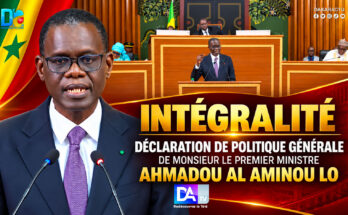
The escalating public debt in Senegal has, within a single year, emerged as the primary point of contention between the administration led by Ousmane Sonko and the Bretton Woods institutions. On Monday, May 11, economic experts from across Africa and Asia convened in Dakar to begin formulating potential strategies to navigate this financial crisis. This initial gathering sets the stage for a larger conference, scheduled for Tuesday, which the head of government is expected to attend. The stated objective is clear: to champion heterodox economic expertise as a counterpoint to the orthodox prescriptions advocated by the International Monetary Fund (FMI) and the World Bank.
Public debt at the heart of the FMI standoff
Following an upward revision of the debt inherited from the previous government, the sustainability of Senegal’s public finances has fueled intense debate. The official figures were adjusted, leading to the suspension of several disbursements from the program agreed with the FMI. Dakar finds itself in a precarious position, needing to honor its external financial commitments while simultaneously funding the ambitious social pledges made by Pastef, the ruling party.
The forum convened this week signifies a deliberate political stance. Rather than acceding to the budgetary adjustments typically demanded by creditors, the executive branch is actively seeking to construct a technical and academic case for alternative approaches. Discussions are expected to cover options such as orderly debt restructuring, extending repayment maturities, and significantly boosting domestic resource mobilization. The participation of Asian economists, hailing from nations that have successfully navigated their own balance of payments shocks, aims to enrich a discourse still largely shaped by Western economic paradigms.
A clear political signal to financial partners
The timing of this event is far from coincidental. By bringing together critics of austerity just weeks after discussions with the FMI were effectively paused, Ousmane Sonko is sending a clear message to financial partners. The Prime Minister, a central figure in the political shift of 2024, has made economic sovereignty a defining characteristic of his tenure. His direct involvement in the upcoming conference elevates its significance beyond a mere academic seminar.
For the organizers, the goal is to demonstrate that there is genuine room for maneuver outside conventional financial programs. This position aligns with a broader trend observed across the African continent, where several governments are increasingly questioning the conditionalities attached to multilateral financing. From Ghana to Zambia, and including Ethiopia, recent experiences with debt restructuring have generated valuable insights that Dakar intends to leverage. However, unlike these neighbors, Senegal is not formally in default and therefore retains some, albeit constrained, access to regional markets.
Credible alternatives to austerity measures
Fundamentally, the alternatives put forth by the economists involved focus on several key areas. The first involves fiscal policy: broadening the tax base, combating illicit financial flows, and renegotiating certain extractive contracts, particularly in the hydrocarbon sector, which commenced production in 2024. The second addresses the architecture of the debt itself, with proposals to favor instruments denominated in local currency or indexed to future revenues. The third emphasizes regional coordination, specifically within the framework of the West African Economic and Monetary Union (UEMOA).
These proposals are not without their complexities. A firm stance against the FMI could potentially increase the risk premium demanded by investors, even as the Senegalese Treasury remains dependent on regular issuances in the public securities market. Furthermore, any renegotiation would necessarily involve dialogue with eurobond holders, whose interests often diverge from those of bilateral creditors. Practically, the government’s political latitude will depend on its ability to effectively articulate a sovereign discourse while simultaneously projecting financial credibility.
Beyond the immediate announcements, the sequence of events unfolding this week in Dakar will be closely monitored by capitals across the sub-region and by credit rating agencies. It could potentially herald a new cycle of negotiations with creditors, or conversely, prolong a standoff whose budgetary cost continues to mount each quarter.