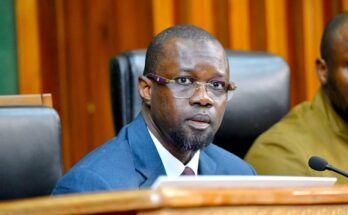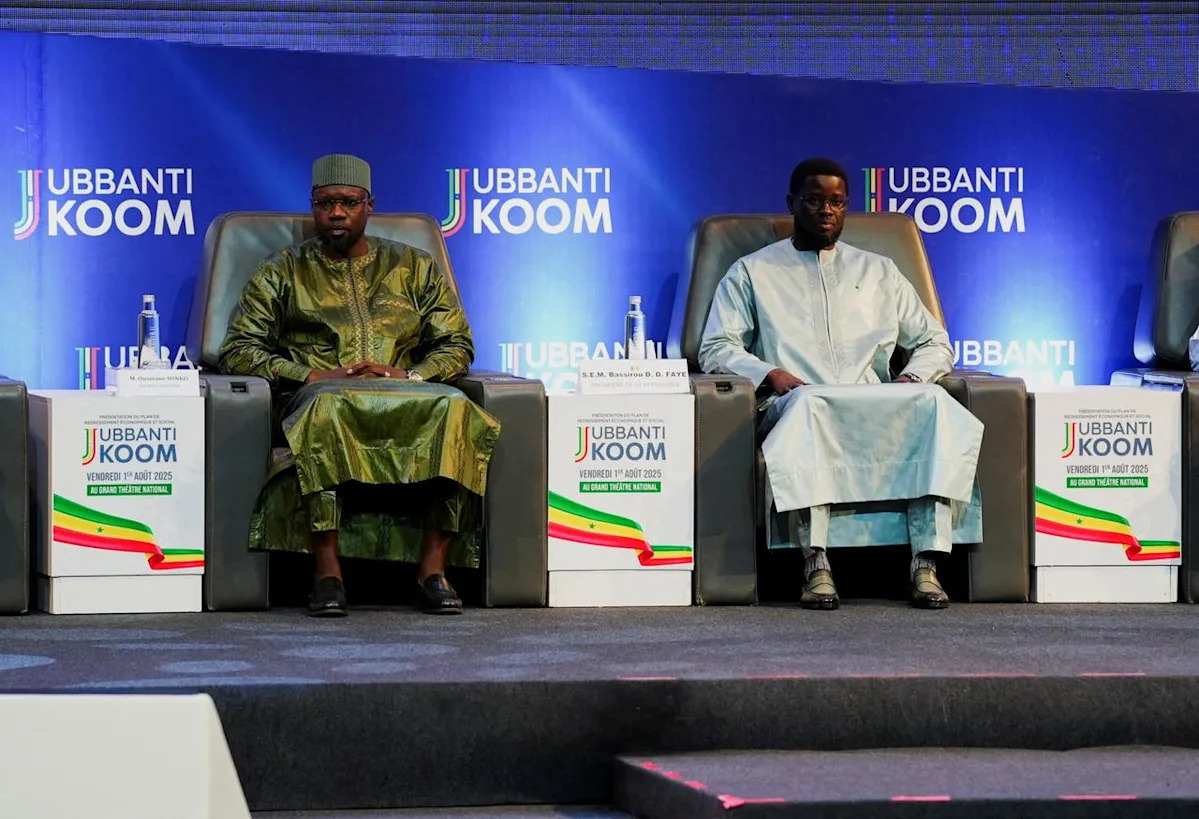
The dismissal of Ousmane Sonko as Prime Minister by President Bassirou Diomaye Faye on May 23, 2026, marks the collapse of a political partnership built on irreconcilable economic visions. Two years after the 2024 presidential transition that brought Faye to power, the alliance between the two leaders has unraveled over fundamental questions shaping Senegal’s economic future: debt management, hydrocarbon development, and the role of foreign capital in national policy.
Debt: the fault line dividing leaders
In September 2024, Ousmane Sonko exposed a hidden debt burden inherited from the previous administration. By March 2025, International Monetary Fund assessments identified over €7 billion in undisclosed liabilities, pushing the country’s debt-to-GDP ratio beyond 100%. Annual debt servicing costs exceed 5.5 trillion West African CFA francs (€8.4 billion), while refinancing needs approach 6 trillion CFA francs (€9.1 billion). The sovereign credit rating has been downgraded three times in twelve months, underscoring a deepening fiscal crisis.
These figures set the stage for two diametrically opposed approaches. Sonko’s strategy centered on public denunciation, framing debt transparency as a moral imperative. He rallied grassroots supporters and the diaspora, positioning himself as a champion of accountability rather than a negotiator willing to compromise with international creditors. Faye, in contrast, pursued engagement with the IMF. His administration hosted an IMF delegation in November 2025 and launched a national dialogue in May 2026 to address the crisis.
Hydrocarbons and foreign influence
The dispute extends beyond fiscal policy to the very foundations of Senegal’s economic model. The country’s emerging oil and gas sector represents a high-stakes battleground. Sonko advocated for stricter national control over hydrocarbon resources, emphasizing energy sovereignty and local ownership. Faye, meanwhile, favored international partnerships to accelerate development, prioritizing foreign investment and technical collaboration.
These differences reflect broader ideological divides. Sonko’s vision aligns with a protectionist, state-led development model, while Faye’s approach leans toward pragmatic engagement with global financial institutions and multinational corporations. The clash has exposed how economic policy in Senegal is increasingly shaped by global pressures, domestic expectations, and the legacy of past governance.
The political cost of economic divergence
The policy rift has created an untenable situation. Economically, Senegal’s creditworthiness and access to international markets have been compromised. Politically, Sonko’s confrontational stance remains a powerful mobilizing force within the Pastef, the ruling party he founded in 2014. Faye’s conciliatory approach, though necessary for fiscal survival, risks alienating a base that demands systemic change.
The prime minister’s dismissal was not merely a reshuffle—it was the inevitable outcome of two incompatible economic narratives clashing under the same banner. As the country faces a potential sovereign default by 2028, the stakes could not be higher.