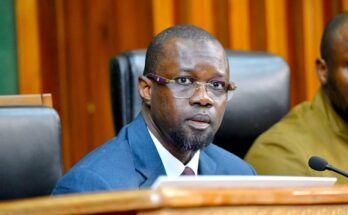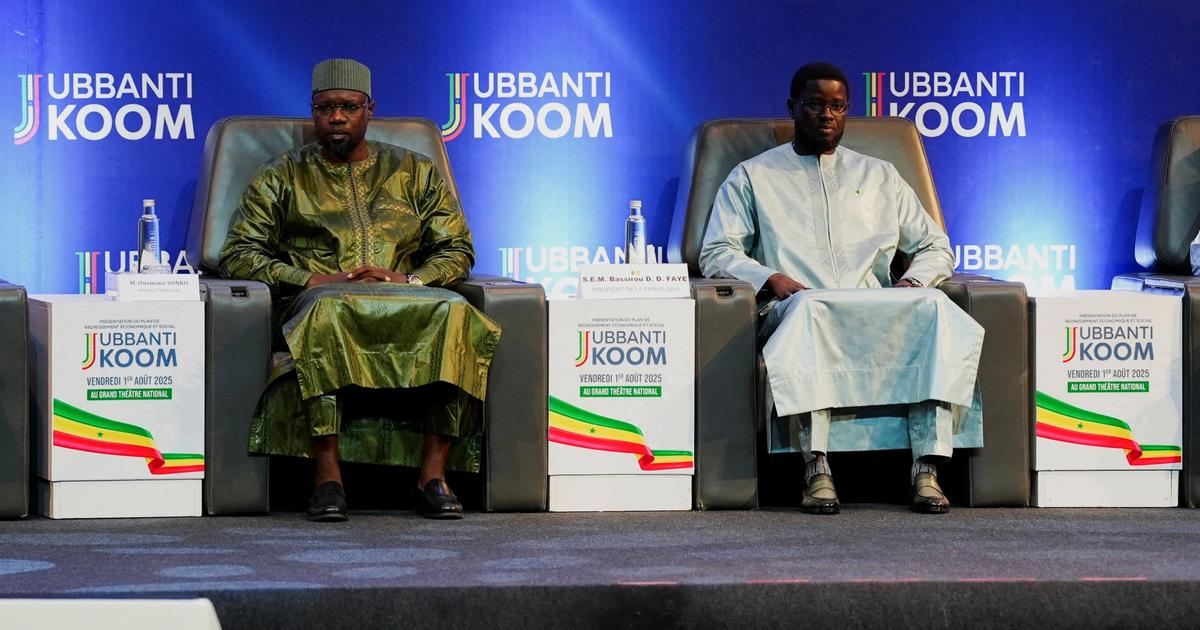
The dismissal of Ousmane Sonko by Bassirou Diomaye Faye on May 23, 2026, was not merely a clash of egos but the inevitable collision of two incompatible economic visions that had long coexisted under the same political banner. Two years after the April 2024 political transition, which brought Faye to power and appointed Sonko as Prime Minister, the presidential duo fractured over three pivotal economic issues shaping Senegal’s future: national debt, hydrocarbon contracts, and the very nature of the capital financing the country’s policies.
National debt: the first fault line
The most glaring divide centered on the debt crisis. In September 2024, Ousmane Sonko publicly exposed billions of euros in undisclosed debt accumulated under Macky Sall’s administration. By March 2025, an IMF assessment estimated unreported commitments at around €7 billion, pushing the country’s debt-to-GDP ratio beyond 100%. Annual debt servicing consumes 5,500 billion FCFA (€8.4 billion), with refinancing needs approaching 6,000 billion FCFA (€9.1 billion) per year. The sovereign credit rating had been downgraded three times within twelve months.
Amid this backdrop, two diametrically opposed strategies emerged. Sonko rejected restructuring outright, framing his stance as a moral crusade against the previous regime. His rhetoric resonated with public opinion, the diaspora, and his core supporters, positioning him as a champion of accountability rather than negotiation. Faye, however, pursued a different path, engaging extensively with the IMF, hosting a delegation in November 2025, and spearheading a national dialogue in May 2026.
The IMF program, suspended at €1.55 billion, combined with closed international financial markets and the looming threat of sovereign default by 2028, rendered Sonko’s position economically unsustainable while politically advantageous for mobilizing the Pastef’s base. His refusal to compromise on debt forgiveness or restructuring clashed with the harsh realities of fiscal sustainability.
Oil and gas contracts: clashing methodologies
The second fracture was even more pronounced: the negotiation of oil and gas contracts. The Sangomar oil field, operational since June 2024 and operated by Australia’s Woodside at an 82% stake, and the Tortue gas field (GTA), launched in early 2025 with BP as the operator along the Senegal-Mauritania border and estimated reserves of 500 billion cubic meters, became battlegrounds of competing ideologies.
While both leaders shared a stated goal of renegotiation, their methods diverged sharply. Sonko took a confrontational approach, publicly condemning BP for what he termed an “unbalanced and unjust” deal, issuing ultimatums, and leveraging populist rhetoric to rally support. Faye, however, adopted a measured stance, emphasizing that the process was proceeding “more than satisfactorily” and following a “normal course.”
The multinational operators, notably BP and Woodside, remained steadfast in their approach. Faye engaged in quiet diplomacy, while Sonko’s fiery declarations created uncertainty that deterred investment and prolonged negotiations. The divergence was not tactical but doctrinal—it pitted absolute economic sovereignty against pragmatic fiscal realism. Sonko’s strategy relied on the belief that rhetorical defiance alone could force concessions from multinational corporations and international financial institutions. Faye, on the other hand, understood that the real economic leverage for Senegal lay in the continued production and fiscal returns from GTA and Sangomar. Without these revenues, the state’s budgetary capacity would remain crippled.
Institutional stability vs. militant rupture
The third fault line was the very capital underpinning political power in Senegal. Sonko’s Pastef party built its financial foundation on micro-contributions from supporters, the diaspora, and a growing class of digital and commercial entrepreneurs. This model fostered an unshakable parliamentary loyalty—130 out of 165 deputies owed their seats to his personal leadership rather than institutional allegiance. The financing structure reflected a grassroots movement that thrived on oppositional energy and anti-establishment rhetoric.
Faye, however, cultivated a different base. His “Diomaye President” coalition, relaunched in a general assembly on March 7, 2026, drew support from technocrats, former civil servants, and business networks that prioritized institutional stability over ideological rupture. The dismissal of Sonko on May 23 marked the consolidation of this shift. When a nation’s debt exceeds 100% of GDP and refinancing needs climb to €9 billion annually, the cost of maintaining contradictory public narratives becomes unsustainable. Senegal’s euro- and dollar-denominated bonds plummeted in value as soon as tensions between the two leaders became public, underscoring the financial peril of divided executive messaging.
Two visions, one fractured reality
Is Faye’s pragmatic approach correct and Sonko’s militant stance flawed? The question itself is misleading. Sonko’s tenure as Prime Minister exposed a national debt scandal that no administration since independence had dared to confront. His revelations forced a reckoning with fiscal dishonesty, ensuring that future borrowing would be based on transparent data. This act of truth-telling was essential, even if it destabilized confidence in the short term.
Faye’s strategy, conversely, sought to restore fiscal credibility by negotiating within the global financial system, accepting the painful discipline of budgetary austerity. The first approach shattered complacency but eroded trust. The second rebuilt trust but imposed social costs. Neither vision is complete without the other, and the tragedy of Senegal lies in the failure to harmonize these two imperatives within a coherent institutional framework. The country’s political architecture, built around a centralized presidency, proved incapable of housing both radical transparency and patient fiscal recovery.
Economic realism prevails
An uncomfortable truth emerges from this episode. Multinational corporations, seemingly unfazed by Sonko’s two-year media offensive, may have been right to wait. They gambled on the long-term institutional stability of Senegal over the short-term rhetorical ruptures of its Prime Minister. And they won. The dismissal of Sonko on May 23, 2026, can be interpreted as a victory for economic realism over political posturing. It signals that hard financial realities ultimately prevail over the performative gestures of statecraft.
This is not to suggest that multinational influence dictated Faye’s decision. Rather, it reveals the limits of political sovereignty when confronted with the immutable laws of global capital. The “real state,” grounded in fiscal and economic constraints, has reasserted itself over the “fictive state” of political declarations.
As Senegal approaches 2029, both leaders face new trajectories. Sonko, now free from executive constraints, can transform the Pastef into a powerful opposition force, mobilizing the diaspora and redefining his political identity. Faye, liberated from internal dissent, can finalize debt refinancing, secure IMF agreements, and present a narrative of stability to domestic and international stakeholders. Each now plays their role openly. By 2029, Senegalese citizens will face a stark choice: between the assertion of uncompromising sovereignty and the managed sovereignty of fiscal pragmatism. Neither path is entirely honest, and neither is fully satisfactory—but the weight of economic necessity will guide the decision.