Senegal’s bold plan to triple its palm oil production capacity has ignited sharp reactions across the political and economic spectrum, with critics questioning whether the $108-million annual import habit can truly be broken through a landmark deal with Indonesia.
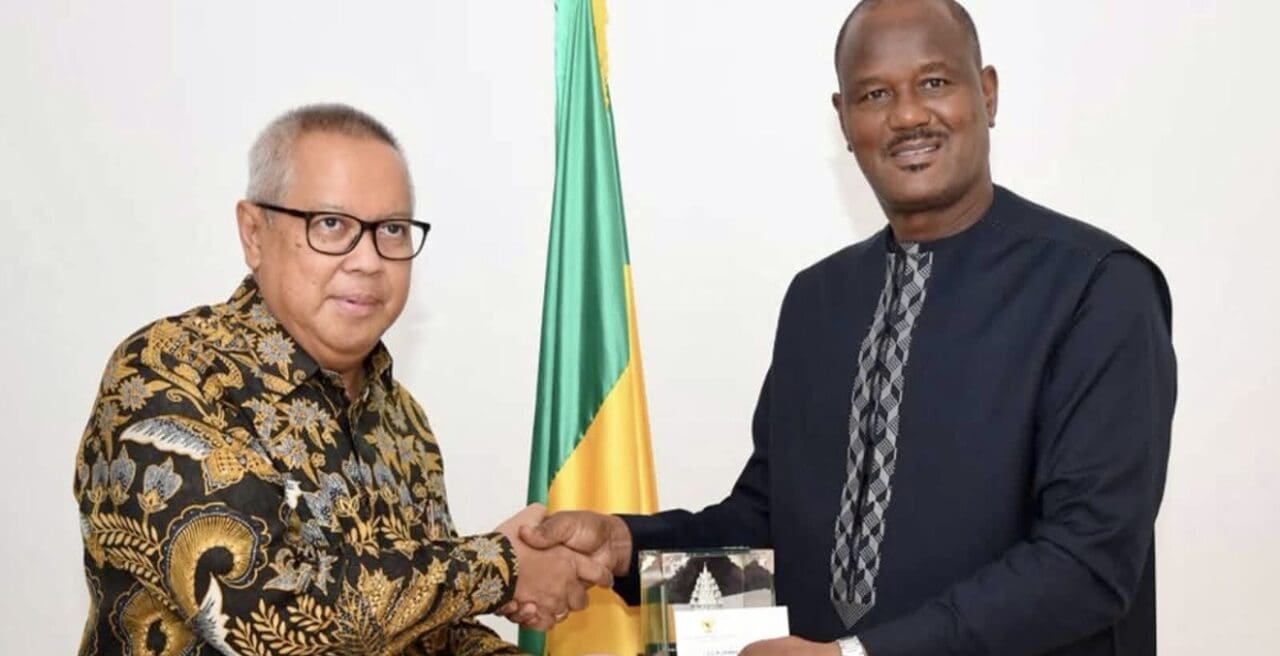
Behind closed doors on September 11, Senegal’s Ministry of Agriculture, Food Sovereignty and Livestock inked a non-binding framework with Jakarta to develop 60,000 hectares of oil-palm plantations in the country’s center and south—more than quadrupling current acreage. While officials remain tight-lipped about financing timelines and technical roadmaps, the announcement has already set tongues wagging: optimists hail it as a sovereign leap, while skeptics warn of history repeating itself after a decade of stagnation.
Ten years of paralysis leave a gaping deficit
Hard data from the UN Food and Agriculture Organization (FAO) exposes the depth of the crisis: from 2015 to 2024, Senegal’s oil-palm acreage never topped 12,000 hectares, hovering around 11,800 hectares. Domestic production languished at roughly 14,000 metric tons per year—woefully inadequate for a country where demand keeps rising. In response, Dakar has poured over 148,000 metric tons of imported palm oil onto local markets every year, crippling the trade balance with a $108-million average annual bill that peaked at $172 million in 2020.
Why the urgency now?
Food-sovereignty advocates argue that import dependence undermines macro-economic stability and consumer price control. With West African neighbors like Côte d’Ivoire and Ghana expanding their own palm-oil sectors, Senegal risks being left behind in a regional race for self-sufficiency and agro-industrial jobs.
Indonesia’s playbook: technology, not just hectares
The choice of Jakarta is strategic. The archipelago alone churns out 46.7 million metric tons of palm oil annually—90% of global output—and does so with cutting-edge seed selection, precision agriculture and integrated refinery practices. The Senegal-Indonesia pact is less about land grabs than about technology transfer: Dakar hopes to import Indonesian expertise in cultivation, milling and value-added refining so local farmers can lift yields and cut costs.
Learning from continental peers
Senegal is not pioneering the model. In 2025, Tanzania signed a wide-ranging cooperation deal with the Indonesian Palm Oil Association (GAPKI) that packages technical training, supply-chain management mentoring and seed-bank access. Nigerian counterparts inked a similar 2024 MoU with GAPKI, explicitly targeting higher smallholder productivity. The shared question now: can Senegal translate diplomatic handshakes into measurable on-the-ground progress?
Public reactions: applause, skepticism, and loud warnings
Civil-society groups cautiously welcome the deal but insist on transparency. They point to past “jumbo-project” failures and urge the government to publish feasibility studies, land-use maps and environmental-impact assessments before any bulldozers roll. Industry chambers of commerce, meanwhile, voice cautious optimism, noting that every ton of locally produced oil shaves import costs and boosts rural employment.
Environmental flashpoints ahead
Early debates are already raging over land tenure, deforestation risks and the social impact on host communities. Environmental NGOs warn that replicating Indonesia’s monoculture model could threaten Senegal’s remaining forest cover and small-scale family farming.
What comes next: three decisive milestones
The roadmap hinges on three critical steps still shrouded in secrecy:
- Technical taskforce activation: a joint Indonesian-Senegalese working group must finalize planting calendars, seed sourcing and milling milestones within six months.
- Funding puzzle: Dakar has yet to disclose whether the plan will be bankrolled by state coffers, foreign direct investment, or blended-finance packages involving multilateral lenders.
- Pilot rollout: the first 5,000 hectares are slated as a proof-of-concept in the Sine-Saloum and Casamance basins; success here could unlock the remaining 55,000 hectares.
Political fallout and accountability
With presidential elections looming, opposition leaders have already accused the incumbent administration of staking a high-risk gamble aimed purely at short-term headlines. Pro-government pundits counter that the move is a long-overdue course correction to place Senegal on a sustainable footing within the African Continental Free Trade Area.
Can history repeat itself—or finally break the cycle?
Skeptics cite 2014’s “Great Green Wall” initiative, which promised 15,000 new oil-palm hectares but stalled after initial land disputes. Supporters, however, point to Côte d’Ivoire’s seven-year sprint from 220,000 to 700,000 hectares as proof that political will and foreign transfer of technology can deliver tangible results. The coming 18 months will reveal which narrative is set to define Senegal’s palm oil future.
Comments are closed, but trackbacks and pingbacks are open.