Sénégal’s National Assembly finds itself embroiled in a fresh wave of controversy. A concise, almost blunt, directive – “send your Orange Money number” – purportedly exchanged among deputies or administrative staff within the parliamentary chamber, has ignited a fervent debate across social media platforms and the Dakar press for several hours. What appears to be a simple request, on the surface, has prompted serious questions regarding the nature of funds destined to pass through the Orange mobile electronic wallet for the benefit of the nation’s elected representatives. This development is a key point of discussion in African news today, reflecting broader concerns in pan-African current affairs.
An innocuous message fuels distrust over parliamentary allowances
In Sénégal, mobile money transfers have become an indispensable part of daily life, whether for settling bills, supporting family, or disbursing salaries. The reliance on Orange Money, a subsidiary of the Sonatel group, now extends beyond mere domestic use into institutional channels. It is precisely this expansion that causes embarrassment when it involves the national representation, particularly as the new majority, elected in 2024, has championed budgetary transparency as a cornerstone of its political agenda.
This incident unfolds at a time when Senegalese public opinion is scrutinizing the lifestyle of state institutions with renewed intensity. The perception, origin, and traceability of allowances paid to deputies have been a recurring topic since the recent political transition. The mere act of soliciting an electronic wallet number for a collective payment is enough to rekindle suspicions, especially in the absence of any official communication clarifying the nature of the transaction. This situation adds a significant layer to discussions within African society news.
Mobile money and public funds: a regulatory blind spot
Beyond the immediate political uproar, this affair casts a spotlight on a fundamental issue rarely discussed: the circulation of public or quasi-public funds through mobile money channels. Platforms operated by Sonatel, as well as Wave and Free Money, have profoundly transformed financial inclusion in Sénégal, boasting millions of active accounts and transaction volumes now reaching thousands of billions of CFA francs annually. This rapid growth has outpaced the adaptation of regulations governing institutional payments.
While the Central Bank of West African States (BCEAO) imposes client knowledge obligations and transaction limits on electronic money issuers, the use of personal digital wallets by public officials or elected representatives, rather than traceable bank transfers to institutional accounts, presents a distinct accountability challenge. Mobile money accounts are linked to individuals, which inherently complicates post-facto controls conducted by bodies like the Court of Auditors or the State Inspectorate General.
Nonetheless, mobile money offers administrations unparalleled speed of execution and appreciated cost reductions in processing for state financial services. The tension between operational efficiency and the demand for traceability is not unique to Sénégal; it is a challenge faced across the entire UEMOA zone, where government-to-person payments via phone have proliferated since the pandemic, making it a critical aspect of Africa politics English-speaking audiences are monitoring.
National Assembly under political pressure
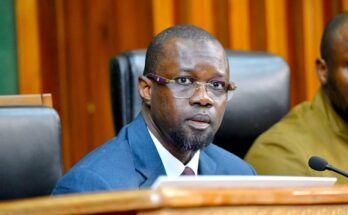
Politically, this incident comes at a delicate moment for the parliamentary institution. The new legislature, dominated by Prime Minister Ousmane Sonko’s Pastef coalition, built its foundation on a promise to break away from the practices of the previous regime. Any appearance of privilege or opacity in the internal workings of the chamber exposes the majority to a backlash from a public particularly attentive to the signals sent by its leaders.
The deputies involved, whose identities have not been publicly disclosed, have yet to issue any official statement regarding the nature of the sums in question. Various hypotheses are circulating in the local press, ranging from session allowances to mission expenses, though none have been confirmed by the Assembly’s administrative services. Institutional silence, as often happens, fuels further speculation.
This affair, modest in its immediate scope, illustrates a broader reality: as mobile money penetrates West African public payment circuits, the boundary between technical convenience and the democratic imperative of transparency becomes a sensitive political battleground. The Senegalese Parliament’s ability to provide clear explanations will determine the lasting impact of this controversy on the nation’s political landscape and its standing in pan-African current affairs.