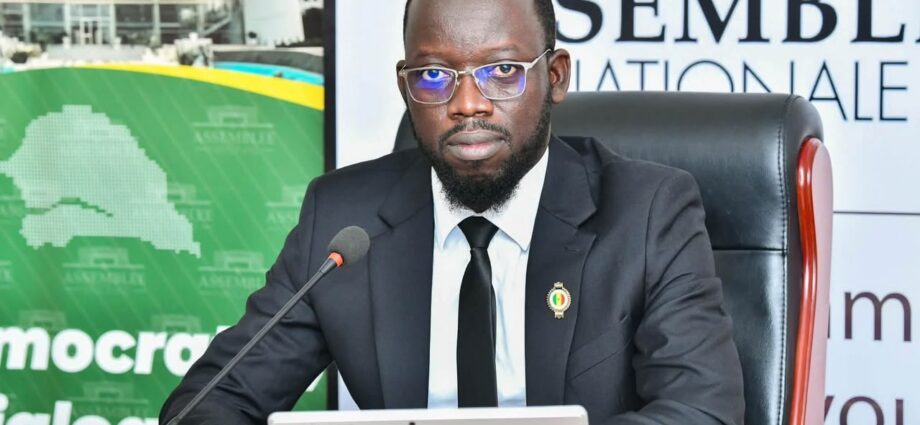
The political landscape of Senegal has reached a critical turning point as lawmaker El Hadji Gueye takes a definitive stand against the escalating threats targeting opposition leader Ousmane Sonko. This decisive move marks a pivotal shift in the nation’s discourse, signaling a rejection of intimidation and a firm commitment to democratic values.
From rhetoric to action: breaking the cycle of fear
Sonko, a prominent political figure in Senegal, has become the focal point of a dangerous escalation in recent weeks. The threats against him—ranging from calls for his elimination to organized campaigns of intimidation—have exposed deep fractures within the country’s political fabric. While some dismiss these actions as mere political posturing, El Hadji Gueye’s response underscores a growing consensus: the time for tolerance of such behavior has come to an end.
Gueye’s statement is not just a rebuke of the threats themselves but a broader condemnation of the tactics used to silence dissent. “Calling for the removal of President Ousmane Sonko, a key figure in this nation’s institutions, is not an opinion—it is a grave threat,” Gueye declared. “Senegal deserves a landscape of ideas, not one of hatred, fear, and violence.” His words reflect a growing resolve among many to challenge the normalization of political violence.
Why Ousmane Sonko remains a target—and why that matters
Sonko’s political career has been defined by his uncompromising stance on transparency and reform. His opposition to entrenched interests has earned him both admiration and enmity. Critics argue that his rise threatens the status quo, while supporters view him as a champion of change. This polarization has fueled the recent surge in threats, which many see as an attempt to derail his influence.
Gueye’s appeal for accountability is rooted in a fundamental principle: “The Republic is not governed by conspiracies or threats. The law must apply to all, without exception.” His stance resonates with a public increasingly weary of political instability and eager for a return to reasoned discourse. By framing the issue as a matter of national dignity, Gueye transforms the conversation from one of personal conflict to one of collective responsibility.
A call to reclaim Senegal’s democratic future
The escalation of threats against Sonko is not an isolated incident but a symptom of a deeper crisis. Political actors who resort to fear and intimidation seek to undermine the very institutions they claim to uphold. Gueye’s intervention, however, represents a counterforce—a push to restore order and uphold the rule of law.
His message is clear: “The era of political arsonists must end. Senegal deserves better.” By framing the threats as an existential challenge to the nation’s values, Gueye elevates the debate from partisan politics to a moral imperative. For citizens, this shift presents an opportunity to demand accountability from their leaders and reject the normalization of violence in political discourse.
What’s next for Senegal’s political landscape?
The coming weeks will be pivotal. Will Gueye’s stance inspire others to take a stand, or will the threats against Sonko continue to escalate? One thing is certain: the political momentum is shifting. Leaders, civil society, and citizens alike are being forced to confront a critical question—what kind of Senegal do they want to build?
Comments are closed, but trackbacks and pingbacks are open.