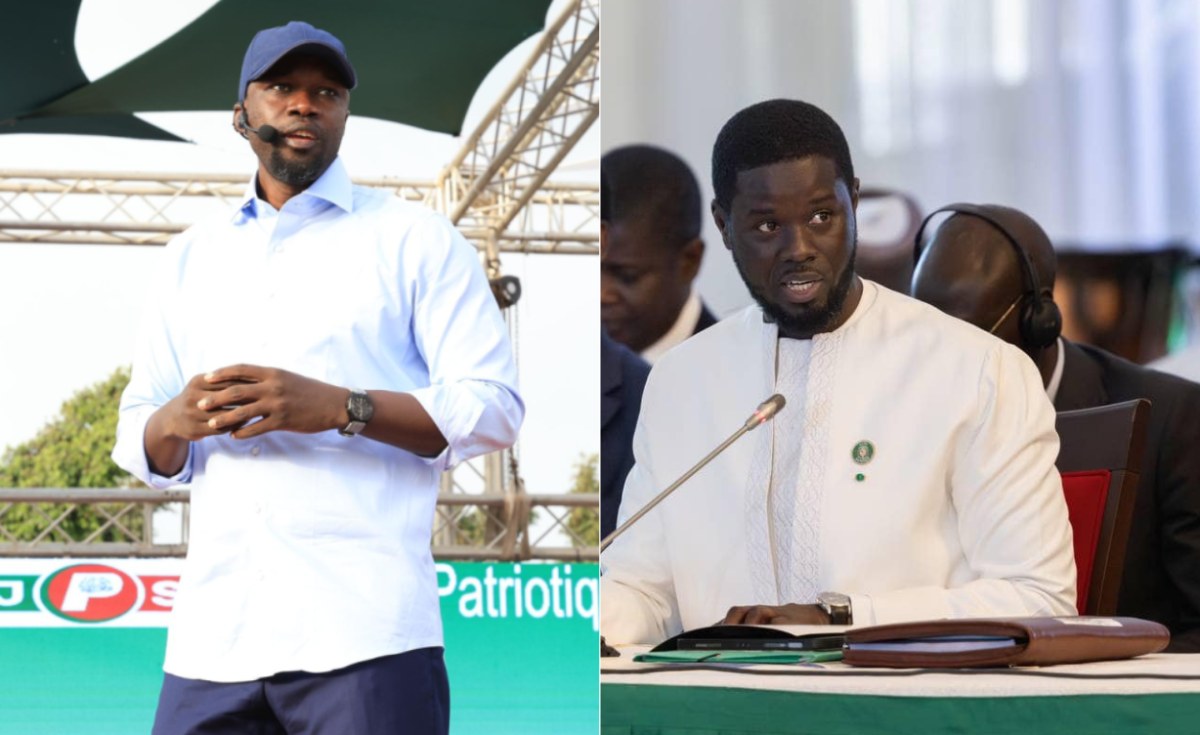
Senegal is currently experiencing one of its most intricate political periods since the Bassirou Diomaye Faye and Ousmane Sonko duo ascended to power in March 2024. For a considerable time, they were seen as inseparable figures driving the Pastef party’s vision. However, recent developments reveal increasingly apparent disagreements between the head of state and the individual who remains the party’s foundational leader.
This unfolding situation arises amidst a unique backdrop. In 2024, Ousmane Sonko, prevented from contesting the presidential election due to legal challenges, designated Bassirou Diomaye Faye, who was also incarcerated at the time, as Pastef’s presidential candidate. Their subsequent victory was widely celebrated as the culmination of an extended political struggle against the Macky Sall administration, signaling the dawn of a new political era in Senegal.
Nevertheless, the realities of governing frequently reshape the dynamics forged during opposition. Over a year since the transfer of power, the relationship between the two prominent figures appears to be entering a distinct phase. Ousmane Sonko’s recent public statements, characterized by overt criticisms and disclosures regarding the political agreements that reportedly facilitated Pastef’s rise, suggest an intention to reassert political influence.
Just hours before the formation of the government led by the new Prime Minister Al Aminou Lo, Pastef’s leader unequivocally declared that no party members would join this new executive team. This stance represents a symbolic departure from the governance established by the 2024 victory, hinting at a gradual separation between the state apparatus and the party structure.
Beyond individual personalities, the core of the current discussion revolves around political legitimacy. On one hand, President Bassirou Diomaye Faye derives his authority from universal suffrage and the functioning of republican institutions. On the other, Ousmane Sonko is regarded by many activists as the primary architect of their ascent to power and the pivotal figure around whom Pastef’s momentum was built.
This duality is not unprecedented in African political history. Various movements that have achieved power have encountered rivalries between the holder of electoral legitimacy and the individual who maintains political authority within the party structure. When these two centers of power clash, the potential for institutional paralysis and political fragmentation intensifies.
At this juncture, it would be premature to declare a definitive rupture. Both leaders still share a common electoral base and a political agenda whose core objectives largely retain the support of their adherents. Nevertheless, the escalating tensions and increasingly assertive rhetoric indicate that a reconfiguration of power is currently underway.
The stakes now extend beyond individual aspirations. They pertain to Senegal’s capacity to uphold its institutional stability while advancing the economic and social reforms pledged to its citizens. In a nation frequently lauded as a democratic model in West Africa, the evolving relationship between Bassirou Diomaye Faye and Ousmane Sonko could have enduring ramifications for Pastef’s future and the overall national political equilibrium.
The coming months will be crucial in determining whether this crisis culminates in a strategic reconciliation, a contentious cohabitation, or an overt political split between the two primary architects of the 2024 transition.