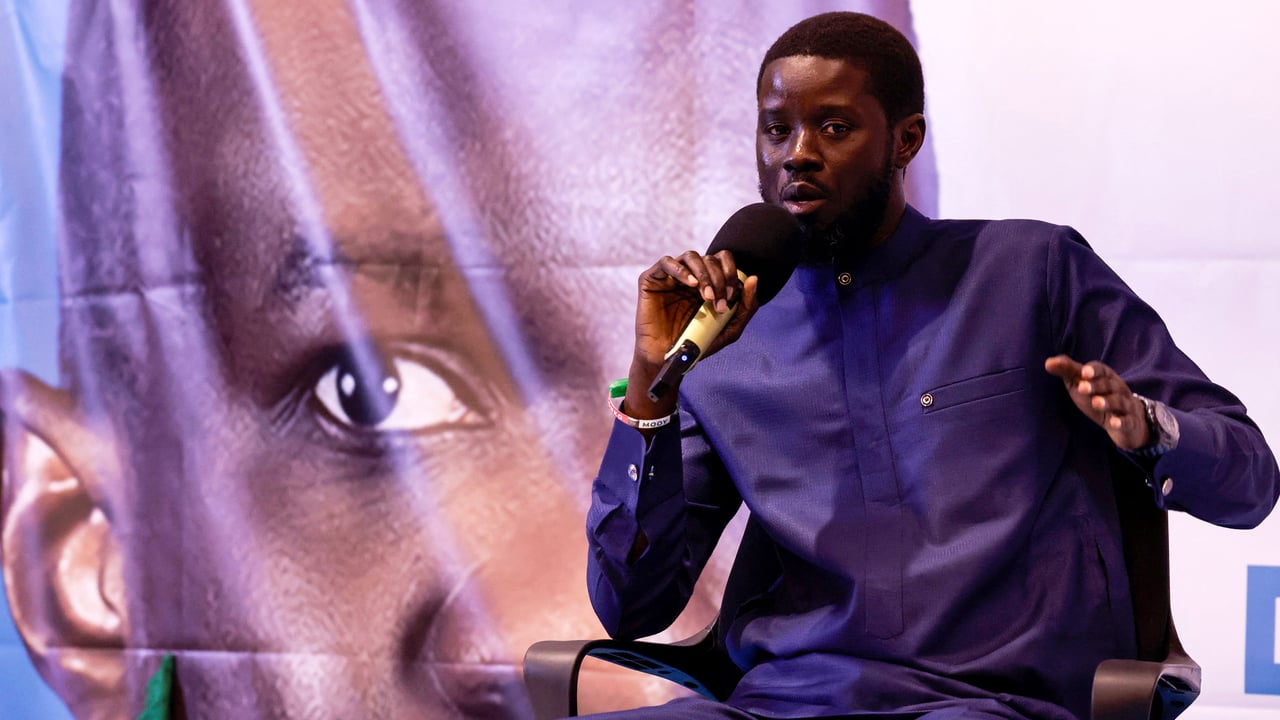

The deep roots of Senegal’s political divide: Diomaye and Sonko’s escalating feud
In Senegal’s political arena, tensions between Bassirou Diomaye Faye and Ousmane Sonko have reached a critical juncture. Once allies in the opposition, their relationship has deteriorated into a bitter rivalry, exposing fractures within the country’s democratic fabric. This clash, far from being a recent development, traces its origins back to years of diverging strategies and unmet expectations.
The origins of a partnership
The alliance between Diomaye and Sonko first took shape within the PASTEF movement, a party that emerged as a powerful force in Senegalese politics. Sonko, a charismatic figure known for his fiery rhetoric against the establishment, quickly rose to prominence as the movement’s leader. Diomaye, on the other hand, was seen as a more pragmatic voice, often balancing Sonko’s bold statements with measured political strategy.
Together, they challenged the traditional political elite, capitalizing on widespread frustration with decades of governance perceived as corrupt and out of touch. Their rise to prominence symbolized a generational shift, promising a new era of accountability and reform. Yet, beneath the surface, tensions simmered as differing visions for the movement began to clash.
Ideological rifts and power struggles
The first signs of discord emerged as Sonko and Diomaye grappled with fundamental questions about the future of PASTEF. Sonko’s uncompromising stance on economic sovereignty and his confrontational approach to governance often clashed with Diomaye’s more conciliatory style. Where Sonko advocated for radical change, Diomaye pushed for incremental reforms, reflecting a deeper ideological divide.
As the movement gained traction, power struggles intensified. Sonko’s legal troubles, including accusations that later proved baseless, further strained the relationship. Diomaye’s public distancing from these controversies highlighted his desire to maintain a more moderate image, while Sonko’s defiance only intensified his appeal among radical supporters. The media amplified these tensions, framing the conflict as a battle between pragmatism and radicalism.
A rupture that reshapes Senegalese politics
The breaking point arrived when Diomaye’s faction within PASTEF sought to distance itself from Sonko’s more extreme positions. Public statements from Diomaye’s camp underscored a desire to transition the movement toward a more institutionalized and electorally viable force. Sonko, however, resisted, clinging to his role as the movement’s revolutionary figurehead.
This divergence culminated in a series of public spats, with both leaders accusing the other of betraying the movement’s founding principles. Diomaye’s allies framed Sonko’s approach as destabilizing, while Sonko’s supporters accused Diomaye of abandoning the people’s cause for personal ambition. The fallout has left PASTEF fractured, with grassroots supporters divided and the party’s future uncertain.
Consequences for Senegal’s political landscape
The fallout from this feud extends beyond the confines of PASTEF, sending ripples across Senegal’s political spectrum. Allies of Sonko have accused Diomaye of orchestrating a takeover, while Diomaye’s camp dismisses these claims as baseless. Meanwhile, the broader opposition, already weakened by infighting, struggles to present a united front against the ruling party.
For Senegalese citizens, the spectacle of two former allies turning on each other has eroded trust in political institutions. The promise of a united opposition against systemic corruption now feels distant, replaced by a sense of disillusionment. Analysts warn that this infighting could pave the way for the ruling party to regain ground, further consolidating its grip on power.
What lies ahead for Senegal’s opposition?
As Senegal prepares for future elections, the question remains: Can PASTEF heal its wounds and reunite under a single banner? Or will Diomaye and Sonko’s feud permanently fracture the movement, leaving a void that other political forces will exploit? The answers may well determine the trajectory of Senegal’s democracy in the years to come.
The stakes are high, and the clock is ticking. For a nation that has long awaited transformative change, the internal battles of its opposition leaders may ultimately prove more damaging than any external challenge.
Comments are closed, but trackbacks and pingbacks are open.