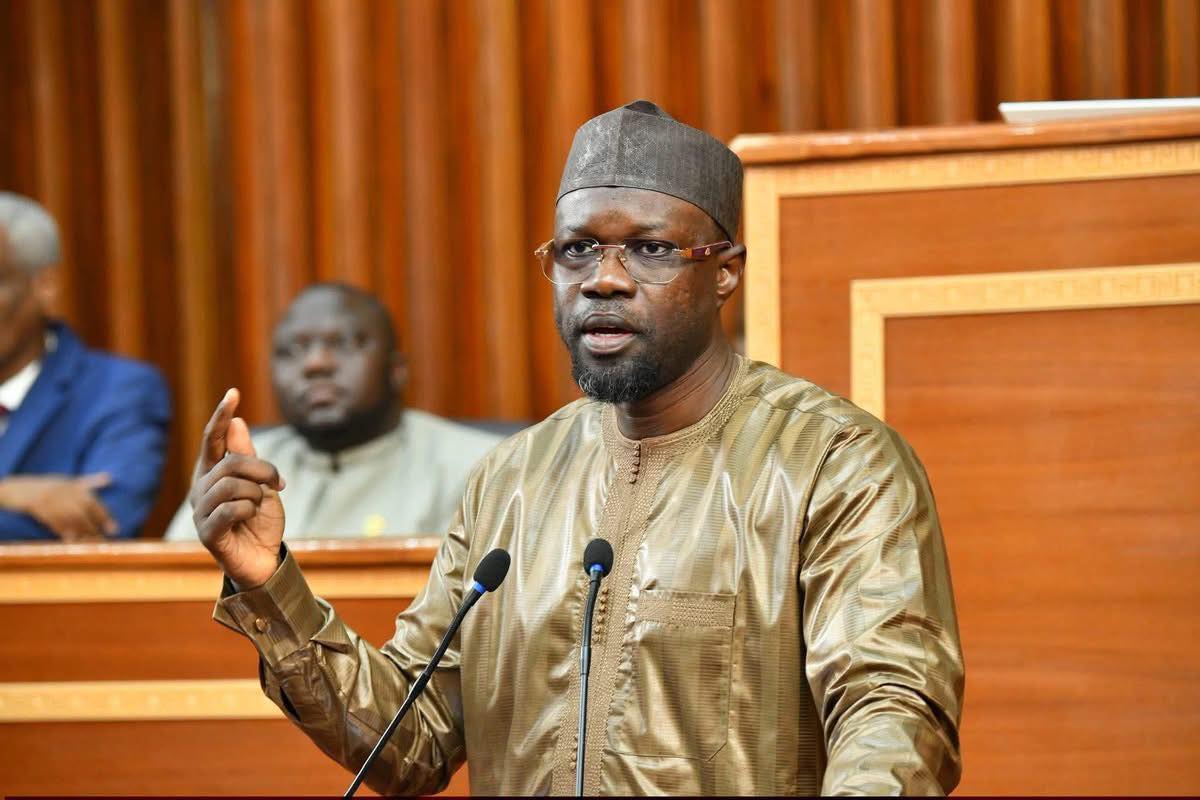
In a meticulously choreographed sequence of events, Ousmane Sonko has ascended to the presidency of the National Assembly, following a series of institutional reshuffles that have left many observers questioning the motivations behind this rapid political maneuver. Once removed from his previous role, Sonko’s swift return to the forefront of Senegal’s political landscape has sparked intense debate about the implications of his newfound position at the helm of the legislative branch.
The timing of his appointment has raised eyebrows. Days after his removal from office, the sitting President of the National Assembly resigned without prior notice. This unexpected vacancy paved the way for Sonko’s installation as the new President of the National Assembly (PAN), a position that grants him unprecedented influence over the legislative agenda. Critics argue that this transition was far from coincidental, suggesting instead a calculated power grab designed to secure his dominant presence in the heart of the state apparatus.
The weaponization of institutional power
Sonko’s new role places him in direct opposition to the executive branch, creating a dynamic ripe for institutional gridlock. As President of the National Assembly, he now holds the keys to legislative proceedings, including the approval of laws and the national budget. This control over the legislative machinery provides him with a formidable tool to obstruct government initiatives and challenge the authority of the President of the Republic. Political analysts warn that this shift signals the beginning of a high-stakes confrontation between branches of government.
A political commentator, speaking on condition of anonymity, described the situation as more than mere political rivalry—it is a deliberate attempt to stifle institutional functionality. “This is no longer politics as usual; it is a calculated strategy to paralyze the state,” the analyst stated. “The battle for power has now moved from rhetoric to action.”
From opposition to institutional dominance: a pragmatic shift?
Within political circles, Sonko’s opponents accuse him of abandoning his earlier rhetoric of reform in favor of a self-serving pursuit of power. Once hailed as a champion of change, his critics now portray him as a shrewd operator who has seamlessly transitioned from vocal dissident to institutional insider, leveraging crises to consolidate his own influence. His detractors argue that his actions betray his earlier claims of fighting for the people, instead revealing a pattern of opportunism.
Today, Sonko occupies a position he once fiercely contested, wielding authority that rivals even those he previously opposed. This dramatic reversal has led many to question whether his ambitions serve the broader interests of the Senegalese people or whether they are merely the opening salvo in a broader campaign to destabilize the highest echelons of government.
The political landscape in Senegal is undergoing a profound transformation, with alliances and rivalries being redrawn. As the balance of power shifts, the coming months will reveal whether this institutional coup will strengthen democratic governance or plunge the nation into deeper uncertainty.