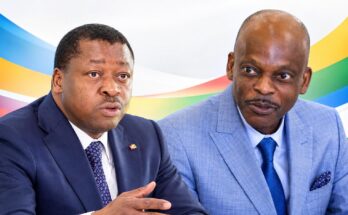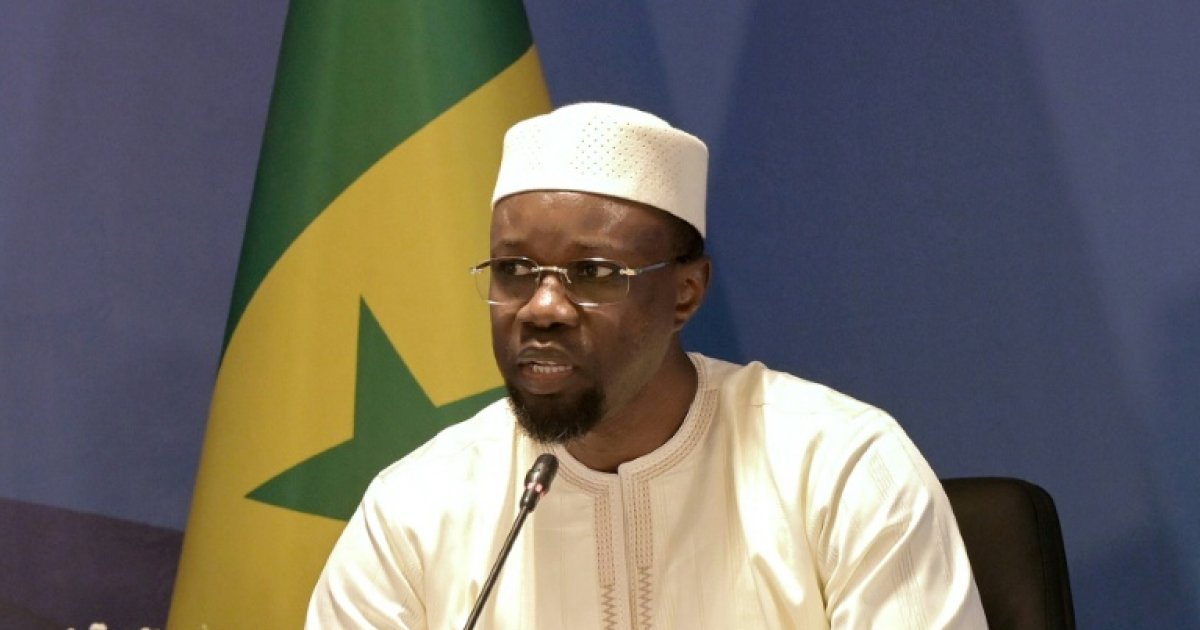
President Faye removes Prime Minister Sonko in Senegal
President Bassirou Diomaye Faye of Senegal announced on Friday evening the termination of his Prime Minister, Ousmane Sonko, an erstwhile ally and political comrade. This significant development follows several months of escalating tensions between the two leaders who ascended to power in April 2024, fueled by immense public hope and a desire for political change in Senegal. This is a major event in Africa politics English discussions.
The presidential decision was conveyed to the nation via a declaration read on national television by Oumar Samba Ba, the Secretary-General of the Presidency. The announcement stated that President Faye had “ended the functions of Mr. Ousmane Sonko, Prime Minister, and consequently those of the ministers and secretaries of state who were members of the government.”
The official statement further clarified that “the members of the outgoing government are tasked with managing current affairs.” As of now, no information has been provided regarding the appointment of a new Prime Minister, leaving many to speculate on the future direction of Senegal’s leadership.
Since the election of Bassirou Diomaye Faye, a discernible rise in friction has been observed between the President and his charismatic former mentor, Ousmane Sonko. Sonko’s considerable influence was pivotal in propelling the duo to the highest echelons of power, making this separation a key topic in African news today.
Ousmane Sonko, a staunch adversary of former President Macky Sall (who served from 2012-2024), faced disqualification from the 2024 presidential election due to a defamation conviction that led to the loss of his civil rights. Following this, Sonko endorsed Bassirou Diomaye Faye as his chosen successor for the presidential race.
With a powerful panafricanist message, Ousmane Sonko captivated Senegal’s disillusioned youth during the election campaign. This period was marked by months of intense standoff with Macky Sall’s administration, which had violently suppressed demonstrations against Sonko and against the prospect of Sall seeking a third term.
Both leaders, recently released from prison under an amnesty law designed to ease years of political unrest, campaigned under the rallying cry “Diomaye Moy Sonko,” a Wolof phrase meaning “Diomaye is Sonko.” This slogan underscored their unity and shared vision for pan-African current affairs.
Immediately following the announcement, Sonko took to his Facebook account, stating, “Alhamdoulillah. This evening I will sleep with a light heart in Cité Keur Gorgui,” referring to his Dakar residence. The news sparked a spontaneous gathering.
Hundreds of Sonko’s supporters converged on his home in Dakar on Friday evening, cheering him after his removal from the government, as observed by our reporters. This spontaneous demonstration highlights the enduring popular support for the former Prime Minister and offers insight into African society news.
Earlier on the same day, addressing Parliament, the Prime Minister had vehemently criticized what he termed the “tyranny” of the West, accusing it of attempting to “impose (homosexuality) on the rest of the world.” This statement followed the recent passage of a law in the predominantly Muslim West African nation that stiffened penalties for homosexual relations.
For several months, the growing friction between the Head of State and the Head of Government had become publicly apparent, casting increasing doubt on their ability to maintain a harmonious working relationship.
At the beginning of the month, President Faye had publicly voiced concerns over his Prime Minister’s “excessive personalization” within the ruling party, signaling the deepening rift.
In a televised interview, President Faye had previously stated, “As long as he remains Prime Minister, it is because he benefits from my confidence. When that is no longer the case, there will be a new Prime Minister.” This foreshadowed the recent political changes.
Sonko’s party currently holds a substantial majority in Senegal’s National Assembly, a position secured after its overwhelming victory in the legislative elections held in November 2024.
Just weeks prior, Parliament enacted a reform of the electoral code, subsequently promulgated by the President, which clears the path for Ousmane Sonko’s potential candidacy in the next presidential election in 2029. This legislative move was met with criticism from the opposition, who argued it was specifically tailored to benefit Sonko.
In July 2025, Senegal’s Supreme Court dismissed an appeal by Sonko, who was then serving as Prime Minister since April 2024, against his conviction. This decision reignited public debate regarding his eligibility for future office.
Despite the legal challenges, Sonko was elected as a deputy in the November 2024 legislative elections before resigning his mandate to retain his position as Prime Minister. His party asserts that this makes him eligible for future elections. Local elections are slated for 2027, followed by a presidential election in 2029.
While President Faye may not command the same widespread popular enthusiasm as the Pastef leader, he has steadily garnered support over recent months through the “Diomaye Président” movement, hinting at a potential bid for the 2029 presidency himself.
Since their assumption of power, the nation’s leaders have grappled with a precarious economic landscape. They inherited a monumental debt from the previous government, which, according to the International Monetary Fund (IMF), stands at an alarming 132% of its GDP, positioning Senegal as the second most indebted country in sub-Saharan Africa. This economic challenge is a critical aspect of pan-African current affairs.
In 2024, the new government, formed after the opposition’s electoral triumph, accused former President Macky Sall’s administration of obscuring the true extent of the nation’s troubling budgetary situation. This accusation led to the suspension of a $1.8 billion aid program from the IMF, further complicating Senegal’s economic outlook.