The Pastef-Les Patriotes party held its first national congress over the weekend since its founding in 2014 in Dakar. The event was an opportunity to give fresh impetus amid a reconfiguration of the political landscape, redraw the party’s guiding lines under its president Ousmane Sonko, and realign Senegal’s political governance.
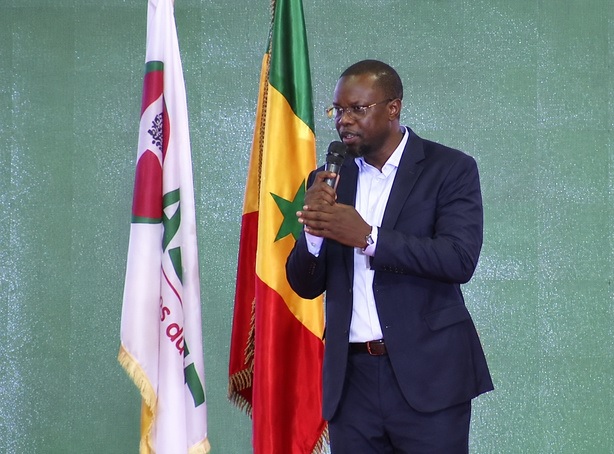
A massive gathering concluded yesterday, Sunday, June 7, at Dakar Arena, marking the first ordinary congress of Pastef-Les Patriotes. Ousmane Sonko, confirmed as president and leader of the majority party, addressed a crowd of devoted militants, unveiling a three-point political roadmap: ideological consolidation of the party, direct challenge to the executive, and locking down the electoral calendar. Sonko began by drawing lessons from what he called ‘the first phase of clarification,’ initiated since the large rally of November 8. ‘Politically, Pastef has remained Pastef and emerges from this clarification stronger,’ he noted. While acknowledging that this period brought ‘surprises and disappointments,’ he claimed none personally affected him. He then claimed for his movement the parentage of major struggles: the fight against corruption, justice, renegotiation of contracts, and above all, maintaining the majority in the National Assembly.
On governance, Sonko launched fierce attacks against the head of state. ‘This country has suffered enough from plots and schemes,’ he declared, urging each institution to stay within its constitutional role without being manipulated by personal ambitions. The criticism was explicit: ‘Even if the president wants to satisfy political ambitions, we must not accept that he weakens institutions.’
Facing voices that raise the specter of an institutional crisis, he offered a sovereign interpretation of the ballot box results: ‘There is no institutional crisis in Senegal. The people chose to entrust the presidency to one person and the National Assembly to another.’
The parliamentary lock on local elections
Ousmane Sonko finally closed the door on any possible postponement of local elections, waving both a political and procedural argument. ‘Pastef will never agree to a postponement of local elections,’ he asserted, before reminding of the constitutional constraints on the executive: ‘To do so, you must go through the Assembly and pass an enabling law.’
Coming out of the investiture meeting of Pastef’s president, the line seemed drawn for a new reconfiguration of the political scene and a new governance of political play.