African news today
Tchad learns from Cameroon’s ICT education model during UNESCO Yaoundé study mission
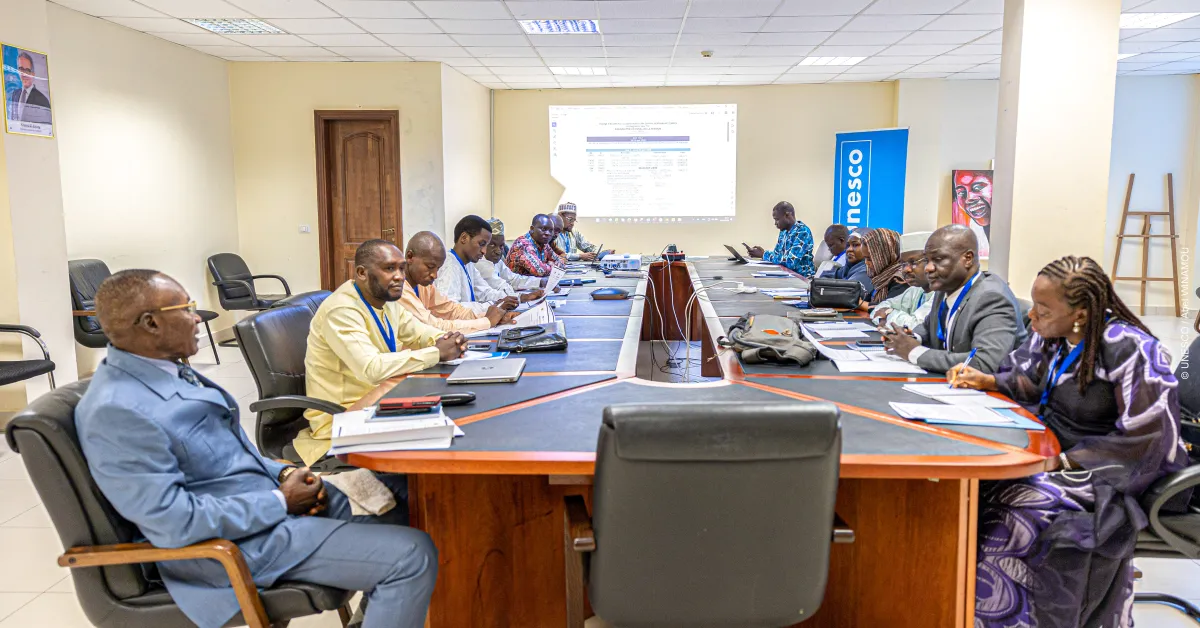
A five-day study mission focused on integrating Information and Communication Technologies (ICT) into education took place in Yaoundé from April 20 to 24, 2026. The delegation from Tchad participated to benchmark successful models implemented in Cameroon, a regional leader in digital education.
This initiative aligns with Tchad’s national priorities to modernize its education system and ensure inclusive, equitable access to quality learning. Key frameworks guiding this effort include the 2022–2026 National Development Plan, the Tchad Connexion 2030 vision, the National Teacher Policy (PNET), and the Programme de Refondation de l’École Tchadienne (PRET). The latter is supported by the Global Partnership for Education and implemented with assistance from UNESCO and UNICEF.
In a challenging environment with limited infrastructure, ICT integration emerges as a critical enabler to enhance teaching quality, expand educational access, and improve governance in Tchad’s education sector. The PRET aims to introduce gradual digital transformation through low-complexity, accessible solutions tailored to local realities.
To achieve this, Tchad’s Ministry of National Education and Civic Promotion organized the study mission, drawing on Cameroon’s expertise in both formal and non-formal digital education initiatives.
Structured around institutional meetings, technical visits, and collaborative workshops, the mission enabled Tchad’s delegation to engage directly with Cameroonian education stakeholders. At the Ministry of Basic Education, discussions covered pedagogical, curricular, and infrastructural dimensions of Cameroon’s ICT integration model.
The sessions examined teacher training programs, digital tools deployed, institutional coordination mechanisms, and partnerships fostering educational digital transformation.
A rigorous methodology guided the mission, combining document analysis, stakeholder interviews, field observations, and collaborative working sessions. The goal was to identify success factors, document transferable practices, and adapt insights to Tchad’s specific context.
Outcomes include a detailed mission report, actionable recommendations, and a prioritized action plan to support Tchad’s ICT integration efforts in education.
This initiative underscores the UNESCO Regional Office’s role as a catalyst for innovation and regional cooperation in Central Africa. It reflects a broader sub-regional effort to establish sustainable mechanisms for sharing best practices among neighboring countries.
By promoting mutual learning and adapting proven solutions, the mission strengthens educational resilience and accelerates digital-era transformation across systems.
Related Posts