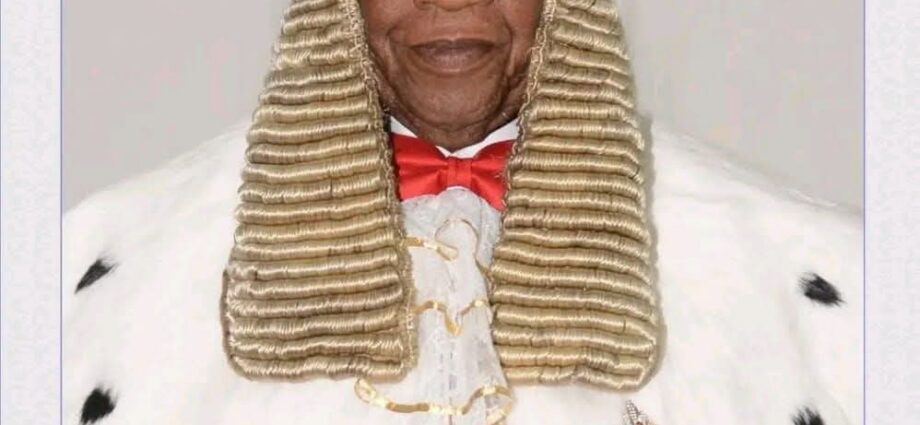
A final evacuation to Paris and the end of a long magistracy
Clément Atangana, who presided over Cameroon’s Constitutional Council, died in Paris on the morning of 4 October 2026, at the age of 85. He had been medically evacuated to France in the hope of receiving more advanced treatment, but the outcome was already decided elsewhere.
A native of Ngomedzap in the Nyong and So’o division, Atangana was a magistrate of the highest rank. His death closes a career that, for all its institutional prestige, will be remembered less for legal doctrine than for the political storms that gathered around the bench he occupied.
The 2018 election petitions and the birth of a nickname
The defining episode of his presidency came during the litigation that followed the 2018 presidential election. Under his direction, the Council threw out every challenge brought before it, issuing the same terse verdict each time. The word became a public shorthand for a court seen as unwilling to disturb the announced result, and it stuck to the man who pronounced it.
From that point onward, the Constitutional Council was widely read as an institution aligned with the ruling party rather than as a neutral arbiter of electoral disputes.
A video, a family gathering, and the erosion of trust
The perception hardened further on the night the presidential results were confirmed. Footage circulated on social media showing Atangana celebrating with relatives, telling those around him that the outgoing head of state was “your candidate.” For opposition supporters, it was less a slip than a confirmation of what they had long suspected.
The scene gave fresh weight to accusations of partiality that had been building for years.
Nyong and So’o, 2025: the motion that would not go away
In 2025, Atangana took part in a meeting of a local development committee in the Nyong and So’o area. The gathering produced a motion of support for Paul Biya, including a call for him to stand in the next presidential election.
A reporter from the government daily was present and filed a dispatch that travelled quickly through the press and public debate. Atangana responded forcefully, insisting the meeting was a non-political association and that he had left before the session that produced the motion. The clarification did little to change minds: for many opponents, the image of an alignment with the incumbent was already fixed.
The wider stakes for Cameroon’s electoral architecture
Atangana’s tenure cannot be separated from the wider question of how Cameroon’s electoral disputes are settled. His death raises the practical issue of who will now sit at the head of the institution, and whether the Council’s reputation can be rebuilt in the eyes of those who lost faith in it.
That question will matter well beyond the courtroom. With legislative and municipal elections on the horizon, the credibility of the body that rules on contested results is itself a political fact — one that Atangana’s successor will inherit in full.
Comments are closed, but trackbacks and pingbacks are open.