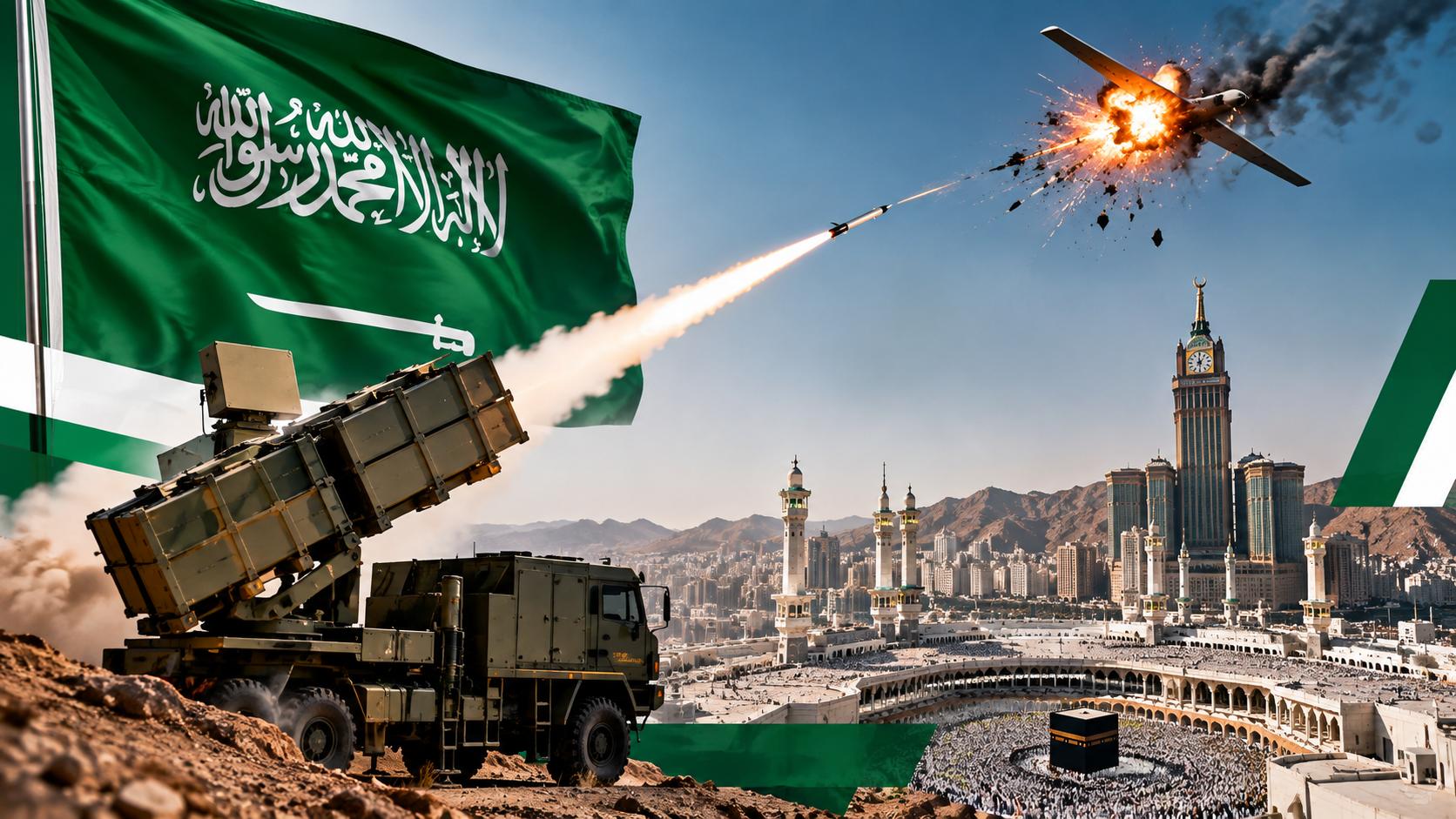
When Saudi air defence batteries brought down a Houthi drone over the southern approaches to Mecca, the number that mattered most was zero: no deaths, no injuries, no debris in the streets. Yet the real consequences of that single interception stretch well beyond the tactical scoreboard. For the worshippers crowding the Grand Mosque, for the businesses that live off their presence, and for a Saudi economy already operating in a fragile regional climate, the episode is a blunt reminder of how much is exposed every time a projectile is launched from Yemen.
What happened over southern Mecca — and why the fallout matters
The Riyadh-led military coalition announced on Wednesday, 16 September, that it had destroyed a drone attributed to Yemen’s Houthi rebels. Saudi air defence had detected and engaged the aircraft on Tuesday, 15 September, in the sky south of Mecca, neutralising an armed device before it could slip into the strictly protected airspace surrounding Islam’s holiest city.
The official statement stressed that the operation left no victims and caused no material damage. That absence of physical harm is exactly why the incident deserves to be read through its wider effects. An attack directed at the spiritual centre of the Muslim world — in a city that permanently hosts pilgrims and residents around the Grand Mosque — carries a symbolic and political charge far heavier than its military significance.
Zero casualties, yet a bill that is not paid in rubble
A daily economy built on the presence of pilgrims
Mecca’s commercial life depends on a continuous flow of visitors. Hotels, transport operators, retailers, restaurateurs and service providers all rely on that stream of worshippers arriving and departing around the clock. Any sign that the airspace above them can be breached introduces doubt into a machine that runs on confidence — both for the people living there and for those planning a journey months in advance.
Business confidence far beyond the holy city
Drone and ballistic missile strikes against oil installations, airports and frontier zones have become a recurring feature of the confrontation. Each new alert adds to the security bill, complicates logistics and feeds the risk premium that investors attach to the wider peninsula. The economic damage is rarely visible on the day of the interception; it accumulates quietly through higher insurance costs, rerouted traffic and postponed decisions.
Riyadh’s warning: a red line crossed
Coalition spokesman Brigadier General Turki Al-Maliki was quick to respond, condemning the attempted strike. He pointed directly at Yemen’s Houthi rebels and their allies, accusing them of trying to “disrupt the security and stability” of the Kingdom and of knowingly putting at risk the lives of residents and of the faithful gathered at the Grand Mosque.
For the Saudi command, targeting a place of worship of such standing amounts to one more crossed red line. The coalition restated its determination to take every measure required to shield Saudi territory, its civilian population and its sacred religious sites.
Why the same scenario keeps repeating
The episode fits squarely into a confrontation that has pitted the Saudi-led international coalition against Yemen’s Houthi insurgents for years. Drone and missile launches aimed at energy facilities, airports and border areas are frequent, but trajectories pointing towards the Mecca region invariably trigger diplomatic and security reactions of an unusually sharp intensity.
Despite mediation attempts and fragile truces negotiated in the past under United Nations auspices, these repeated attacks show that Houthi military capacity remains intact — and that stabilising the Kingdom’s southern frontier over the long term is proving extremely difficult.
The consequences to watch in the coming months
This latest alert pushes the vulnerability of the Arabian Peninsula’s strategic and religious infrastructure back to the top of the agenda. Riyadh’s air defence proved its effectiveness tactically, but the same success highlights how urgent a durable political settlement to the Yemeni conflict has become.
- Safety of pilgrims and residents in and around the holy sites
- Continuity of air traffic and airport operations across the region
- Protection of oil and energy infrastructure
- Investor confidence and the cost of doing business in the Kingdom
- Fragile peace efforts that a single new strike could derail
As international chancelleries monitor the situation closely, the incident serves as a reminder that the risk of escalation never truly disappears. It remains capable, at any moment, of undermining peace efforts and unsettling the regional balance.
Comments are closed, but trackbacks and pingbacks are open.