
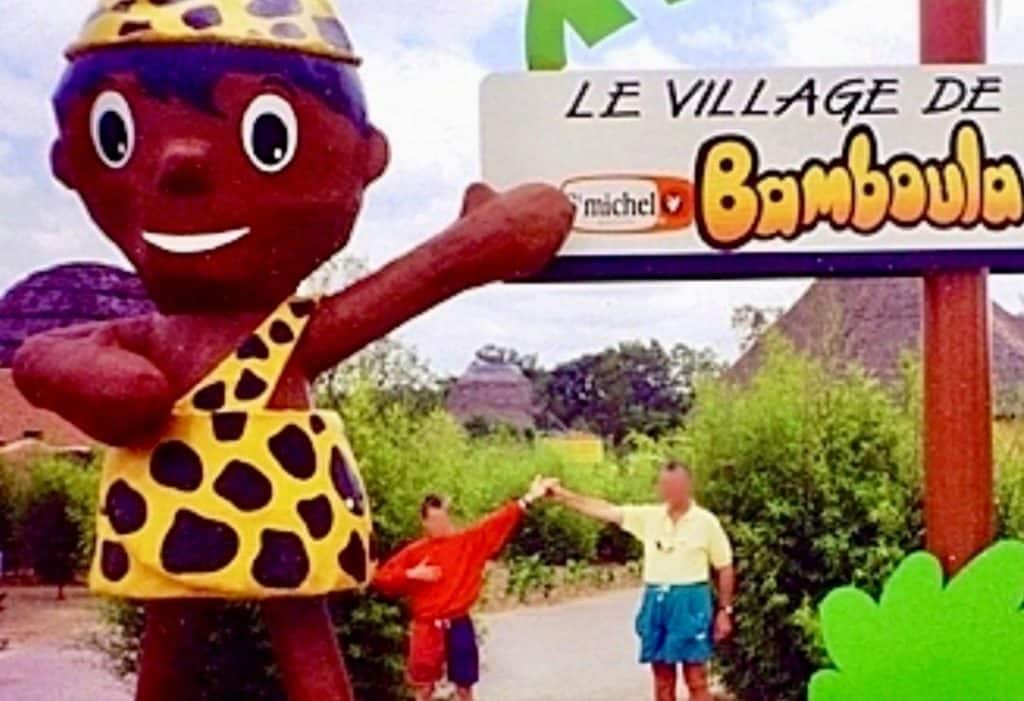
A page in history that refuses to be forgotten is one that continues to question our collective conscience. In Ouahigouya, on July 16, 2026, Comrade Captain Ibrahim Traoré brought to light one such painful episode: the Village of Bamboula, an event that reminds us that even towards the end of the 20th century, humans could be treated as objects of curiosity.
This story takes place in France in 1994, at Port-Saint-Père, near Nantes, where a zoo opened a space presented as an ‘African village’. Behind the constructed decor and official discourse of cultural encounter, a far darker reality lurked.
Twenty-five Ivoirian residents, including men, women, and children, left their country with the idea of participating in a cultural experience. They hoped to share their traditions and promote their heritage.
However, once on site, the reality took a different turn. According to accounts from the time, their travel documents were confiscated, and their living conditions became increasingly incompatible with the image of a simple cultural exchange.
For several months, they lived under the gaze of visitors who came to observe their daily life in a presentation-style setting that was meant to represent African culture. Their existence became a spectacle organized around stereotypical representations.
The children grew up away from the normal school curriculum, while adults had to respond to the expectations of a public that came to discover a folklorized vision of Africa. What marks this case most is not just the existence of Bamboula Village but also the time period during which it occurred.
Read Also 👉 The Ralliance Cry of Captain Ibrahim Traoré for Sovereignty
We are no longer in the era of slavery or colonial exhibitions. This event occurs after the abolition of slavery in France, after the adoption of the Universal Declaration of Human Rights, and several decades after African independence.
Yet, in 1994, people could still be presented as a public attraction. In response to criticism, associations, intellectuals, and human rights defenders denounced these practices, leading to a growing scandal that ultimately led to the closure of Bamboula Village. However, the village’s closure did not erase the memories left behind.
A Reminder of the Power of Memory
By evoking this episode at Ouahigouya, Comrade Captain Ibrahim Traoré did not just recall a historical fact. His intervention was part of a broader reflection on memory, dignity, and the need for African peoples to know their own history.
Bamboula Village appears as a symbol of the relations of domination and dehumanizing representations that marked certain periods in the relationship between Africa and Europe.
Remembering this story does not mean cultivating bitterness, but understanding the mechanisms that allowed such practices to occur so they can be avoided. The Bamboula Village is not just an event; it’s a reminder that no society is completely protected from attacks on human dignity.
When memory is claimed, it becomes an instrument of vigilance: it allows present and future generations to defend a fundamental value – the respect for every human being.
Aurelle KIENDREBEOGO
Burkina 24
