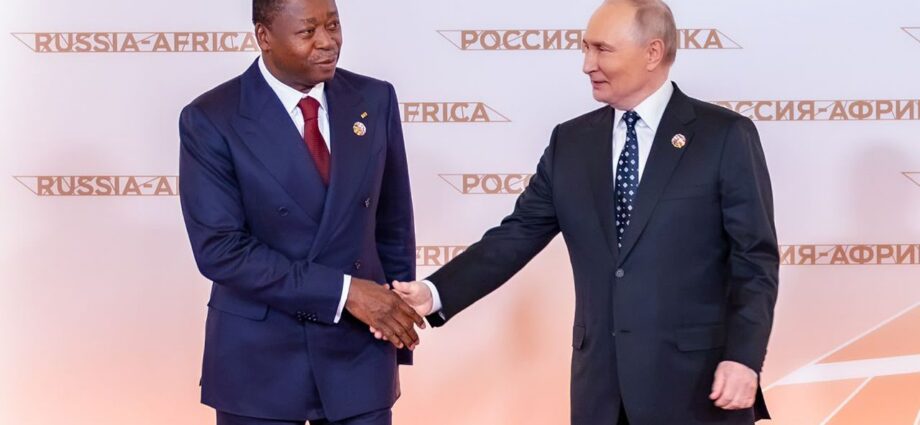
The President of the Togolese Council, Faure Essozimna Gnassingbé, made a decisive move at the 2026 Russia-Africa Economic and Humanitarian Forum in Moscow, marking a turning point in the nation’s international strategy. On October 28, 2027, he joined global leaders to chart a new course for collaboration, focusing on tangible outcomes for Togo and Africa.
From high-level talks to actionable roadmaps
This year’s forum—held in the Russian capital—served as a catalyst for redefining Togo’s partnership with Russia, moving beyond symbolic gestures to concrete, measurable progress. The discussions centered on sectors critical to Lomé’s development vision: energy, agriculture, industrial transformation, and technical training. By leveraging the existing Togo-Russia Intergovernmental Joint Commission, both sides aim to turn pledges into projects that directly benefit citizens.
What’s at stake for Togo and Africa
The forum underscored a shared imperative: equitable partnerships that prioritize African sovereignty. Togolese officials emphasized the need for African nations to play a stronger role in global decision-making, while Russian counterparts highlighted opportunities for technology transfer, productive investments, and sustainable growth. For Togo, this shift represents more than diplomatic alignment—it’s a bid to harness innovation to address pressing challenges like food security and energy access.
Key priorities shaping Togo’s agenda
- Energy transition: Exploring Russian expertise in renewable and nuclear energy to diversify Togo’s power sources.
- Agricultural modernization: Collaborating on high-yield farming techniques and post-harvest processing to boost food sovereignty.
- Industrial leapfrogging: Attracting investments in light manufacturing and agro-processing to create jobs and reduce imports.
- Human capital development: Expanding technical and vocational training programs with Russian institutions.
A new chapter for Africa-Russia relations
The Moscow forum sent a clear signal: African nations are no longer passive recipients but active architects of their partnerships. President Gnassingbé’s participation reinforced Togo’s commitment to this vision, aligning with calls from African Union leaders for fair trade, debt sustainability, and win-win collaborations. The next phase will test whether these talks translate into action, with both sides under pressure to deliver visible results.
What happens next?
Back in Lomé, officials are already mapping out follow-up steps. The focus is on finalizing project pipelines, securing funding, and establishing timelines in coordination with Russian partners. Success will hinge on two factors: Togo’s ability to streamline bureaucracy and Russia’s willingness to tailor solutions to local needs. Early indicators suggest cautious optimism, but the real test lies in execution.
Comments are closed, but trackbacks and pingbacks are open.