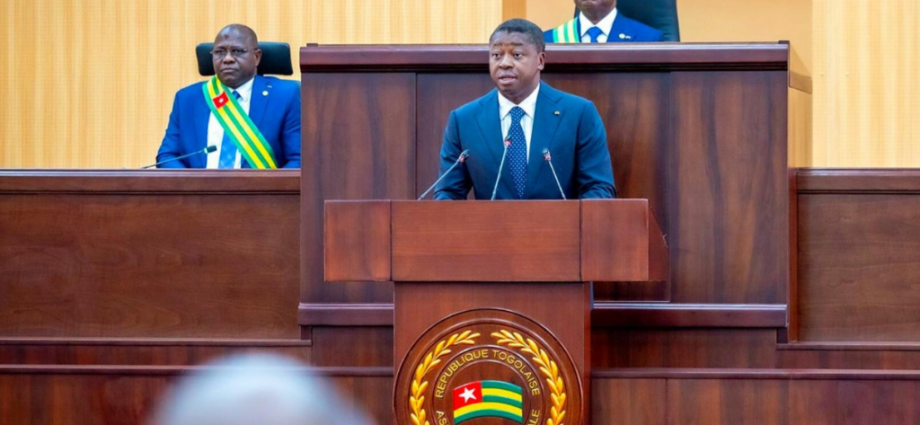
The government of Togo is under fresh pressure from the ECOWAS Court of Justice following a nine-month delay in implementing a key constitutional ruling. A formal letter from the regional court, dated October 23, demands detailed responses from Lomé on measures taken to comply with its January 29, 2026 judgment, reigniting scrutiny over President Faure Gnassingbé’s enduring grip on power.
ECOWAS court insists on compliance with constitutional ruling
In a sharply worded communication addressed to Togo’s Minister of Justice, the ECOWAS Court of Justice has formally requested clarification on actions taken to execute its ruling issued earlier this year. The letter, signed by the court’s Acting Chief Registrar Dr. Ousmane Diallo, follows an official complaint filed by the Togolese Human Rights League and twelve other plaintiffs against the Togolese state.
The court’s October 23 correspondence specifically references judgment ECW/CCJ/JUD/01/26, which found Togo in breach of Article 23 of the African Charter on Democracy, Elections, and Governance. The ruling called for measures ensuring future constitutional reforms align with international democratic standards—but did not annul the 2024 constitution. Now, Lomé is being asked to explain how it plans to meet these obligations.
2024 Constitutional change: power shift or consolidation?
In March 2024, Togo adopted a sweeping constitutional reform abolishing the presidential system in favor of a parliamentary regime. Executive powers were transferred to a newly created role: President of the Council of Ministers. While supporters framed it as institutional modernization, critics argued the change was a strategic move to retain effective control under President Gnassingbé, who had held office since 2005—and within a governing dynasty since 1967.
The reform’s centerpiece was the transfer of executive authority to the Council President, to be selected based on parliamentary majority. By May 2025, Gnassingbé was appointed to the post—effectively maintaining his leadership without a fresh presidential election.
Opposition leaders and civil society groups have repeatedly condemned the reform as a procedural end-run around democratic accountability, enabling the same leader to hold power under a new institutional guise.
Diplomatic pivot raises democratic questions
Togo’s engagement with the Sahel’s military-led governments—Mali, Burkina Faso, and Niger—has intensified over the past year, presenting a paradox for a nation still bound by ECOWAS membership. In January 2025, Foreign Minister Robert Dussey floated the possibility of Togo joining the Alliance of Sahel States (AES). By April 2026, Lomé unveiled a new cooperation framework with the Sahel bloc, emphasizing political dialogue, security collaboration, and economic integration.
Officials defend this outreach as necessary for regional stability and maintaining communication channels between the AES and ECOWAS. Yet the alignment with juntas that openly reject ECOWAS norms—through coups, delayed transitions, and restrictions on civic freedoms—has fueled concerns about Togo’s own democratic trajectory.
Both governance models share a common thread: concentration of power, erosion of checks and balances, and limited space for political alternation—raising doubts about Lomé’s commitment to regional democratic principles despite its formal membership in ECOWAS.
What’s next for Togo’s constitutional path?
The ECOWAS Court’s renewed demand for compliance places President Gnassingbé’s government at a defining crossroads. The October 23 letter is not merely administrative—it is a test of Togo’s willingness to reconcile its domestic reforms with regional democratic standards it helped endorse.
Failure to respond satisfactorily could further strain relations with ECOWAS, already strained by shifting political alliances across West Africa. Success, however, would signal a rare willingness to subordinate constitutional design to external judicial oversight—a move capable of reshaping Togo’s democratic reputation.
As debates over governance models intensify across the Sahel and Gulf of Guinea, Lomé faces a clear choice: use this moment to affirm constitutionalism and democratic renewal, or deepen a governance strategy that continues to provoke regional concern.
Comments are closed, but trackbacks and pingbacks are open.