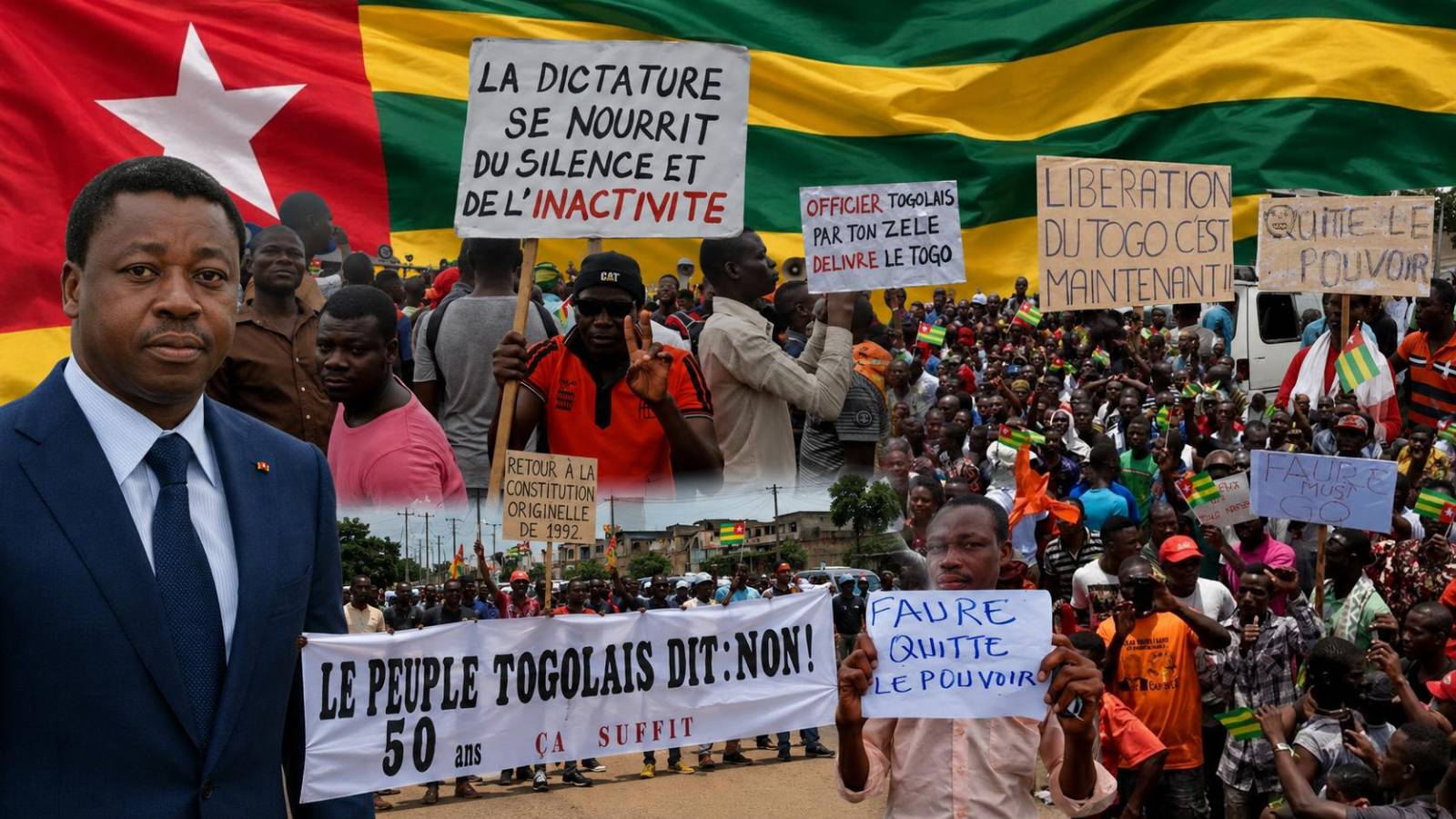
Togo is currently navigating one of the most distinctive periods in its political trajectory. As the administration led by Faure Gnassingbé concludes its institutional evolution towards a parliamentary Fifth Republic, a discernible sense of exhaustion permeates the corridors of power. Amidst a reconfiguring regional diplomatic landscape and a youth population facing severe challenges, the foundational fissures within the nation have become unprecedentedly apparent. This analysis delves into a pivotal moment where the observed silence of the Economic Community of West African States (CEDEAO) could signify a long-awaited turning point.
A chameleon-like administration at its strategic limits
Since 2005, the prevailing political system has sustained itself through a strategy of continuous circumvention. By alternately positioning himself as a mediator in regional conflicts, such as those in Mali and Niger, and as a champion of security stability against terrorist threats in the northern regions, Faure Gnassingbé has meticulously cultivated an image of an indispensable statesman for the international community.
However, beneath this facade of a regional negotiator lies a harsh domestic reality:
- Institutional Entrenchment: The transition to a parliamentary system, slated for 2024-2025, effectively transforms the presidency into a largely ceremonial role, transferring substantive executive authority to a “President of the Council of Ministers” without clear limitations on tenure.
- Societal Constriction: Despite the macroeconomic growth indicators frequently highlighted by Lomé II, the economic reality for average households remains dire. Youth unemployment and underemployment persist as critical, simmering issues that mere rhetoric on entrepreneurship has proven insufficient to address.
The shattered myth of CEDEAO’s ‘gendarme’ role
For an extended period, the argument rooted in fear was: “Should the regime falter, CEDEAO will intervene to reinstate constitutional order.” By 2026, this perceived threat has significantly diminished, revealing itself to be largely insubstantial.
In the aftermath of recent coups in Mali, Burkina Faso, and Niger, CEDEAO emerges as an organization grappling with its own vulnerabilities and striving to reassert its legitimacy. It has, through costly experience, seemingly grasped that an unyielding opposition to popular aspirations within a member state is the most direct path to its own dissolution.
The implication is unambiguous: Should the Togolese populace, through a unified and sovereign act, choose to reclaim national governance, CEDEAO—frequently criticized for its inconsistent application of principles—would likely remain an observer, merely advocating for a “peaceful transition.” The regime’s diplomatic immunity now hangs by a fragile thread.
Youth’s responsibility: a decisive moment
The current juncture is particularly opportune because the regime’s capacity to perpetually suppress a demographic representing 70% of the population is waning. However, assuming responsibility does not equate to disorder; rather, it necessitates a fundamental shift in perspective:
- Disengage from self-perpetuated oppression: Young individuals within governmental administration, security apparatuses, and ruling party circles must recognize that their support sustains a system that ultimately jeopardizes the prospects of their own descendants.
- Cultivate a structured alternative: Transformative change will not emerge from an external savior, but from organized civic engagement. Youth must actively participate in intellectual discourse and demand rigorous accountability regarding the management of national assets such as phosphates, the Port of Lomé, and critical infrastructure.
- Confront the pervasive fear: The regime leverages memories of historical repression to stifle collective action. Yet, historical precedents demonstrate the inherent fragility of even the most rigid systems once they lose the foundational consent of the governed.
An appointment with history
Faure Gnassingbé has re-engineered constitutional frameworks to secure what appears to be indefinite governance. However, no constitutional amendment, regardless of its ingenuity, can withstand the collective will of a populace that has overcome its fear. Togo is a shared national inheritance, not a private domain.
Passivity is no longer a viable path for survival; it constitutes an act of complicity in national decline. Young Togolese, the moment for global respect is not in the distant future. It is present, in your collective ability to declare, unequivocally: “The era of transition has arrived.”