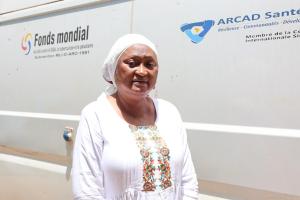
Why science holds the key to healthier communities: an interview with Dr. Bintou Dembélé
Bamako – As the world celebrates World Health Day 2026 under the theme “Unite for Health, Support Science,” the World Health Organization (WHO) shines a spotlight on dedicated professionals transforming scientific knowledge into tangible health improvements across Africa. Among them is Dr. Bintou Dembélé, a physician and public health expert from Mali whose work bridges infectious disease control, healthcare system strengthening, and community trust-building in West Africa.
With a career rooted in the belief that science must serve people first, Dr. Dembélé advocates for accessible, collaborative science that prevents health crises, enhances care quality, and fosters partnerships between researchers, policymakers, and local communities. In this exclusive interview, she shares her vision for a science-driven approach to public health that is both impactful and inclusive.
why science remains our greatest ally in safeguarding population health
In an era marked by rapid disease evolution and emerging health threats, science serves as the cornerstone of effective protection. It drives the discovery of life-saving drugs, vaccines, and treatments, while enabling proactive prevention by unraveling how diseases emerge and spread.
Beyond treatment, science revolutionizes diagnostics, medical technologies, and healthcare delivery models. These advancements strengthen health systems, improve patient outcomes, and increase resilience against both chronic and infectious diseases. Investing in scientific research today means saving lives tomorrow.
boosting west african health through scientific collaboration
Cross-border and interdisciplinary scientific collaborations offer a powerful strategy to address shared health challenges in West Africa. By pooling expertise, resources, and data, countries can tackle endemic and non-communicable diseases more effectively.
Such partnerships extend beyond clinical outcomes. They improve maternal and child health, reduce preventable deaths, and enhance community resilience. Healthier populations contribute to stronger economies, proving that investing in science yields dividends far beyond the clinic.
the “one health” approach: a holistic path to crisis prevention
The “One Health” framework recognizes the interconnectedness of human, animal, and environmental health. This integrated perspective empowers communities to identify and mitigate risks at their source.
By promoting local surveillance networks, fostering dialogue between scientists and citizens, and integrating traditional knowledge, “One Health” turns prevention into a shared responsibility. It transforms communities from passive recipients into active participants in their own health security.
turning research into action: the urgency of implementation
Scientific data holds immense potential—but only when translated into policy and practice. Rapid data analysis, transparent sharing, and responsive decision-making are essential to convert research findings into life-saving interventions.
When governments and health agencies incorporate real-time scientific insights into public health strategies, resources are allocated efficiently, and interventions align more closely with community needs—accelerating progress where it matters most.
building public trust in science through openness and accessibility
Trust in science grows from clarity and inclusivity. To engage communities, scientific knowledge must be communicated in plain language, adapted to cultural contexts, and disseminated through trusted local channels.
Transparent sharing of findings—free from jargon and tailored to everyday life—creates a bridge between experts and the public. This not only demystifies science but also empowers citizens to advocate for policies and behaviors that protect their health and well-being.
Comments are closed, but trackbacks and pingbacks are open.