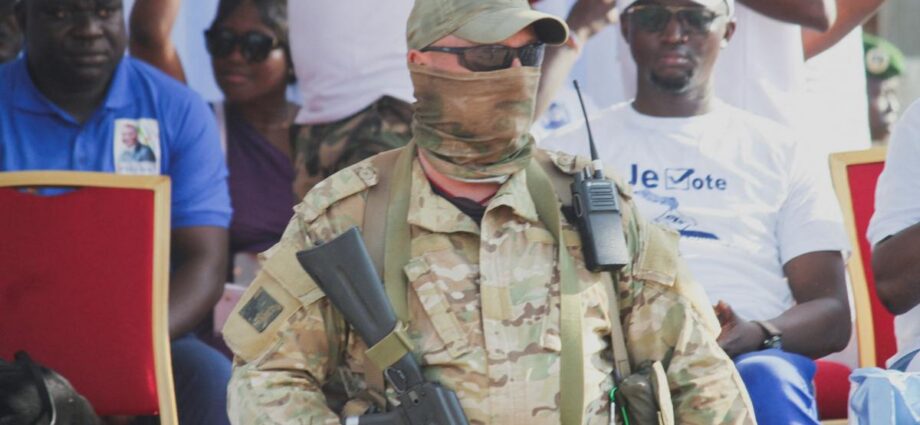
In the heart of Central Africa, a shadowy alliance is reshaping the region’s illicit economy. The Wagner Group, the infamous Russian paramilitary network, has found a lucrative lifeline in the trafficking of tramadol, a prescription opioid repurposed into a powerful stimulant. Analysts describe this shift as a “drug empire” taking root in the Central African Republic, where the group’s influence is growing despite global scrutiny.
Originally marketed as a mild painkiller, tramadol in the region is often reconditioned with higher concentrations, transforming it into a cheap but highly addictive substance. Dubbed the “poor man’s cocaine”, its distribution has become a cornerstone of Wagner’s operations, according to The Wall Street Journal.
Once led by the late oligarch Evgueni Prigojine, Wagner faced severe setbacks after his death in 2023 and the rise of Africa Corps, a Kremlin-backed military unit. Yet in Bangui, the group retains its grip. With an estimated 500 fighters under the command of Prigojine’s son, Pavel, Wagner has embedded itself in the country’s power structures, leveraging its control over key resources and state institutions.
The Central African Republic offers Wagner an ideal environment for expansion. Rich in minerals like gold, diamonds, and uranium, and with dense forests, the country is less scrutinized by Western diplomacies. The group’s mining operations alone are estimated to generate $180 million (€160 million) annually in illicit revenue, as reported by the Global Initiative. These profits are further bolstered by tramadol trafficking, which flows into the country via the Democratic Republic of the Congo before spreading across local markets.
Wagner’s reach extends beyond commerce. The group supplies tramadol to elite presidential guards, the “Requins” militia—known for armed patrols in the capital—and opposition supporters, as well as gold miners and pro-Russia demonstrators. The drug is also allegedly used to “enhance combat performance” among Wagner-backed forces and allied militias, including those involved in counterinsurgency operations.
A gateway to regional instability
Experts warn of Wagner’s ambitions spreading to neighboring Sudan, where the Rapid Support Forces (RSF) operate near the Central African Republic’s borders. Such a development could exacerbate instability in an already volatile region, drawing in more actors and deepening geopolitical rivalries.
The Central African Republic’s descent into a nexus of illicit trade highlights a broader trend in African geopolitics. As traditional powers recalibrate their strategies, Wagner’s resilience underscores the complex interplay between mercenary networks, state capture, and transnational crime—a dynamic reshaping the continent’s security landscape.
Comments are closed, but trackbacks and pingbacks are open.