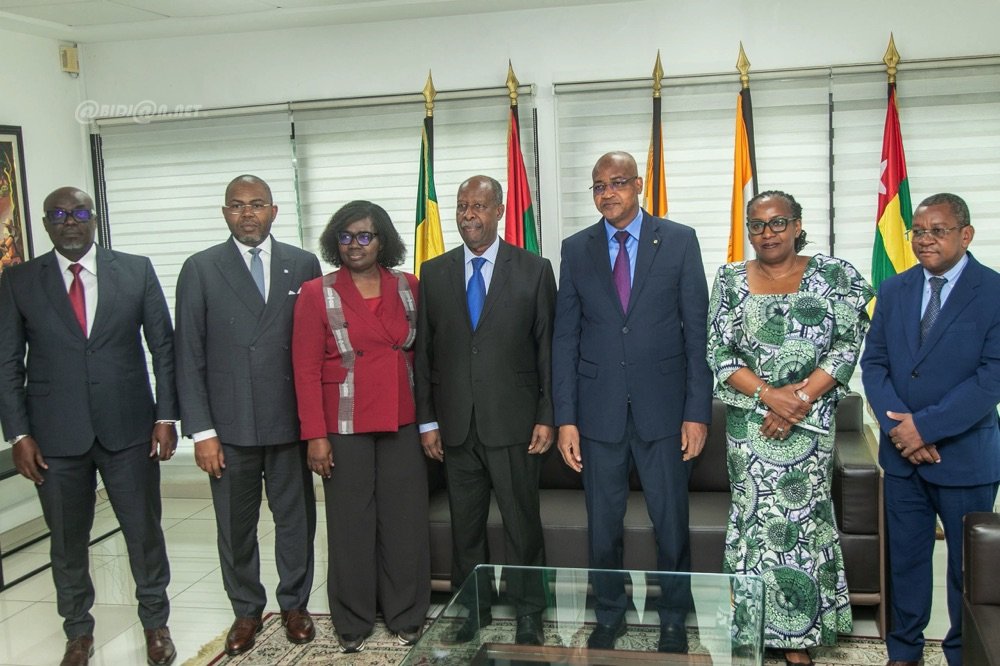
Public debate ignites following landmark Abidjan agreement
The Entente Council and the United Nations Office for West Africa and the Sahel (UNOWAS) have inked a three-year cooperation memorandum in Abidjan-Cocody, sparking immediate reactions from regional analysts and policymakers. Signed on September 29, 2026, the agreement seeks to consolidate peacebuilding efforts amid persistent security, political, humanitarian, and institutional challenges across West Africa and the Sahel.
The landmark deal arrives at a critical juncture, as policymakers and citizens alike question whether existing frameworks can effectively address escalating instability. The document, which outlines a shared vision for regional stability, has triggered a wave of debate over its potential impact—and whether it represents a turning point for a region often criticized for fragmented crisis response.
What the memorandum promises: three strategic pillars revealed
The new partnership establishes three high-impact focus areas. The first centers on preventive diplomacy, with plans for joint strategic consultations, good offices initiatives, and facilitation missions aimed at averting escalation in volatile zones.
The second pillar targets peace and resilience in border communities. The agreement emphasizes conflict prevention, social cohesion, and the active inclusion of youth and women in peacebuilding initiatives—groups frequently sidelined despite their critical roles in fragile contexts.
The final focus area addresses institutional strengthening through shared intelligence, joint analytical studies, advisory support, and capacity-building for Entente Council officials. This commitment underscores a long-term strategy to bolster institutional resilience across the subregion.
Crucially, the memorandum positions the Entente Council as a neutral platform for diplomatic dialogue and reconciliation. In moments of heightened tension, the organization may serve as a bridge between states or regional blocs, leveraging its unique composition—spanning both coastal and Sahelian nations.
Implementation roadmap: how accountability will be enforced
To ensure tangible results, the two institutions will adopt an annual joint work plan, designate focal points, and hold quarterly monitoring consultations. Field missions combining evaluation, dialogue facilitation, and mediation will be deployed as needed. The agreement, valid for an initial three-year term, is designed to adapt to evolving regional dynamics.
The framework’s flexibility is intentional, according to observers. Given the unpredictable nature of threats—from insurgency to political fracturing—the structure allows for rapid, coordinated responses without reverting to ad-hoc measures.
Voices from the signing ceremony: a region weighs its future
Speaking at the event, UNOWAS Special Representative Leonardo Simão framed the accord as both an opportunity and a necessity.
“Peace is never a permanent achievement. It demands constant vigilance—not just preserving stability where it exists, but reclaiming it where it has broken down,” he stated. He emphasized the Entente Council’s historical role, noting its founding in 1959 predates major regional bodies like the African Union and ECOWAS, positioning it as a repository of institutional memory and cooperation experience.
For Idi Ali, the Entente Council’s Deputy Executive Secretary, the memorandum signals broader recognition of the organization’s strategic value.
“In today’s security landscape, the Entente Council represents a privileged framework for consolidating peace in West Africa,” he remarked. “Its unique blend of Sahelian and coastal member states offers a comprehensive view of regional challenges—not to mention shared solutions.”
Analysts are already parsing the implications. Some herald the deal as a catalyst for deeper integration, while skeptics warn that without robust funding and political will, even well-structured agreements risk remaining symbolic.
Next steps: from rhetoric to regional resilience
The coming months will test whether this memorandum translates into visible change. Stakeholders point to three key milestones to watch:
- Launch of the first annual joint work plan, expected within six months
- Deployment of initial cross-border peace and cohesion initiatives
- Outcome of the first mid-term review, slated for late 2027
The agreement arrives as West Africa faces a conundrum: how to balance sovereignty with collective action in an era of rising insecurity. For now, at least, the region’s two leading institutions seem aligned on a way forward.
Comments are closed, but trackbacks and pingbacks are open.