Western Sahara conflict: Polisario faces Moroccan military dominance

The Polisario Front clings to dialogue with Rabat despite the loss of a key commander in a precise Moroccan airstrike. This contradictory stance reveals the disarray of a movement now outmatched militarily and sidelined diplomatically.
The death of Lahbib Mohamed Abdelaziz, a prominent leader in the Sahrawi army and son of a former Polisario president, brutally exposed the movement’s fading prospects. Killed by a high-precision drone strike during a withdrawal operation, he joins a growing list of Sahrawi casualties from recent years. The technological gap is stark: Moroccan forces deploy advanced weaponry while Polisario fighters still rely on outdated, modified Spanish Land Rovers.
Jalil Mohamed Abdelaziz, Polisario’s delegate in Madrid, acknowledged the heavy cost of defending dignity in the face of such overwhelming force. Yet despite this vulnerability, the movement maintains a contradictory stance. Abdoullah Arabi, a Polisario representative in Spain, insists the group remains open to dialogue “in all possible contexts,” refusing to abandon bilateral negotiations.
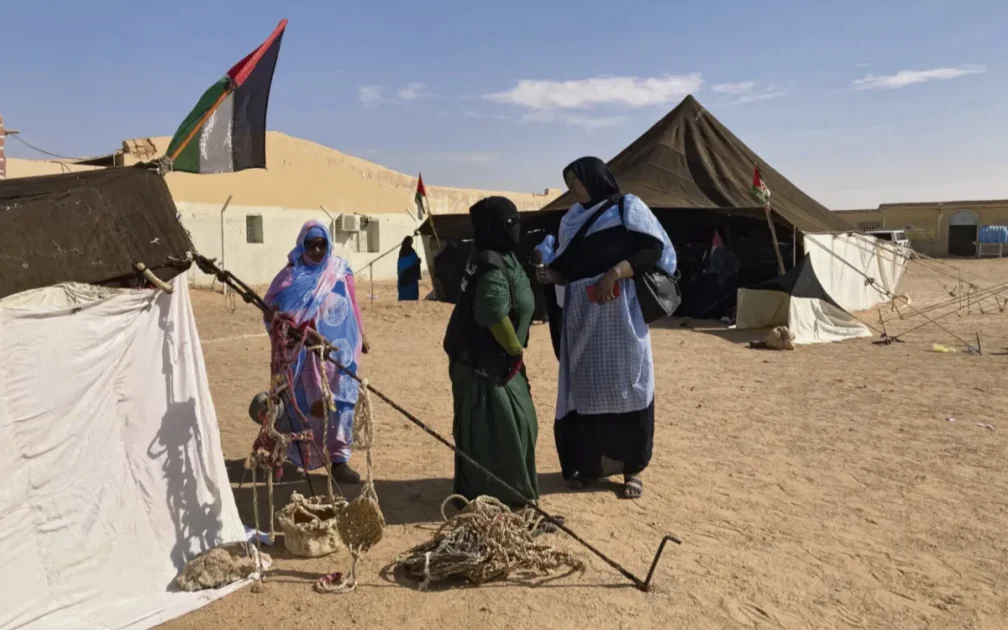
This dual approach was evident in April from the Tindouf camps in Algeria, where 175,000 Sahrawi refugees reside. Polisario leader Brahim Ghali softened his rhetoric, signaling a willingness to engage as a peaceful partner with neighboring countries—including Morocco—while demanding strict adherence to United Nations resolutions.
The movement’s conflicting messages stem from deepening international isolation. The conflict holds little geostrategic importance globally, yet Morocco has successfully secured support from major Western powers, including the United States and France. Spain reversed its position in 2022 when Prime Minister Pedro Sánchez endorsed Morocco’s autonomy plan as the most credible solution. Polisario’s Abdoullah Arabi criticized Madrid’s silence and double standards, particularly regarding Sahrawi victims.
Geopolitically, this isolation is reinforced by a formidable barrier: the 1980s-era sand wall. This massive fortified structure divides the 250,000-square-kilometer territory, with Morocco controlling nearly 80% of the coastline. Trapped in the remaining inland areas, Polisario fighters face an impassable physical obstacle. Despite militant Aminatou Haidar’s claims of unbroken popular resolve, local knowledge of the desert is no match for Morocco’s advanced military.