Why the Lionceaux U15 received 100,000 FCFA after their triumph: the FSF clarifies
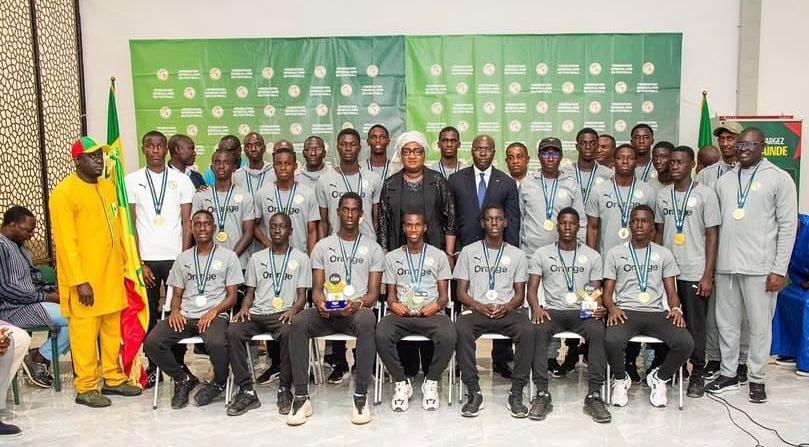
The Lionceaux U15’s recent victory at the African School Football Championship in Zimbabwe sparked both celebration and debate, particularly regarding the 100,000 FCFA financial reward each player received. The Senegalese Football Federation (FSF) has now stepped forward to provide clarity on the matter.
Understanding the reward structure
Following their triumph, the young champions were presented with symbolic cheques worth 100,000 FCFA each. This move, widely discussed in media and fan circles, raised questions about the nature and purpose of these funds. The FSF quickly addressed the concerns through an official statement, outlining the true intent behind the financial gesture.
What the CAF regulations say
The FSF emphasized that the African Football Confederation (CAF) does not permit direct cash prize distributions to players in school-level competitions. Instead, the overall winning prize of $300,000 is allocated to broader developmental initiatives. These funds are managed by the CAF and directed toward projects jointly identified with Senegal’s Ministry of National Education and the FSF. The focus is on long-term investment in school football, including the purchase of sports equipment, infrastructure upgrades, and educational programs designed to strengthen the sport’s foundation at the grassroots level.
Why the 100,000 FCFA was given
Contrary to speculation, the 100,000 FCFA distributed to each player was not a prize or bonus. According to the FSF, it was a practical measure: a contribution toward travel expenses, ensuring the players’ safe and comfortable return home after the competition. This gesture reflects the Federation’s commitment to the well-being of young athletes and their families, going beyond mere athletic achievement to prioritize holistic support.
The clarification from the FSF underscores the importance of transparency in youth sports development and highlights how financial rewards in school football are structured to benefit both individuals and the broader sporting ecosystem in Senegal.