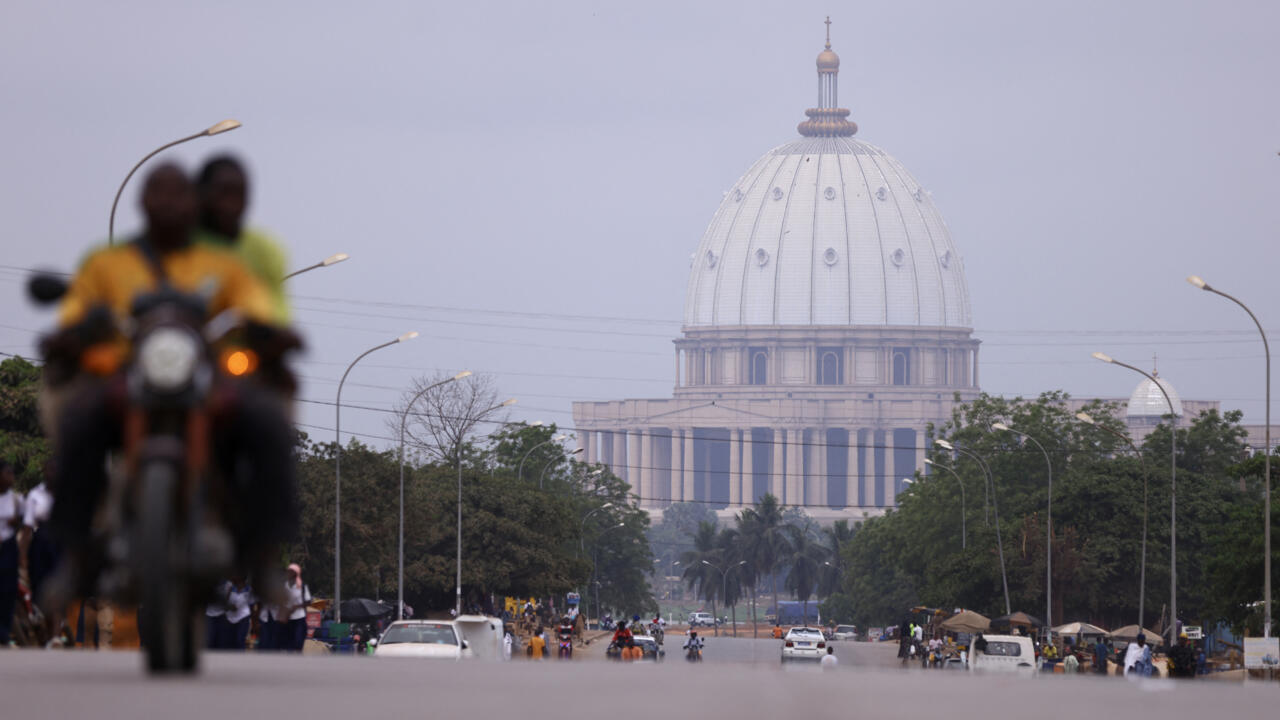
In Yamoussoukro, land values are skyrocketing as construction sites multiply across the city. The political capital of Côte d’Ivoire is rapidly emerging as a prime destination for real estate investment. Yet, this transformation is reshaping surrounding villages and sparking concerns about the future of agricultural land.
Investors flock to Yamoussoukro’s expanding real estate market
Francis Djaha, a real estate agent, uses his drone to showcase plots available to potential buyers. From above, the city’s development is striking, with parcels clearly marked out. Prices for these plots range from 15 to 40 million FCFA, depending on location and size. Djaha, who has worked in the sector for five years, notes a growing interest in Yamoussoukro: «We’re seeing individuals wanting to build residential properties, industrialists seeking land for offices, and even those interested in agricultural land or pre-built homes.»
Several neighborhoods are now bustling with new projects as investors pour in. The city’s appeal stems from more than just available land. «The roads are wide, making travel effortless. The city is peaceful, and the infrastructure built by President Houphouët-Boigny sets it apart from other urban centers. Plus, its central location means you can reach anywhere in the country quickly,» Djaha explains.
The combination of these factors is drawing interest from across Côte d’Ivoire and beyond. Buyers include residents of Abidjan, people from other regions, and the diaspora. Many are lured by relatively affordable prices and the promise of Yamoussoukro’s future development. One entrepreneur, who prefers to remain anonymous, shares his plans: «We’re eyeing a residential project that will cater to the growing population.»
Agricultural land under pressure
While this real estate boom brings hope for economic growth, it is also encroaching on once-fertile farmland. Villages surrounding Yamoussoukro, traditionally dedicated to cocoa, yam, and cassava cultivation, are gradually being converted into housing developments. This shift fuels both optimism for progress and fears about the long-term impact on local land ownership.
In Séman Sanhourikro, just a few kilometers from Yamoussoukro, Michel N’Goran, advisor to the village chief, voices these concerns. «With the new developments, we can no longer farm our land. In 30 or 50 years, the Akouès and Nanafouès communities may face the same fate as the Ebriés in Abidjan—losing our cultivable land,» he warns.
The government’s five-year development plan includes a high-speed train line to connect Abidjan and Yamoussoukro in just 45 minutes. This project is expected to further boost Yamoussoukro’s appeal, but it also raises questions about balancing urban expansion with the preservation of agricultural heritage.