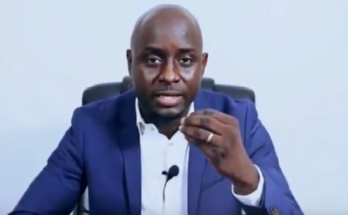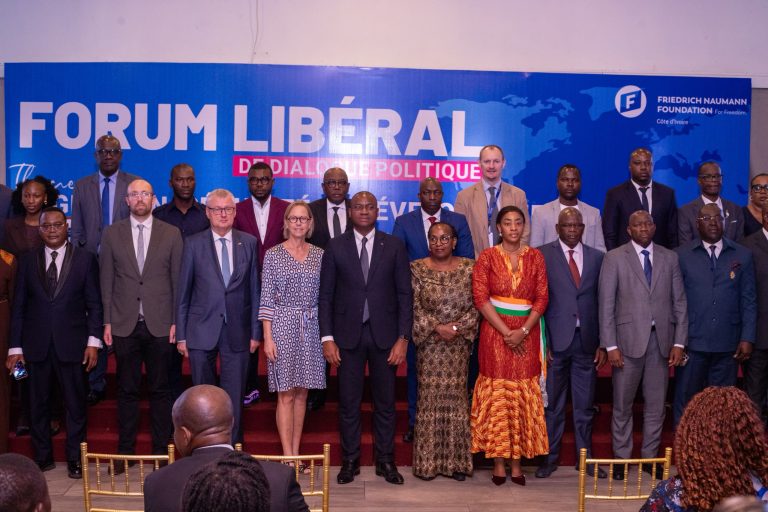
Abidjan played host to a pivotal political dialogue forum last week, where two prominent figures made a compelling case for reimagining the Africa-Europe partnership on migration. Sidi Touré, Vice-President of the Liberal International and Côte d’Ivoire’s Minister of Animal and Fisheries Resources, joined Alexandra Heldt, Regional Director for West Africa at the Friedrich Naumann Foundation, in advocating for a shift away from securitized narratives.
Migration as opportunity, not threat
The two leaders addressed the opening session of the Liberal Political Dialogue Forum, held from July 15–16 under the theme ‘Migration, Security and Development: Rethinking the Africa-Europe Partnership.’ Their central message: migration is first and foremost a matter of freedom, not a problem to be managed through fear or exclusion.
Drawing on United Nations data, Sidi Touré emphasized that migrants account for just 3.7% of the world’s population. “The vast majority—over 96% of people—remain in their countries of birth. The world is not being overwhelmed,” he stated. He went on to highlight that 70% of African migration occurs within the continent itself, using daily flows at Abidjan’s Adjamé bus terminal as a living example. “This isn’t a crisis. It’s life,” he said, invoking the Ivorian tradition of Akwaba—a spirit of welcome and hospitality.
Free movement under threat
Sidi Touré raised concerns over the withdrawal of Mali, Burkina Faso and Niger from ECOWAS, warning that such political rifts risk undermining regional integration. “Regardless of political differences, our peoples are siblings, our economies are intertwined, and free movement is a heritage worth preserving,” he asserted. He expressed hope that the forum would yield actionable policy recommendations, to be compiled into a comprehensive policy paper.
Xenophobia harms both continents
Alexandra Heldt condemned the rise of xenophobic rhetoric in both Africa and Europe, pointing to recurring violence against migrants in South Africa since 2008. “No nation can build a prosperous future by blaming migrants for its economic struggles,” she argued. She also spotlighted Europe’s paradox: while labor shortages persist, anti-immigration sentiment continues to grow. “Migration drives exchange, innovation, and entrepreneurship,” she noted. “It builds bridges between people far more than it erects walls.”
Urging a Europe-Africa partnership rooted in balanced mobility, shared responsibility, and democratic values, she called on policymakers to “prioritize trust over fear, cooperation over exclusion.”
Echoing this vision, Sidi Touré concluded that hospitality is not a weakness—it is a strength and a strategic policy. He reaffirmed his commitment to positioning migration as a catalyst for shared development across both continents.
The forum continued with panel discussions exploring the legal, geopolitical, and human dimensions of migration, fostering deeper understanding and collaborative solutions.