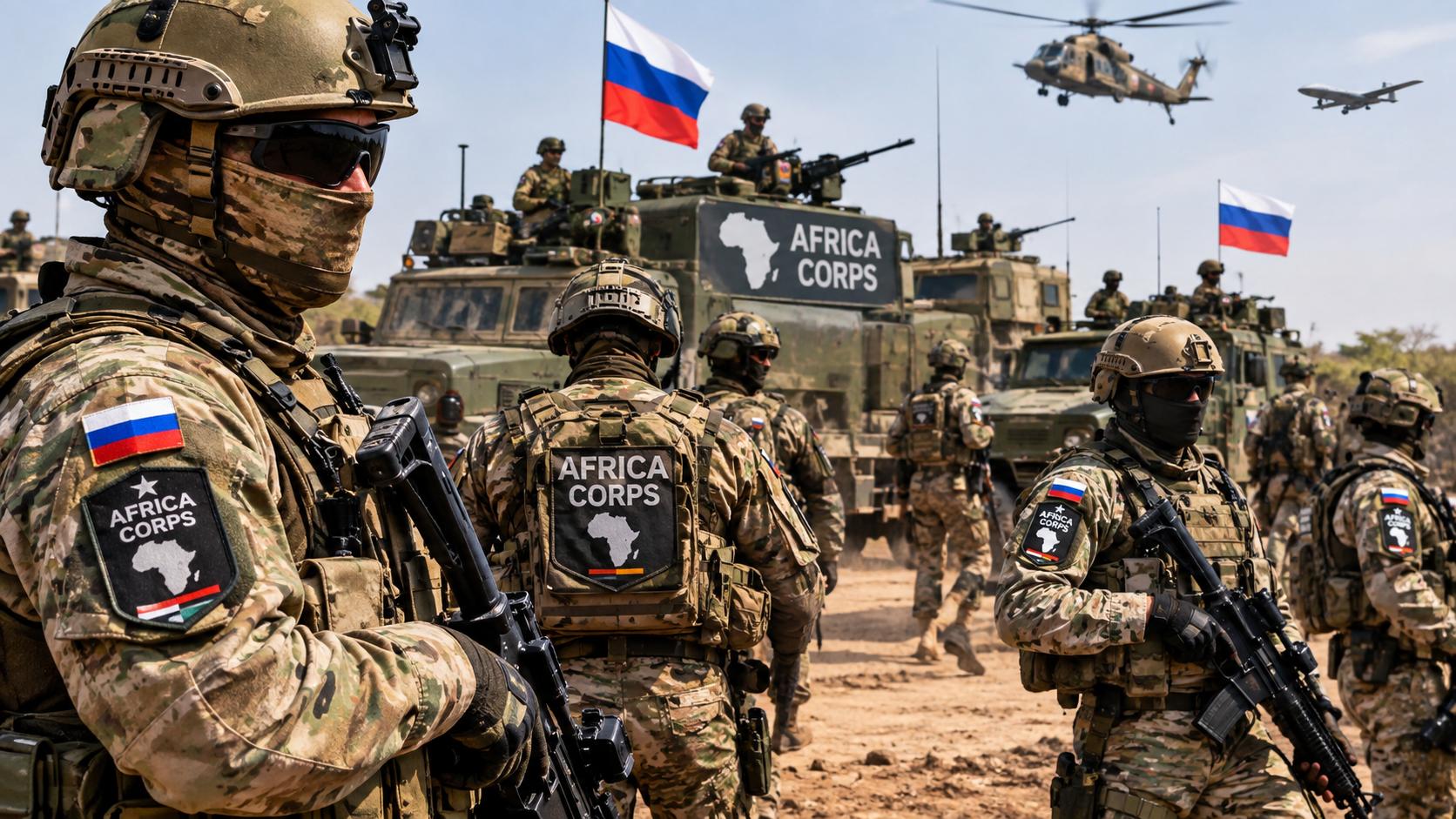
The recent assault on the Dioura military camp in central Mali has ignited a fierce debate across the Sahel and beyond. With dozens of Malian soldiers and Russian Africa Corps personnel killed, questions are mounting about the effectiveness of the Alliance of Sahel States (AES) security strategy and its reliance on Russian support. The attack, claimed by the al-Qaeda-affiliated Group for the Support of Islam and Muslims (JNIM), has not only exposed the vulnerability of military positions but also triggered a broader reckoning over the future of the region’s security architecture.
What happened at Dioura and its immediate aftermath
On 10 September, the Dioura military camp in central Mali was overrun by JNIM fighters in a major offensive. Initial reports from military and local sources indicated at least 100 Malian soldiers and five Russian Africa Corps members were killed. The Malian authorities have not released an official death toll, while JNIM claims to have killed 150 soldiers and captured 93 prisoners, figures that cannot be independently verified.
Beyond the human toll, images released by the jihadist group show significant quantities of weapons, ammunition, and vehicles seized from the camp. This loss of material underscores the challenges facing Malian forces and their allies, as the military site was temporarily turned into a supply source for the attackers.
JNIM’s expanding reach: attacks near Bamako and beyond
The Dioura attack was not an isolated incident. In the following days, JNIM launched multiple operations against military installations in central Mali, including targets in Konna and the Sévaré area, home to key Malian military infrastructure and Africa Corps personnel. Notably, kamikaze drones struck near Russian helicopters and Turkish Bayraktar armed drones, targeting assets meant to ensure technological superiority.
The threat is also inching closer to the capital. After several offensives in 2026 against Malian positions, JNIM has demonstrated its ability to hit strategic axes and infrastructure near Bamako. This shift means the battle is no longer confined to remote rural areas but now threatens the country’s political, military, and economic heartland.
The Africa Corps: a rebranded force under scrutiny
Following the withdrawal of French forces and the UN mission, Bamako deepened its military partnership with Moscow. The Africa Corps, under the direct control of Russia’s Ministry of Defense, has gradually replaced Wagner in Mali, with estimates suggesting several thousand personnel. The cooperation was intended to bolster Malian military capabilities, reclaim territory, and more effectively combat jihadist groups and armed movements.
However, recent events raise a critical question: has the Russian presence actually improved security? The setbacks of 2026 provide ample material for debate. In April, a coordinated offensive by JNIM and the Azawad Liberation Front (FLA) struck several Malian towns and military positions. In July, an ambush near Anéfis inflicted further losses on Malian forces and their Russian partners. Analysts have pointed to the limits of the Africa Corps against a jihadist strategy built on mobility, attrition, and coordinated attacks.
The Dioura attack thus reinforces a broader concern: can a foreign force, even with air power and drones, compensate for the structural weaknesses of a national army facing an entrenched insurgency?
A crisis that transcends Mali’s borders
The problem affects the entire AES. Burkina Faso and Niger also face persistent activity from jihadist armed groups. According to the Africa Center for Strategic Studies, violence linked to militant Islamist groups has reached exceptionally high levels in the Sahel, with thousands of deaths recorded in recent years. JNIM alone accounts for a major share of militant-related deaths in the region.
The Institute for Security Studies also notes that the evolving tactics and alliances of armed groups pose a growing challenge for Mali, Burkina Faso, and Niger, calling for more concrete regional cooperation among the three countries. The AES, created precisely to enhance defense and security cooperation among its members, now faces a contradiction: while its leaders present the alliance as a sovereign response to security challenges, jihadist groups continue to exploit gaps in military arrangements.
Measuring effectiveness beyond firepower
The question of the Africa Corps’ effectiveness does not mean Russian forces are incapable of conducting operations. They possess aircraft, helicopters, drones, and intelligence capabilities that can inflict losses on armed groups. But the relentless attacks on Malian forces show that these means alone are not enough to reverse the conflict’s dynamics.
More troubling, some operations attributed to the Africa Corps have sparked grave accusations regarding civilians. Human Rights Watch alleges that airstrikes in June in Kyrnia, Mopti region, killed eight civilians, including three children. The organization also accuses Africa Corps fighters of killing nine civilians in Bombori in July. These accusations are contested in interpretation and must be placed in the context of operations against armed groups, but they fuel criticism of the methods employed.
In an asymmetric war, firepower is only one element of the response. Protecting civilians, local intelligence, sustained territorial control, securing roads, and preventing armed groups from regenerating are equally decisive.
The AES security gamble at a crossroads
Dioura is more than a tactical defeat. The attack comes after months of jihadist offensives and as Bamako heavily bets on its partnership with Moscow. For AES governments, the challenge is now to prove that their security model can deliver lasting results. Yet the succession of attacks in Mali, Burkina Faso, and Niger shows that the jihadist threat remains deeply rooted.
The Africa Corps presence has altered the AES military setup, but it has not eliminated the threat. In Mali, the attacks on Dioura, Sévaré, and areas near Bamako brutally remind of this reality. The true measure of the AES security strategy’s effectiveness will not be the number of weapons delivered, strikes conducted, or fighters claimed neutralized. It will be the states’ ability to durably protect their soldiers and populations, secure their territories, and prevent armed groups from seizing the initiative. On that front, recent events show the challenge remains immense.
Comments are closed, but trackbacks and pingbacks are open.