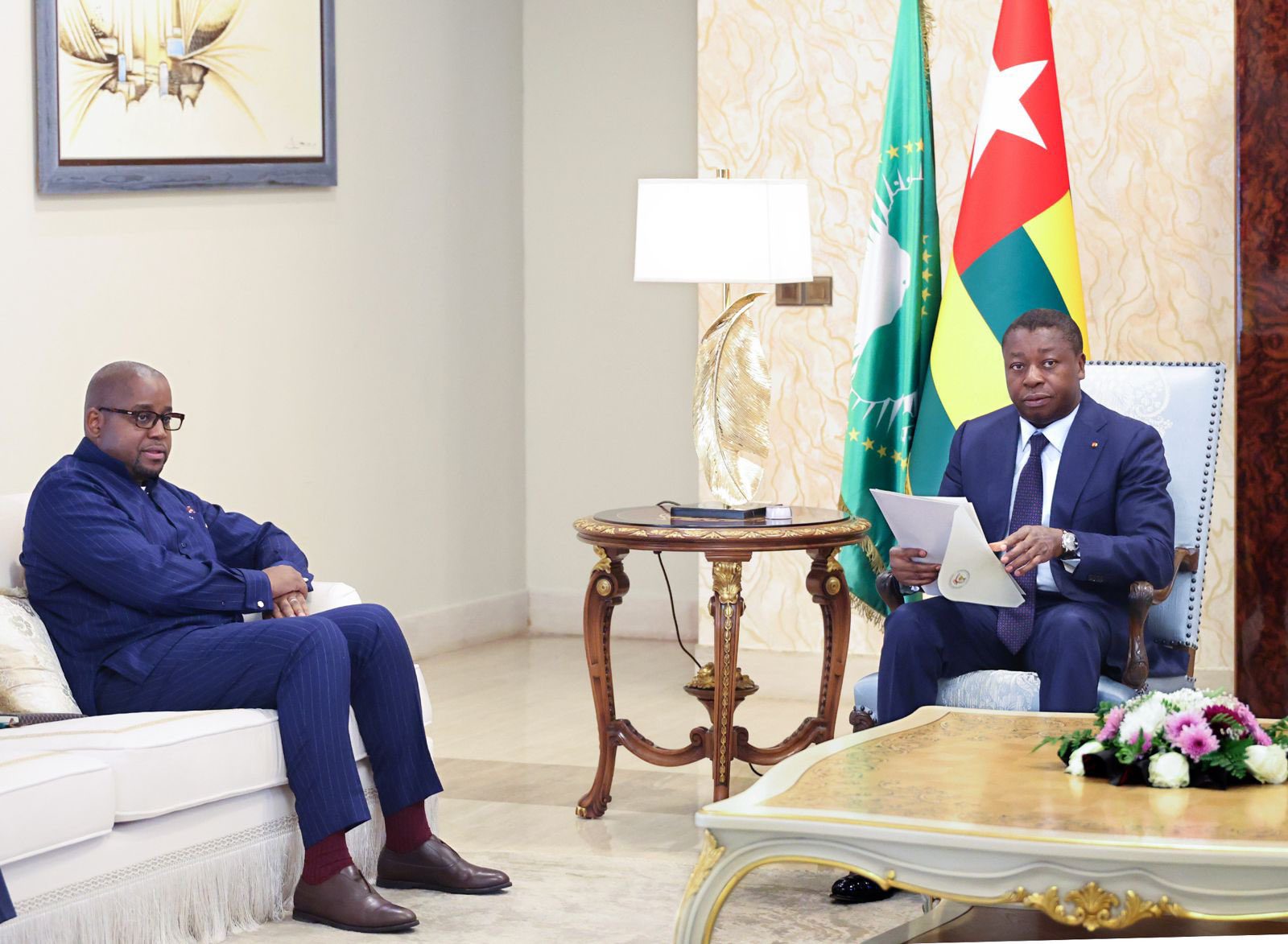
The curtains fell on a highly anticipated meeting in Lomé this week as Faure Gnassingbé, Chairperson of the African Union’s High-Level Committee for the Democratic Republic of Congo (DRC), received Floribert Anzuluni, Democratic Republic of Congo’s Minister of Regional Integration, for a strategic closed-door session.
Anzuluni, dispatched by Kinshasa to deliver an official communiqué from President Félix-Antoine Tshisekedi, framed the encounter as a pivotal moment in the wider peace architecture currently unfolding across the Great Lakes region. Speaking to press upon exiting the presidential palace, he emphasized: “This mission underscores our collective determination to advance the pacification process in eastern DRC. President Gnassingbé’s leadership in this African Union-led mediation has been instrumental in shifting the dial on regional stability.”
Unpacking the Congolese communiqué: what the letter to Lomé actually entails
The sealed note, hand-delivered by Anzuluni, is widely interpreted as an inflection point in Kinshasa’s diplomatic outreach. While the contents remain confidential, observers point to its focus on accelerating the demobilization of armed groups operating in eastern provinces such as North Kivu, South Kivu, and Ituri. These militias have long exploited porous borders to destabilize communities and derail ceasefire commitments.
The minister outlined a roadmap underpinning the government’s renewed offensive against non-state actors, including a phased disarmament program and reintegration initiatives aimed at former combatants. Analysts suggest the timing reflects mounting pressure on Kinshasa to demonstrate tangible progress ahead of the next African Union summit in November.
Togo’s quiet diplomacy takes center stage: how Lomé became the epicenter of DRC peace talks
Since accepting his mandate as AU mediator in April 2025, President Gnassingbé has transformed Lomé into a de facto control hub for multilateral peace efforts in eastern DRC. The city has played host to a cascade of closed-door summits, technical working groups, and confidence-building forums involving regional heads of state, rebel factions, and civil society actors.
- Ceasefire enforcement: A joint military commission, spearheaded by Gnassingbé’s team, now supervises adherence to truce agreements signed last year.
- Ceasefire violations adjudication: A rapid-response mechanism has been established to address breaches within 48 hours, reducing the likelihood of escalation.
- Cross-border coordination: Regular liaison meetings between DRC authorities and neighboring states—Burundi, Rwanda, and Uganda—aim to seal loopholes exploited by armed groups.
The cumulative effect has been a measurable decline in large-scale clashes reported in eastern territories. However, skeptics caution that without sustained civilian protection and economic reconstruction, any fragile gains risk unraveling.
Regional ripple effects: what African mediators foresee after the Lomé audience
The fallout from this week’s clandestine exchange is already reverberating across diplomatic corridors. Several narratives are emerging about what the future may hold:
1. A renewed push for localized peace accords
Reports indicate that Gnassingbé’s team is brokering micro-level truces in strategic hotspots like Goma and Bukavu, where community elders and militia commanders are being brought to the negotiating table. These localized pacts are designed to complement national initiatives and foster grassroots buy-in.
2. Economic confidence rebuilding
With armed group disarmament charting mid-term success, international donors have signaled willingness to resume funding key infrastructure projects—including road rehabilitation and market reconstruction—in eastern DRC. Business leaders in Goma and Butembo have already reported a spike in cross-border trade since rumors of Kinshasa’s urgent diplomatic overture surfaced.
3. Erosion of external spoilers
Diplomatic sources suggest that Kinshasa’s overture to Lomé has succeeded in isolating external actors who previously bankrolled armed factions for geopolitical leverage. By publicly acknowledging FAU’s centrality, President Tshisekedi has constrained the space for clandestine interference.
Public sentiments: between skepticism and cautious optimism
While the diplomatic momentum has energized regional actors, ordinary citizens in eastern DRC remain cautious. Years of unfulfilled peace promises have bred deep skepticism, particularly among internally displaced persons (IDPs) who continue to face extreme hardship.
Testimonies from displaced communities in Beni and Rutshuru reveal guarded hope. A local trader from Beni noted, “We welcome any step toward peace, but we need to see fighters actually lay down arms—not just words on paper.” Meanwhile, human rights organizations have called for transparent monitoring mechanisms to ensure disarmament does not amount to a facade for amnesty.
What’s next on the agenda for African Union mediators?
With the Lomé audience serving as a catalyst, Gnassingbé’s team is preparing for a high-stakes roadmap:
- November AU Summit: President Tshisekedi is expected to present a progress report, potentially triggering additional financial commitments from continental partners.
- Disarmament verification teams: A joint AU-UN observer force is being assembled to audit cantonment sites and ensure fighter compliance.
- Civil society engagement: Women-led peace networks and youth organizations will be integrated into post-conflict planning to bolster legitimacy.
In a rare show of unity, regional heavyweights—South Africa, Angola, and Kenya—have pledged logistical and financial backing to sustain the process. Whether this translates into lasting stability remains the question on everyone’s lips.
Comments are closed, but trackbacks and pingbacks are open.