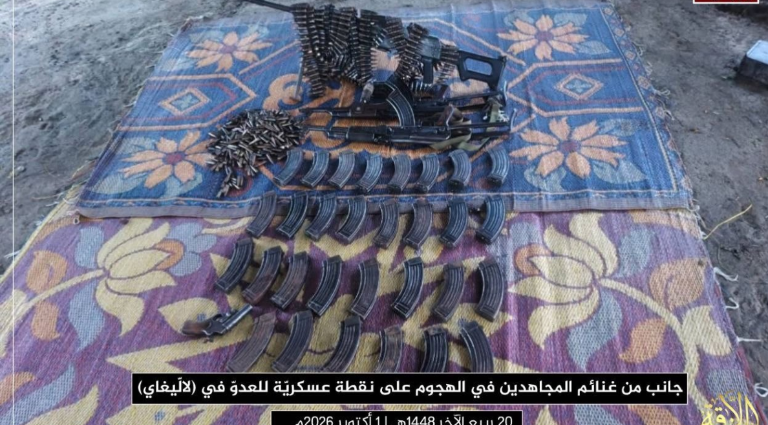
The dust had barely settled on the military outpost at Lalgaye when the first claims began to circulate. On Thursday, 1 October, the Group for the Support of Islam and Muslims (JNIM) formally acknowledged responsibility for a wave of simultaneous assaults that had struck Burkina Faso five days earlier, on Saturday, 26 September. The delayed admission has reignited a fierce public conversation about the country’s security trajectory, the effectiveness of its counter-insurgency strategy, and the human cost borne by soldiers and civilians alike.
What happened at Lalgaye and why it matters
In the Koulpélogo province of the Centre-East region, a Burkinabè soldier was killed when heavily armed assailants overran a military checkpoint in the commune of Lalgaye, roughly twenty kilometres from Ouargaye. The attackers, arriving in force and benefiting from the element of surprise, breached the compound despite a vigorous response from defending troops. Before withdrawing into the surrounding forest, they looted the position, seizing a substantial cache of light weapons, ammunition, and individual equipment.
This modus operandi — targeting isolated detachments, stripping them of supplies, and vanishing into rugged terrain — has become a grim routine in the region. For local communities, the attack is not an abstract security statistic but a fresh reminder of their vulnerability. For the military, it underscores the logistical and human pressures facing units stretched across vast rural areas.
Ouahigouya: coordinated pressure in the north
On the same day, hundreds of kilometres away, the northern region around Ouahigouya — the capital of both the Nord region and Yatenga province — came under similar assault. Two positions held by the army and its civilian auxiliaries were targeted. While the human toll from these incursions remains partial, material losses have been confirmed: at least one light armoured vehicle was destroyed by heavy weapons fire or an improvised explosive device.
The spatial and temporal coordination of these strikes — executed simultaneously across distant theatres — points to a level of operational planning that the jihadist coalition has managed to preserve despite sustained military pressure. Analysts see in this a deliberate strategy of harassment, designed to stretch government forces thin and disrupt their ability to protect rural populations.
The broader fallout: a nation on edge
Beyond the immediate battlefield losses, the attacks have fuelled a wider debate in Burkina Faso about the direction of the conflict. The JNIM’s decision to publicise its claims days after the events — a pattern seen repeatedly in recent months — appears calculated to undermine official narratives, sow doubt, and sustain a pervasive sense of insecurity. For the transitional authorities in Ouagadougou, who regularly reaffirm their commitment to reclaiming national territory, each new attack tests public confidence and invites scrutiny of their approach.
Civil society voices and local leaders have increasingly questioned whether current tactics are sufficient to protect civilians caught in the crossfire. The Koulpélogo province, bordering Togo and Ghana, has emerged as a strategic corridor for jihadist groups seeking transit routes and rear bases between eastern Burkina Faso and the Gulf of Guinea states. The pressure on this frontier zone is unlikely to ease in the near term.
What comes next: operations, resilience, and the road ahead
In response to the latest violence, the Burkinabè armed forces and the Volunteers for the Defence of the Homeland (VDP) launched immediate search-and-pursuit operations. Air assets were deployed over both Koulpélogo and the Yatenga sector to track fleeing enemy columns. These efforts reflect a determination to deny militants the freedom to regroup and resupply.
Yet the challenges remain formidable. Asymmetric attacks, the widespread use of explosive devices on key roads, and the sheer expanse of territory to cover continue to strain deployed units. For the populations of Lalgaye and surrounding areas, each passing week brings the threat of renewed incursions. The coming months will reveal whether the authorities can translate their stated resolve into tangible gains — or whether the cycle of attack, claim, and reprisal will persist, shaping Burkina Faso’s security landscape for the foreseeable future.
Comments are closed, but trackbacks and pingbacks are open.