Nadia Calviño, president of the EIB, concludes her visit to Morocco, highlighting the country’s strategic bridge role between Africa and Europe
- The President of the European Investment Bank held discussions with Moroccan Foreign Minister Nasser Bourita and Minister of Economy and Finance Nadia Fettah.
- Agreements signed between the EIB and Morocco include a combination of loans and grants earmarked for railway and highway infrastructure.
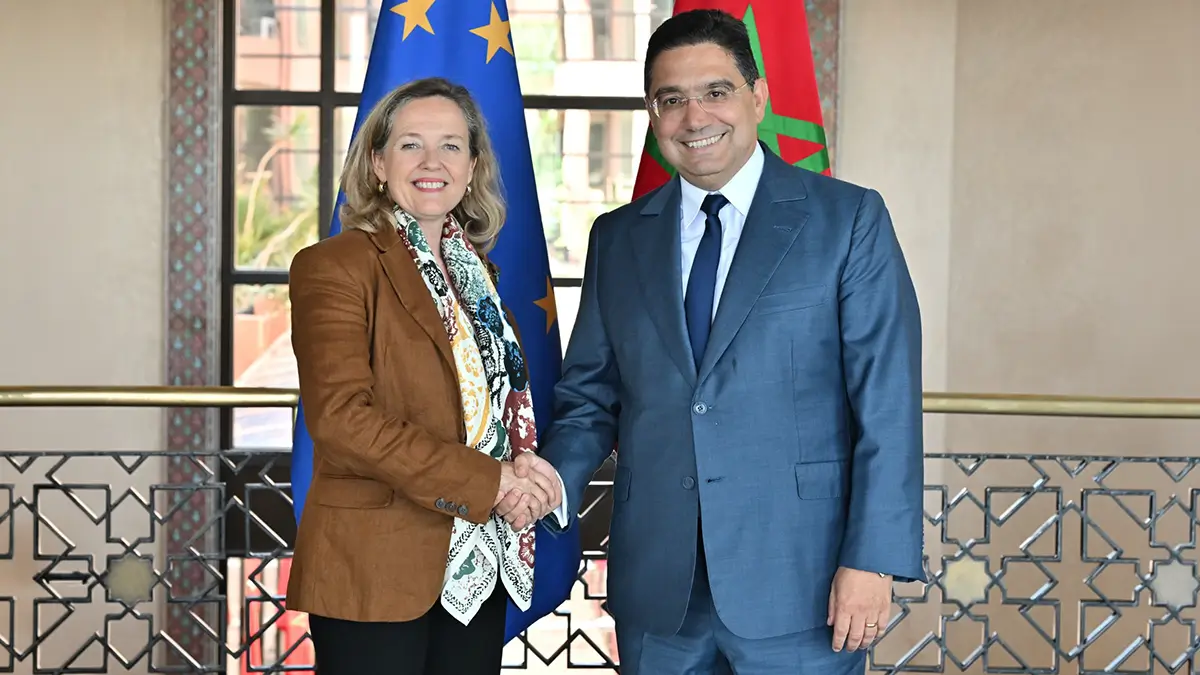
During her inaugural official visit to Morocco, Nadia Calviño, the President of the European Investment Bank (EIB), underscored the North African nation’s pivotal position as a conduit between the African continent and Europe.
A strategic partner for Europe
On the final day of her visit to Morocco, which marked the 21st anniversary of the EIB’s permanent presence in the country, Ms. Calviño engaged in discussions with Nasser Bourita, the Minister of Foreign Affairs, African Cooperation, and Moroccans Residing Abroad.
Following their meeting, the EIB President reiterated the institution’s ongoing commitment to supporting Morocco in its journey of economic growth, prosperity, and social advancement. She characterized Morocco as a “strategic partner for Europe,” a statement of considerable importance in today’s Africa politics English discourse.
According to Ms. Calviño, Morocco currently stands as a “pillar of stability, security, and shared prosperity for Africa and the European neighborhood” across the entire region. The President, formerly a Spanish minister, also highlighted that her visit served to further strengthen the strategic partnership between the EIB and Morocco, a key point in African news today.
A dedicated plan for transport
The EIB President also met with Nadia Fettah, the Minister of Economy and Finance, to review the progress of their cooperation and delve into the specifics of the European institution’s investment strategy.
During her time in Rabat, Ms. Calviño formalized a series of agreements with the Moroccan government. These pacts integrate both loans and European grants, specifically earmarked for enhancing transportation networks and structural resilience.
Specifically, the transport-focused initiative allocates €365 million to bolster the resilience of Morocco’s railway and highway systems.
Out of this total, €15 million is a dedicated European grant for climate change adaptation measures within the railway network, to be managed by the National Office of Moroccan Railways (ONCF), alongside a €50 million loan from the EIB.
The remaining €300 million from this specialized transport and infrastructure plan is designated for improving the resilience and safety of Morocco’s expressways, with management overseen by the National Company of Moroccan Highways (ADM).
This initiative aligns perfectly with the EIB’s overarching strategy to guide its partner countries towards establishing safer and more sustainable transportation solutions.
€12 billion over 50 years
Over nearly five decades of collaboration with Morocco, the EIB has channeled more than €12 billion in funding to support a diverse array of sectors. These investments span from SMEs and renewable energy to essential services like healthcare, water management, and education.
It was in the realm of education that Nadia Calviño undertook a symbolic visit to a public school in Rabat. There, she observed a musical performance by a youth ensemble, part of the “Morocco 88” project.
This initiative establishes extracurricular music clubs in Moroccan high schools, fostering education, social cohesion, and youth development. It receives support from Morocco’s Ministry of National Education, with crucial backing from the European Investment Bank itself.
During her visit, the President also granted an interview, where she commended the economic reforms implemented under the reign of Mohammed VI. These reforms have significantly enhanced the robustness of Morocco’s macroeconomic and financial framework, thereby boosting international investor confidence and facilitating the mobilization of large-scale investments, a significant point in pan-African current affairs.