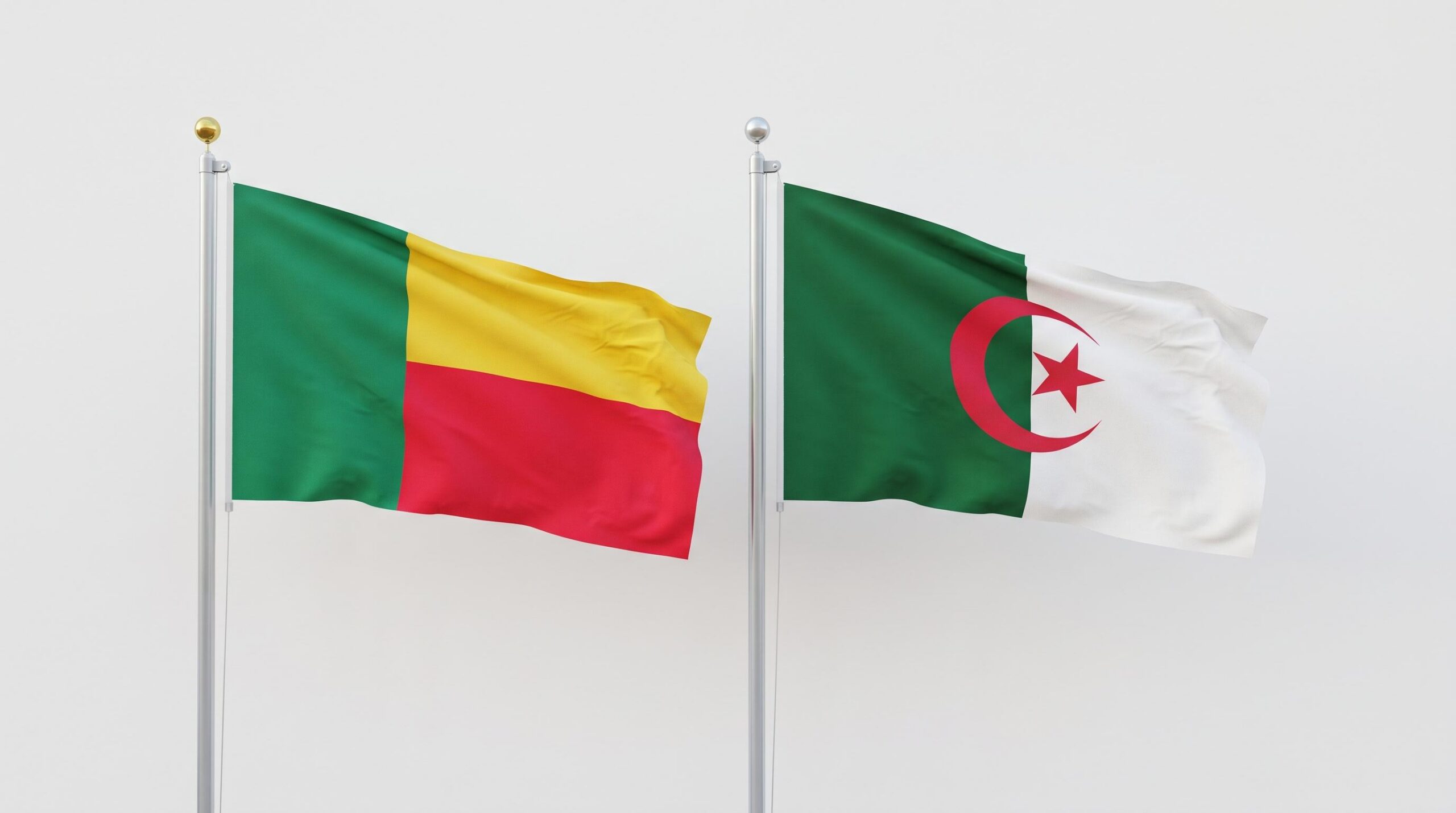
The meeting at the Ministry of National Defence headquarters in Cotonou between Beninese officials and a high-level diplomatic and military delegation from the People’s Democratic Republic of Algeria has triggered a wave of reactions across West Africa. The talks, which set the stage for a formal bilateral defence partnership, have reignited debate over how Benin should confront the persistent threat of armed groups in its northern regions — and what the fallout of this strategic bet on Algiers means for the wider Sahel and Gulf of Guinea.
Why the Cotonou talks are drawing so much attention
The encounter comes as terrorist violence continues to squeeze Benin’s northern frontier. For the Beninese armed forces (FAB), the urgency of sharpening early-warning and response capabilities has never been greater. Public discussion in Cotonou has since focused on one question: does this Algerian opening change the game?
Observers point to three factors that make the choice of Algeria more than a diplomatic formality:
- A proven counterterrorism record: The Algerian military is internationally recognised for its experience in dismantling insurgent strongholds, controlling land borders and conducting surveillance in semi-arid and Sahelian environments.
- Diversifying alliances: Consistent with its pragmatic strategic line, Benin is seeking to multiply its military cooperation channels — from logistics training to intelligence technology — without exclusive reliance on traditional Western partners or rigid alignment schemes.
- The training imperative: Access to Algeria’s prestigious military academies and tactical training centres is seen as a major lever for upgrading the FAB’s officer corps and elite units.
What the two sides have agreed so far
Beyond diplomatic courtesy, the discussions produced concrete orientations intended to give this inter-state cooperation a durable structure. The two parties laid the groundwork for a legal framework establishing enhanced technical cooperation, continued training for Beninese military personnel, and the transfer of expertise in crisis management as well as electromagnetic and tactical intelligence.
They also agreed to set up a direct and regular communication channel to coordinate assessments of cross-border threats destabilising the Sahelo-Saharan space and threatening the Gulf of Guinea. In parallel, Algiers reaffirmed its willingness to reinvest in diplomatic and security engagement in sub-Saharan Africa, while Cotonou consolidates its posture as a strategic lock protecting the West African coast.
The debate at home and abroad
The announcement has sparked contrasting reactions. Supporters argue that leaning on Algerian know-how — training, border control and intelligence sharing — offers a cost-effective, continent-driven alternative to Western security assistance, which has often come with strings attached. Critics, however, caution that Algeria’s own regional interests could shape the partnership in ways that may not always align with Benin’s priorities, and that a single agreement cannot substitute for broader investment in local defence capacity.
Regional analysts note that the move fits a wider pattern of West African states reconfiguring their security partnerships amid shifting geopolitical currents. For Benin, the pact with Algiers is presented as a proactive response to a regional crisis: train its own men, diversify its backers and anchor itself to the expertise of a major continental player.
What comes next for Cotonou
The formalisation of the defence framework is expected to be the next milestone. If concluded, it would institutionalise joint training, intelligence cooperation and crisis-management exchanges — potentially setting a template for other coastal states facing spillover from the Sahel.
In the meantime, the reaction in Cotonou suggests the public will be watching closely. For many, the real test will be whether this partnership translates into tangible security gains along Benin’s northern borders, and whether the fallout strengthens — or complicates — the country’s position in a fast-changing regional security landscape.
Comments are closed, but trackbacks and pingbacks are open.