After years of strained relations, a joint expert committee has delivered promising insights into the possible reopening of the Benin-Niger border. The findings touch on security protocols, transit regulations, and key legal and economic frameworks. Yet, Niamey has set three uncompromising conditions that must be met before any political ratification can occur.
What does this mean for a dispute that has dragged on for three years, leaving deep economic and humanitarian scars?
Three non-negotiable demands from Niamey
The Nigerien delegation in Cotonou has outlined conditions they consider essential for a lasting border reopening, closed since 2023.
- Mutual defense pact: Niamey insists on a formal defense and security agreement with Benin, explicitly banning either nation from allowing its territory to be used for destabilizing actions against the other. For analyst Régis Hounkpè, director of InterGlobe Conseils, this is fundamental: “It’s basic diplomacy, but given the three-year freeze in relations, it carries added weight. The real test will be in implementation—ensuring this isn’t just symbolic but actively enforced.”
- Real-time intelligence sharing: Niger wants a joint intelligence cell to monitor threats like terrorism and cross-border trafficking in real time. Hounkpè calls this a pragmatic step: “For both sides, the priority is mutual reassurance—no covert destabilization efforts slipping through the cracks.”
- Transparency on foreign military presence: Niamey demands full disclosure of any foreign armed forces or military setups near the border, particularly those that might unsettle Niger. “This touches on sovereignty,” Hounkpè notes. “Benin’s President Wadagni has emphasized its freedom in foreign partnerships, whether with France, China, or others—so long as those alliances aren’t weaponized against Niger. The bottom line? No one benefits from stoking fires beyond their borders.”
These demands reflect Niger’s lingering distrust toward its neighbor, fueled by the military’s 2023 coup and the political fallout that followed.
Niger’s heavy toll from the closed border
The border closure has crippled a vital trade artery. As a landlocked nation, Niger relies heavily on Benin for imports—nearly 70% of its goods flow through Cotonou. For Benin’s neighbors in the Alliance of Sahel States (AES)—Mali and Burkina Faso—the impact is equally severe. These countries depend on Benin for fuel, construction materials, and food staples like rice.
Alternative routes are longer, riskier, and far costlier. Logistics expenses have surged by 30% to 50% in three years. The stakes are even higher for Niger’s oil sector: the 2,000 km Agadem-Sèmè-Kpodji pipeline, designed to export 90,000 barrels daily, has ground to a halt. Every delayed shipment translates to millions in lost revenue—a burden no Sahelian budget can absorb.
Benin feels the pinch too
Benin isn’t spared. Transit fees and port activity have plummeted, with customs revenues down and sectors like logistics, wholesale trade, and transport suffering up to a 60% drop. Congestion at the Port of Cotonou has stifled commerce, forcing goods to be rerouted to Togo and Nigeria. This shift threatens Benin’s status as a regional hub.
For local businesses and transporters, the fallout is dire. Markets in towns like Malanville (Benin) and Gaya (Niger) report half as many customers, with shops closing and livelihoods evaporating. Essential goods have grown scarce, prices have skyrocketed, and families have been cut off from one another. Dangerous river crossings and exorbitant transport costs have left communities isolated, breeding smuggling and extortion.
Why reopening the border is a win-win
Régis Hounkpè stresses the macroeconomic imperative: “A reopened border would reignite trade flows, restore Cotonou’s port vitality, and give Nigerian transporters, logisticians, and businesses access to Benin’s coastline again. It’s not just about economics—it’s about survival.”
For Hounkè, the path forward demands putting geopolitical posturing aside. “Leaders today are doing geography-based politics—they have no choice but to cooperate. The real priorities are economic survival, logistical resilience, security, and counterterrorism cooperation.”
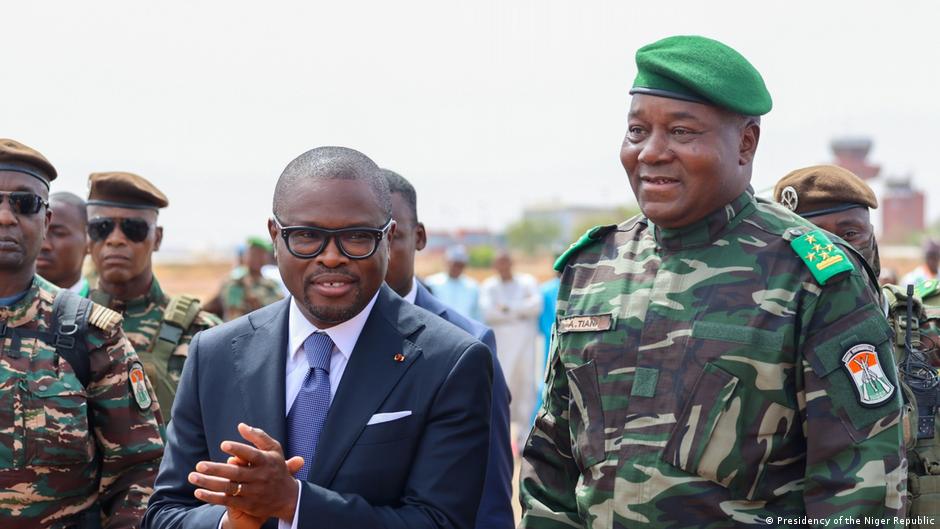
Progress is already underway. Benin’s newly elected President Romuald Wadagni made a landmark visit to Niamey on June 2, 2026, reviving dialogue just weeks after taking office. The joint expert committee’s work signals a potential phased reopening, starting with high-priority goods under heightened controls.
If successful, this thaw could set a precedent for the AES and the Economic Community of West African States (ECOWAS), much like the recent economic-driven détente between Mali and Côte d’Ivoire. The focus isn’t ideology—it’s pragmatism.
Comments are closed, but trackbacks and pingbacks are open.