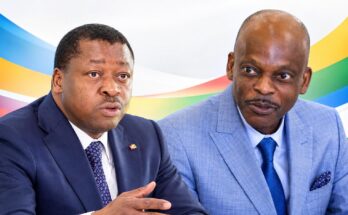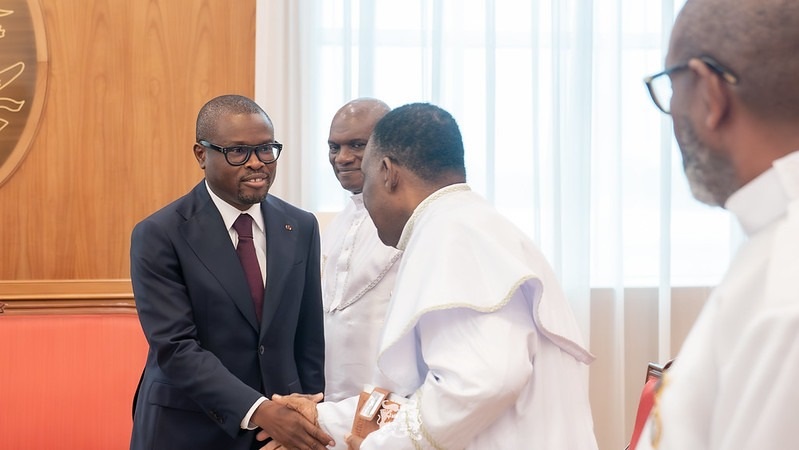
The audience granted on 4 June 2026 by President Romuald Wadagni to a delegation of the Church of Celestial Christianity provides an unexpected political insight: that of an exemplary state transition, where two presidents seamlessly share roles in service of a peace process that reaches far beyond Bénin’s borders.
Some dossiers, by their very nature, reveal the quality of governance. The reunification process of the Church of Celestial Christianity is one of them. Not because it is dramatic – it unfolds in meeting rooms, theological consultations, and internal deliberations – but because it demands unwavering continuity from political authorities. Any break in the state’s commitment would signal to the church’s various branches that the process is fragile, vulnerable to electoral calendar uncertainties. This risk appears to have been fully anticipated.
The opening scene: two presidents, one dossier
One must go back to the ceremony for the submission of conclusions and recommendations of the High Council for Work (CST) to understand the uniqueness of the moment. That day, Patrice Talon and Romuald Wadagni stood side by side. The former was still the sitting president; the latter was president-elect but had not yet taken the oath. This co-presence was not merely protocol: it was political. It signified that this dossier had been explicitly transferred, with a tacit agreement between the two men on the need to ensure its continuity.